
Reviewed · BALINESE COOKING CLASSES
From Ubud: Authentic Cooking Class Visit Traditional Market
Market-to-kitchen is the real Bali story. I love that you shop a Traditional Market and come back to make 5 dishes and 1 dessert with an English-speaking chef, so you’re not just watching food demos. One possible drawback: it’s a hands-on 3–3.5 hour experience with some walking in the heat, so plan comfy clothes and water.
I also like the “show up and get moving” setup. You’ll get pickup and private, air-conditioned transport from Ubud (and several nearby areas), plus a welcome drink and snacks to take the edge off before you start cooking.
And if food limits are part of your trip, this one gives you options. You can request vegan meals and allergy-friendly menus when you book, and you’ll leave with a recipe booklet and PDF so the flavors don’t fade after you get home.
In This Review
- Key highlights worth caring about
- Market to cutting board: what the morning (or afternoon) feels like
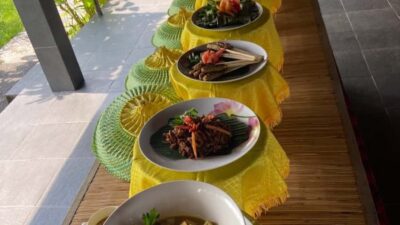
- Cooking the Balinese way: sauces, pastes, and 5 dishes plus dessert
- Farm tour context: why food origin changes the flavor story
- Celuk Village and Art Village crafts: batik, carving, and metalwork
- Pickup, private transport, and the small-group advantage
- Price and value: what $45 buys you in the real world
- Who should book this Ubud class (and who should skip it)
- Should you book this Ubud Authentic Cooking Class + Market Visit?
- FAQ
- How long is the cooking class?
- How much does it cost per person?
- Does the experience include pickup in Ubud?
- Is this a private tour or shared group?
- What does the class include?
- How many dishes and desserts do you make?
- Can the class handle vegan diets or allergies?
- What is the artisan stop?
- Is there free cancellation?
Key highlights worth caring about
- Market shopping for real ingredients: You choose what you cook, from tropical fruits to spices and protein options.
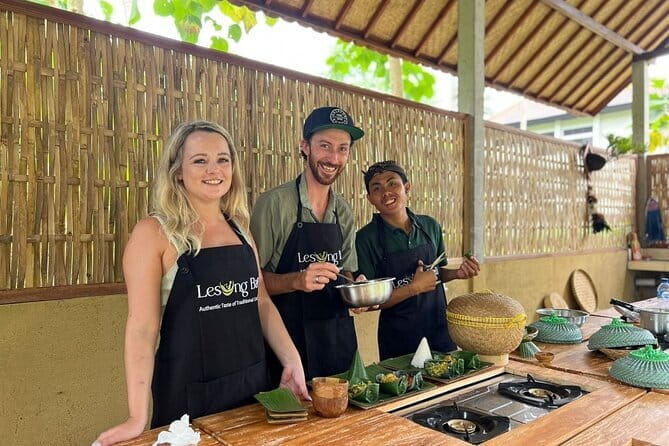
- Hands-on cooking, not a lecture: You learn sauces, pastes, sides, and mains, then eat what you make.
- Big enough meal payoff: 5 dishes plus 1 dessert means you’ll leave properly fed.
- You’ll see Bali crafts up close: Art Village/Celuk Village includes demos connected to batik, wood carving, and gold and silver smith work.
- Diet-friendly requests are part of the deal: Vegan and allergy needs can be accommodated if you request ahead.
Market basket to banana-leaf plate. More Ubud cook-alongs.
- Ubud Cooking Class Bali with Balinese Chef★ 5.0 · 1,609 reviews
- Ubud: Cooking Class with Transfers and Optional Market Visit★ 4.9 · 824 reviews
- PRIVATE Authentic Balinese Cooking Class in Ubud at Putu’s Home★ 5.0 · 644 reviews
- Balinese Ubud cooking school (9 Dish Cooking and Market Tour)★ 5.0 · 540 reviews
Market to cutting board: what the morning (or afternoon) feels like
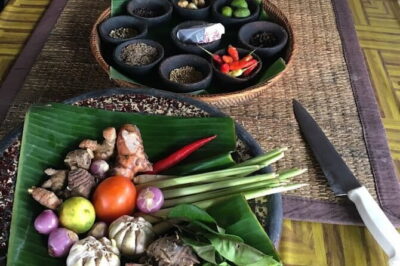
This class starts in a way that makes everything else make sense. Instead of showing up only to cook, you begin with a trip to a traditional market, where you learn what local ingredients look like before they ever hit a pan. You’ll see choices like meats, fish, poultry, exotic spices, and tropical fruits—exactly the sort of ingredient mix that defines Balinese home cooking.
What I like about the market portion is the practical angle. When you learn what spices smell like, how fresh fruit feels, and how ingredients are commonly grouped in daily cooking, you stop treating recipes like a magic trick. You start treating them like something you could recreate.
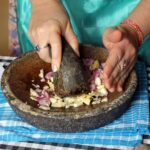
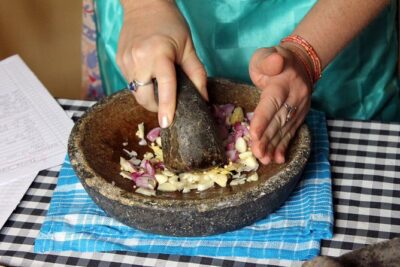
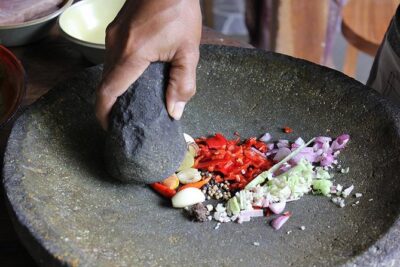
After you pick your ingredients, you head to the kitchen to build flavor from the ground up—especially through sauces and pastes. That’s the key Bali move here: getting the seasoning right early, then letting it carry through the whole meal.
One more comfort factor: the experience includes mineral water and welcome snacks. That matters because market time can be warm, and you don’t want to start cooking hungry or dehydrated.
If you’re coming from outside central Ubud, the pickup range is a real plus. The tour offers pick-up from Ubud and also from Kuta, Seminyak, Canggu, Legian, Jimbaran, Nusa Dua, and Sanur. If your hotel is outside those zones, you’d need to confirm details before you get your hopes up.
Cooking the Balinese way: sauces, pastes, and 5 dishes plus dessert
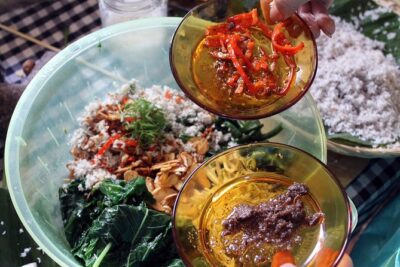
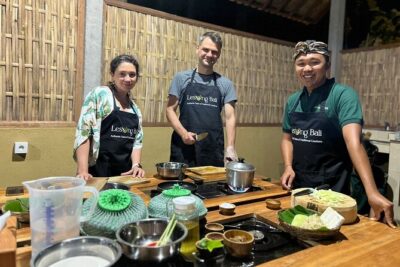
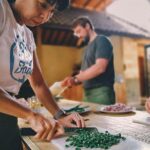
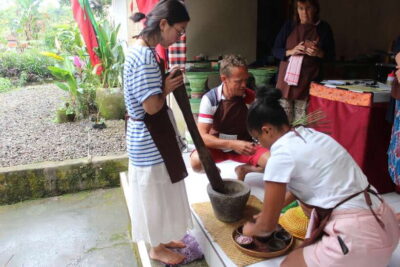
This is a cooking class where you actually cook. You’ll learn the art of making sauces and pastes, and you’ll also handle side dishes and main courses. In other words, it’s not only chopping and tasting—it’s the full process.
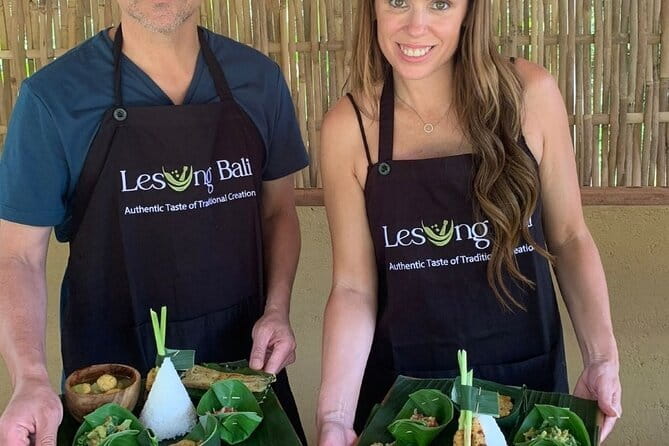
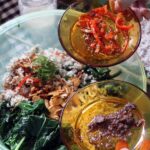
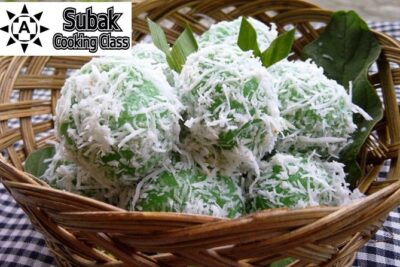
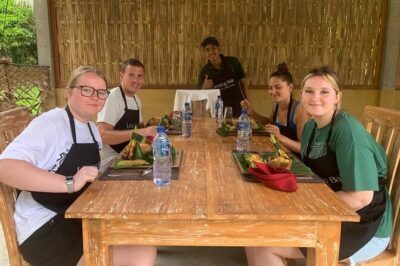
A big part of the value is the amount of food you produce. With 5 dishes and 1 dessert included, you’re going home with an entire meal’s worth of practice. That’s especially useful if you’ve taken a class before where you only learn one dish and spend the rest of the time watching. Here, the structure pushes you toward real repetition.
You should also expect a menu that reflects local cooking style, built around those ingredients you selected at the market. If you have vegan or allergy needs, you can request this ahead of time so the class still works for you. The point is not to force you into a compromise dish; it’s meant to keep you cooking and eating with your group.
Timing-wise, the experience runs about 3 hours (and the cooking portion is listed at around 3.5 hours). That means you’ll be busy, but not trapped all day. It’s a nice length for people who want something meaningful without losing their whole Bali schedule.
Also, the class includes the ingredients and the food you cook. So there’s no awkward moment where you’re wondering what costs extra. You can focus on learning and eating, which is exactly how a cooking class should feel.
Farm tour context: why food origin changes the flavor story
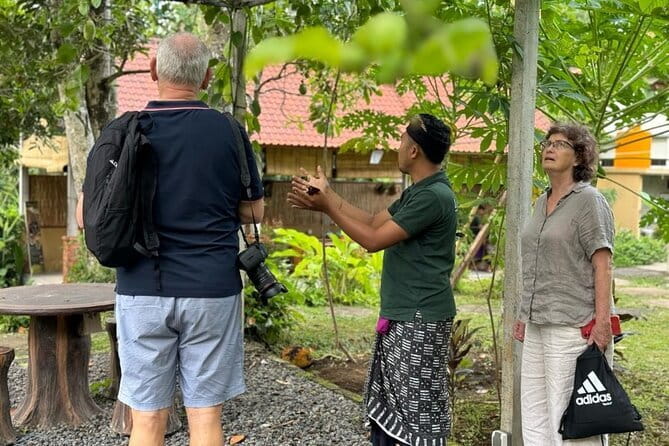
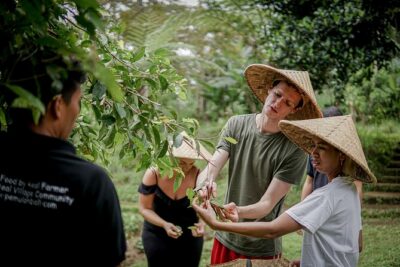
You don’t just learn ingredients by name—you also get a farm tour as part of the experience. The goal is simple: connect what you bought at the market to where the food comes from and how local growing habits shape what’s available.
Even if the farm portion is shorter than a full day on a working estate, it helps you understand why certain ingredients show up again and again in Balinese kitchens. It also gives you something to watch for while you cook. You’ll find yourself thinking about texture and freshness, not only spice ratios.
For me, this is one of the underrated parts of value. Some cooking classes stop at the kitchen. This one gives you a link between market and meal, so you can remember the experience as a full food chain, not just a recipe session.
If you’re the type who likes to eat with your brain on, this farm context makes the meal more interesting. If you just want to cook and enjoy, it still feels useful, not academic.
Other Ubud tours and experiences to line up next
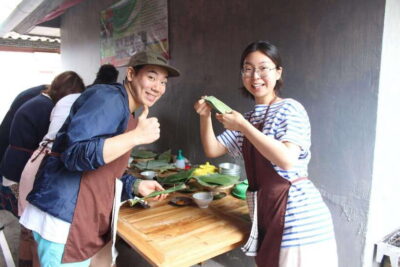
Celuk Village and Art Village crafts: batik, carving, and metalwork
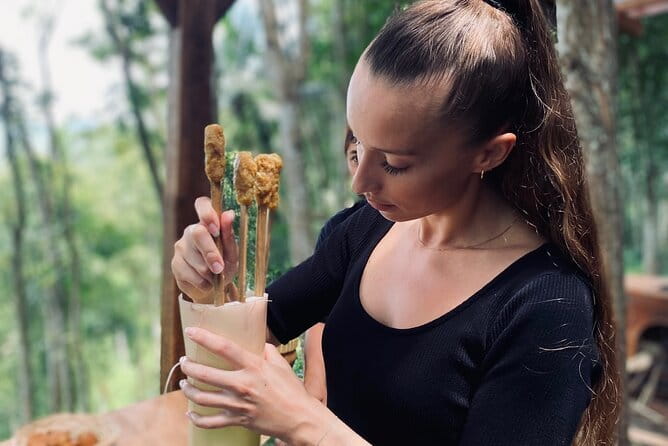
Near the end, you’ll visit an Art Village, including Celuk Village, where you can see local artisans at work. This isn’t a random shopping stop. It’s designed around traditional handicrafts—things like batik, wooden carving, and gold and silver smith work.
Seeing crafts in person does a few smart things. First, it gives your cooking story a second half. You start with ingredients and then you shift to the cultural side of Bali—how local skills get passed along and turned into everyday beauty. Second, it gives you photo opportunities that are closer to real work than staged performances.
There’s a practical side too: if you enjoy buying gifts, this is the sort of visit where you can ask questions and understand materials. That makes it easier to spot quality and avoid the “cheap souvenir everywhere” vibe.
The only consideration here is pace. If you’re cooking hard and then walking around an artisan area, you’ll want comfortable shoes and a light plan for keeping energy up. The good news is the overall schedule is still only a few hours, so it doesn’t turn into a marathon.
Pickup, private transport, and the small-group advantage
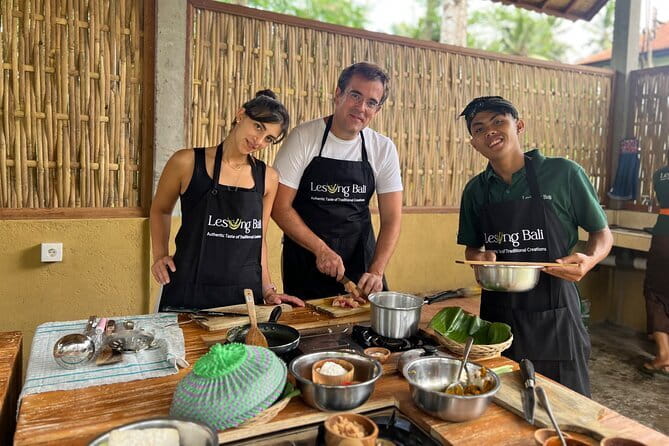
You get private transport with air conditioning, plus an English-speaking driver. Translation: you’re spending more energy on the experience and less on figuring out routes, traffic, and where to meet.
It’s also listed as a private tour/activity with only your group participating. That matters for cooking classes. In a private setting, it’s easier to ask questions, move at a comfortable speed, and handle dietary needs without feeling rushed.
Pickup is offered from several common Bali bases, including Ubud and many of the popular south-coast areas. If you’re staying in one of those locations, this is one of the simplest ways to fit a cooking class into a Bali trip.
Even small details support comfort. Mineral water, welcome drink and snacks, and the use of a mobile ticket all reduce friction. You don’t want a great meal experience slowed down by paperwork.
Price-wise, you’re paying $45 per person, and the experience is generally booked around 20 days in advance. That advance booking rhythm suggests demand, and it often means you should lock it in early if you travel during peak seasons or have a tight schedule.
Price and value: what $45 buys you in the real world
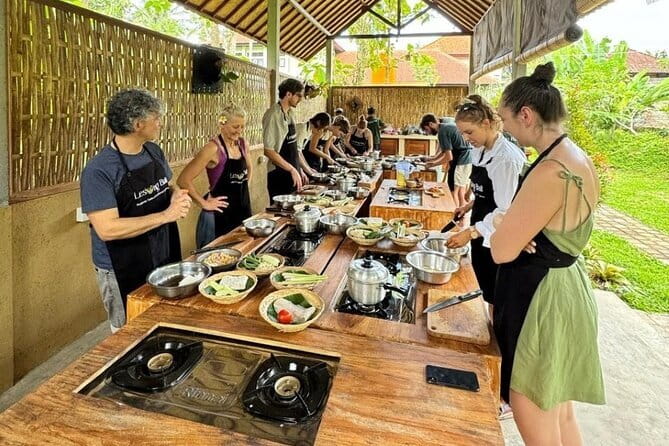
At $45 per person, this class can feel like either a deal or a stretch—depending on what you get. Here, you actually get a lot inside one outing.
You’re paying for:
- market ingredient selection
- a cooking class with sauce/paste lessons
- meal included (5 dishes plus 1 dessert)
- all ingredients and the food you cook
- welcome drink and snacks, plus mineral water
- farm tour
- Art Village/Celuk Village craft stop
- private air-conditioned transport and an English-speaking driver
- recipe materials: a printed booklet and a PDF
That’s a wide package for a single block of time. The value gets better if you hate wasting a vacation hour. Since pickup and transport are handled, you’re not trying to stitch together separate rides to a market, then a class, then a craft stop.
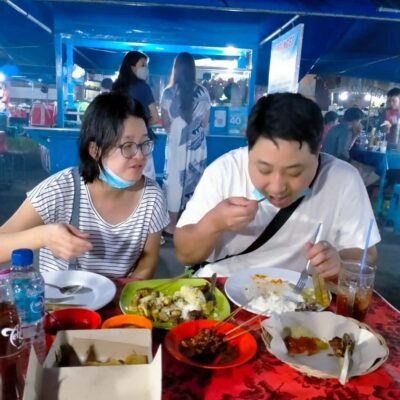
The price is also fair because you’re not only learning—your group eats what you cook. That’s the easiest way to judge whether a cooking class is worth it: you should leave satisfied, not hungry and still craving dinner plans.
If you’re on a tight budget, do compare against shorter classes that might only teach one dish. But if you want a full meal, ingredient learning, and cultural stops, this format justifies the cost.
Who should book this Ubud class (and who should skip it)
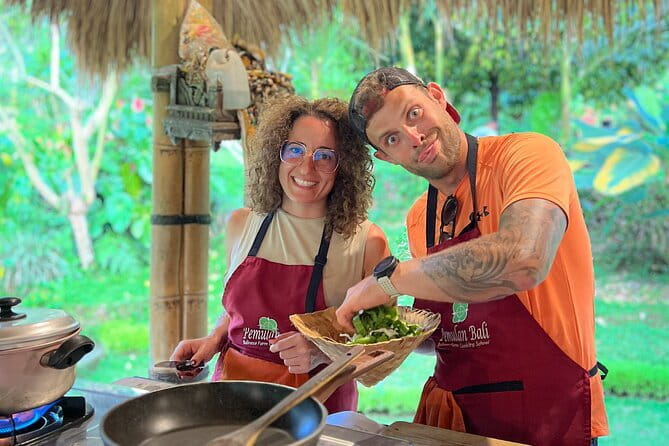
This one fits best if you want a hands-on Balinese food experience with a cultural add-on. It’s a good match for:
- couples who want a memorable, structured activity with pickup
- families who like learning through doing (and eating the result)
- groups who want shared cooking time without complicated logistics
- anyone interested in market ingredients, not only restaurant-style cooking
You’ll also like it if you have dietary needs. Vegan and allergy-friendly options can be requested, which is not always easy in cooking classes.
You might want to reconsider if:
- you dislike markets or don’t want any walking before cooking
- you’re looking for a long, slow sightseeing day rather than an active food workshop
- you prefer a class that focuses on one signature dish only
In short: book if your goal is learning plus eating, with a little Bali craft culture to round it out.
Should you book this Ubud Authentic Cooking Class + Market Visit?
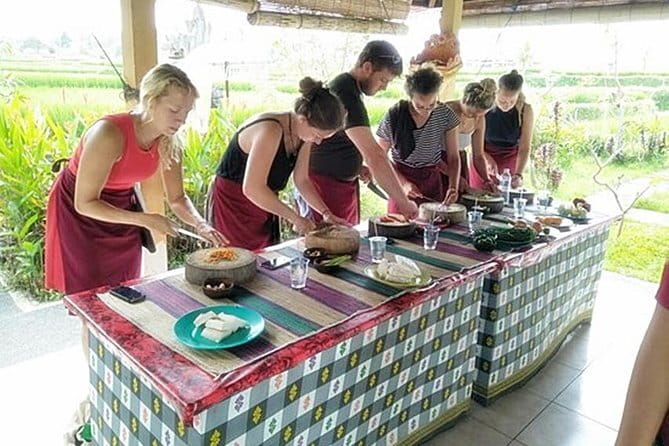
Yes, if you want an efficient, high-value way to learn Balinese cooking with ingredients you actually pick yourself. The combination of market shopping, hands-on cooking for 5 dishes and 1 dessert, farm context, and an artisan visit gives you more than a typical one-topic class.
I’d book early because it averages bookings around 20 days in advance. If you’re traveling with allergy needs or you want vegan cooking, put those requests in before your session so the menu can be adjusted.
If your idea of a perfect Bali day is relaxed lounging only, this may feel too active. But if you like learning by doing and you want to eat a meal that’s tied directly to local ingredients, this is a smart choice.
FAQ
How long is the cooking class?
The experience is listed at about 3 hours (with the cooking class portion around 3.5 hours).
How much does it cost per person?
It costs $45.00 per person.
Does the experience include pickup in Ubud?
Yes. Pickup is offered from Ubud and also from Kuta, Seminyak, Canggu, Legian, Jimbaran, Nusa Dua, and Sanur.
Is this a private tour or shared group?
It’s a private tour/activity, and only your group participates.
What does the class include?
You get a traditional market visit, cooking class, farm tour, welcome drink and snacks, mineral water, private air-conditioned transport, and all ingredients plus the food you cook. You also receive a free recipe booklet and a PDF recipe.
How many dishes and desserts do you make?
You’ll make 5 dishes and 1 dessert.
Can the class handle vegan diets or allergies?
Yes. You can request options for dieters, vegans, and allergies after booking or before the experience.
What is the artisan stop?
You’ll visit an Art Village (including Celuk Village) where you can see traditional handicrafts such as batik, wooden carving, and gold and silver smith work.
Is there free cancellation?
Free cancellation is available. You can cancel up to 24 hours in advance for a full refund.
More Shopping Tours in Ubud

More Ubud Tours We Rate





Cook Balinese in Ubud

Just added around Ubud
- Ubud: White Water Rafting with visit Ubud Monkey Forest
★ 5.0 · 3 reviews - Private Guided Bali Car Charter
★ 5.0 · 3 reviews - East Bali and Lempuyang Temple Tour
★ 5.0 · 3 reviews - Bali Downhill Cycling and White Water Rafting
★ 5.0 · 3 reviews - Cave Tubing Adventure in Ubud
★ 5.0 · 3 reviews
Balinese Cooking Classes, compared.
 ★ 5.0Ubud Cooking Class Bali with Balinese ChefFrom $351,609 reviews
 ★ 4.9Cooking Class with Transfers and Optional Market VisitFrom $21824 reviews
 ★ 5.0PRIVATE Authentic Balinese Cooking Class in Ubud at Putu’s HomeFrom $75644 reviews
 ★ 5.0Balinese Ubud cooking school (9 Dish Cooking and Market Tour)From $58540 reviews
 ★ 4.8Balinese Cooking Class and Market TourFrom $23531 reviews
 ★ 5.0Balinese Farm Cooking Class by Pemulan BaliFrom $39410 reviews
 ★ 5.0Balinese Authentic Cooking Class in UbudFrom $39239 reviews
 ★ 5.0PRIVATE Balinese Cooking Class in Ubud with Dewa with TransfersFrom $69213 reviews
Browse the lists this tour appears in