
Reviewed · BALINESE COOKING CLASSES
Balinese Authentic Cooking Class in Ubud
Your stomach will lead the way.
This half-day class turns Ubud into a food lesson you can touch: a market stop, a traditional house visit, a farm walk where spices come from the ground, and then real cooking with a Balinese chef. You can pick the morning, afternoon, or evening session, and the menu can be regular, vegetarian, or vegan.
What I like most is the way the experience connects the dots. You’re not just following recipes. You’re learning why ingredients matter, using a traditional lesung mortar-and-pestle technique while you cook. Plus, it’s kept small (max 15), so the teaching feels personal even if you’re new in the kitchen.
One thing to consider: part of the day depends on conditions. The experience requires good weather, and if that’s not available, you’ll need to adjust dates or get a refund. Plan to bring your appetite and some flexibility.
In This Review
- Key reasons this cooking class works so well
- Ubud countryside cooking, not a rushed factory class
- The half-day schedule: market, house, farm, then cooking (by time of day)
- Balinese house visit: family compounds and everyday design
- The farm walk: harvesting spices you’ll actually use
- Cooking with lesung: the spice technique that changes everything
- What you’ll cook and eat: regular, vegetarian, and vegan menus
- Coffee, snacks, and the included little comforts
- Price and value: what $39.71 buys in real time
- Group size, comfort, and what to pack
- Should you book Lesung Bali in Ubud?
- FAQ
- How long is the Balinese cooking class?
- Where does the experience take place?
- Are there different class times?
- Is the market tour included?
- Do you offer vegetarian or vegan options?
- Is pickup included?
- How big is the group?
- What is the cancellation policy?
- What’s included in the price besides cooking?
Key reasons this cooking class works so well
- Market-to-plate flow: For morning classes you’ll tour a traditional market and buy spices locally, then cook with what you learn.
- Family compound context: A traditional Balinese house stop helps you understand daily life and how homes are arranged.
- Farm harvesting: You’ll walk the farm grounds and harvest spices for your menu before cooking starts.
- Hands-on spice grinding: You’ll use the lesung to chop and pound spices the Balinese way.
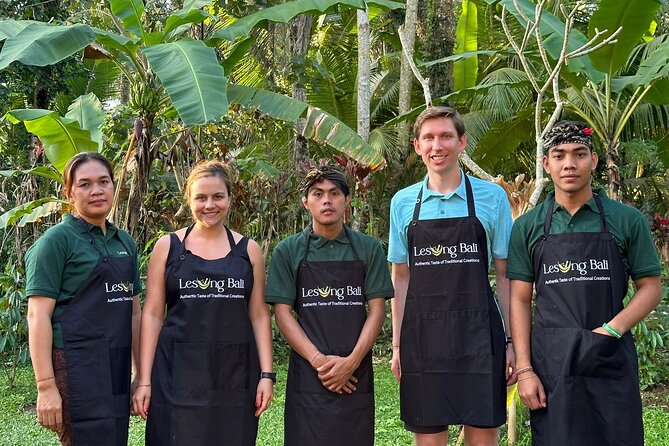
- Real guidance, not just watching: Instructors like Ron, Putri, Don, Gustie, and Begul are repeatedly praised for patience and clear teaching.
- Big meal payoff: You’ll cook multiple dishes and end up eating what you make, often with enough food to feel properly fed.
Market basket to banana-leaf plate. More Ubud cook-alongs.
- Ubud Cooking Class Bali with Balinese Chef★ 5.0 · 1,609 reviews
- Ubud: Cooking Class with Transfers and Optional Market Visit★ 4.9 · 824 reviews
- PRIVATE Authentic Balinese Cooking Class in Ubud at Putu’s Home★ 5.0 · 644 reviews
- Balinese Ubud cooking school (9 Dish Cooking and Market Tour)★ 5.0 · 540 reviews
Ubud countryside cooking, not a rushed factory class
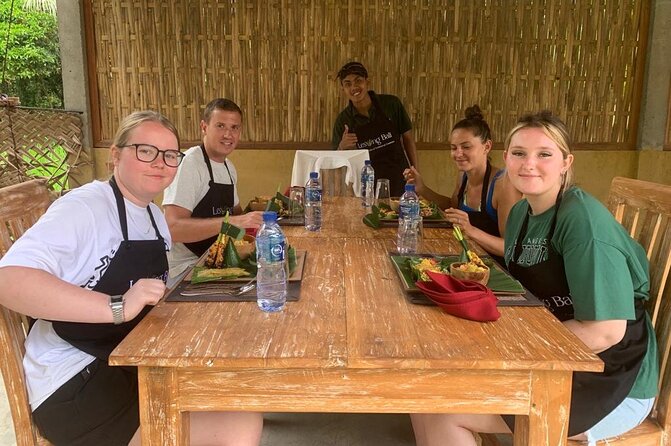
This class runs on the west side of Ubud, in a setting that feels more like countryside than city. The grounds are described as green and relaxing, which matters because cooking classes can be tiring if you’re always in traffic or waiting around.
The structure is also smart. It’s built around a full sensory loop: see ingredients, learn how they’re used, pick menu choices, and then cook and eat. In real terms, that means you’ll remember what you made and why it tastes the way it does.
And because it’s capped at 15 travelers, you’re more likely to get help when you need it. Many cooking classes scale up and then you’re left to your own chopping board. Here, the staff emphasis is on guiding you step by step.
The half-day schedule: market, house, farm, then cooking (by time of day)
You get roughly 5 hours total, depending on the exact class time and flow of the day. The schedule changes slightly by session, mainly around the market visit.
Morning class
- A traditional market tour is part of the morning experience.
- You’ll learn what’s used for cooking and buy spices from the local market.
- Later, you’ll go to a Balinese house and then continue to the farm for harvesting.
Afternoon or evening class
- You skip the market tour (since that’s marked as morning-only).
- You still get the cultural house visit and farm-based sourcing before cooking.
In both cases, the day follows this rhythm:
1) introductions and tea/snacks,
2) house and culture context,
3) farm walk and spice harvesting,
4) menu planning,
5) hands-on cooking with demonstrations and practice,
6) you eat the dishes you made.
That menu planning step matters. You choose what you’ll cook, and that choice affects how the chef teaches technique and ingredient prep.
Balinese house visit: family compounds and everyday design
One of the most consistently praised parts is the traditional Balinese house stop. It’s not treated like a quick photo stop. You’ll get time to learn about Balinese culture and daily lifestyle, including how the building placement works on the property.
Many people love this part because it changes how they view the food. When you hear how people live and what rituals and rhythms shape their day, cooking starts to feel less like a “tour activity” and more like understanding a community.
You’ll usually have coffee or tea during this segment, and there’s often a local snack. Some instructors (like Ron and Don in the feedback) add background in a way that feels human, not scripted. If you’re the type who likes context, this house visit is where that part of the trip happens.
Other Ubud tours and experiences to line up next
The farm walk: harvesting spices you’ll actually use
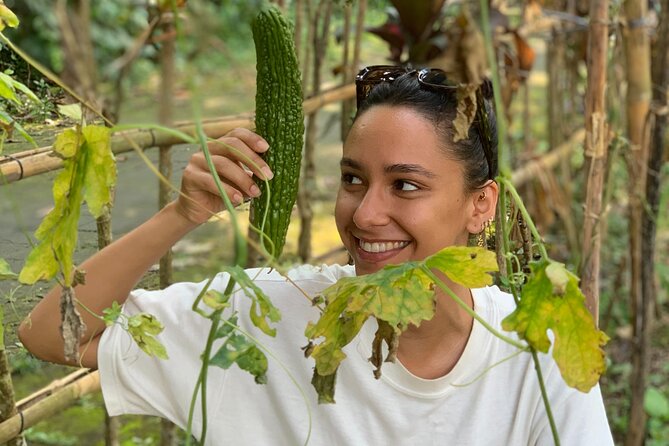
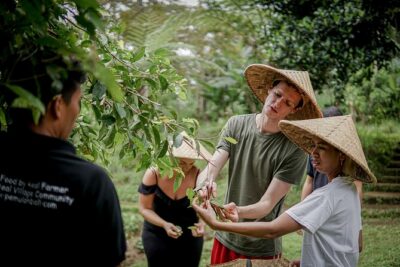
After the house visit, you’ll head to the farm to start the cooking portion in a very literal way: you harvest spices for the menu. It’s a small but meaningful shift from “ingredients are prepped for you” to “you’re meeting them in their growing environment.”
On the farm, you’ll explore the grounds and collect what you need, which sets you up for the next stage: making spice pastes and balancing flavors.
Also, the farm experience can be playful. Some people mention time around fish on the property. Even if you’re focused on cooking, those little moments are part of why the day feels relaxed instead of purely instructional.
Cooking with lesung: the spice technique that changes everything
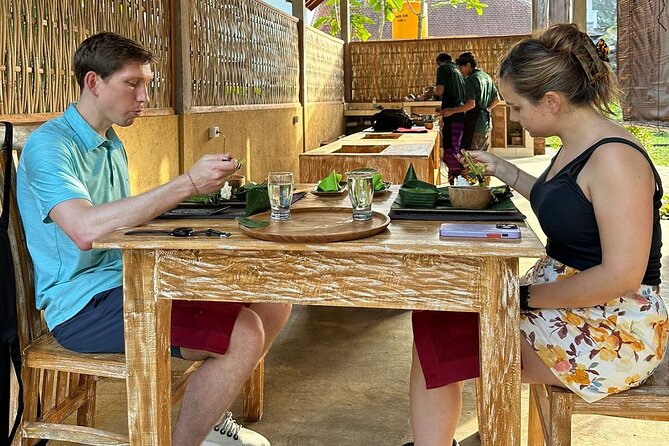
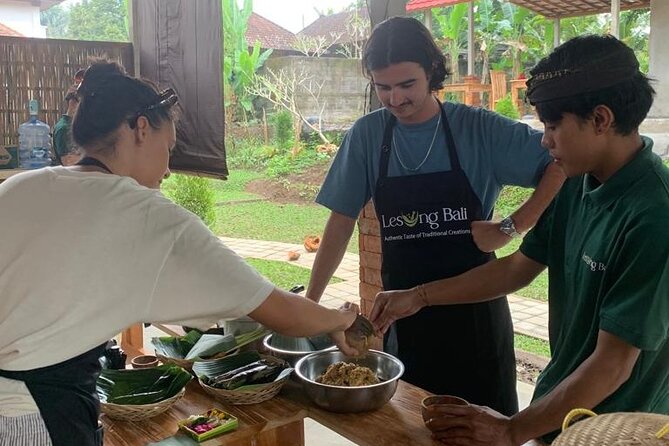
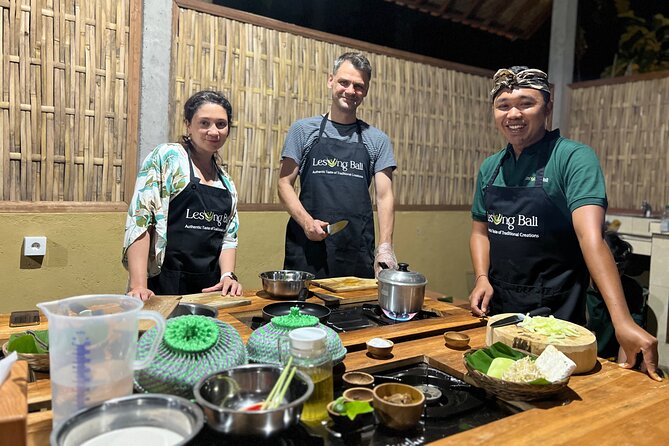
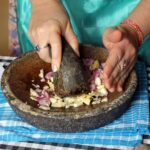
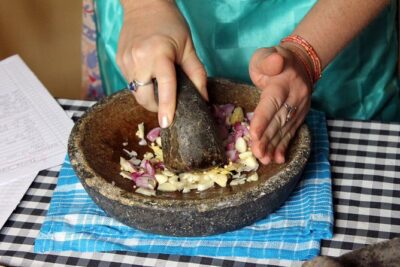
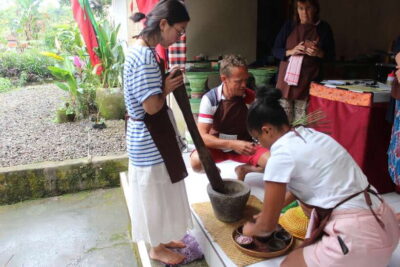
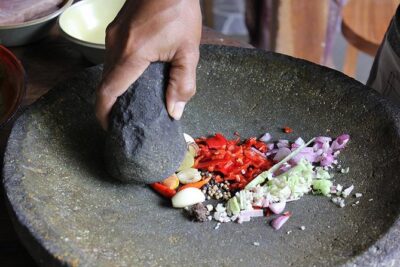
Once the menu is chosen, the chef teaches you authentic Balinese cooking techniques using fresh ingredients. A standout skill is working with the lesung—a mortar and pestle used to chop and pound spices in a traditional way.
Why this matters: if you’ve only used a modern blender or pre-ground spices, Balinese cooking feels different once you grind and release aroma by hand. You can smell the change immediately, and you understand why the chef asks for specific textures.
During the class, you’ll learn:
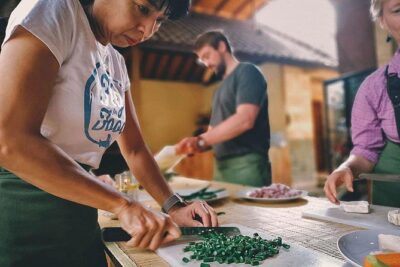
- how to prep ingredients for your menu dishes,
- how many key components go into each recipe,
- what you need beyond the spice base (and how timing affects flavor).
The teaching style is repeatedly described as patient and detailed. Some people highlight instructors like Putri and Ron for breaking down steps clearly, and Begul for humor plus hands-on guidance. If you’re worried about cooking ability, don’t overthink it. This format is designed so you’re doing the work, not standing on the sidelines.
What you’ll cook and eat: regular, vegetarian, and vegan menus
This class offers multiple menu types: regular, vegetarian, and vegan. That’s important because Balinese dishes often rely on seasoning bases and ingredient choices that you’ll want adapted correctly for your diet.
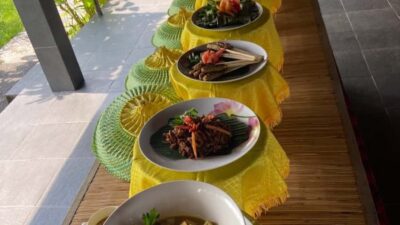
From the way meals are described, you’ll typically cook multiple dishes—many people specifically mention six dishes plus dessert. Even if your exact menu differs by session, the pattern is consistent: you cook a set of dishes and then eat them.
Portion size is another plus. Several reviews stress that the amount of food at the end is more than you expect, so come hungry. If you plan to eat again afterward, you’ll probably need willpower.
The instructors also emphasize using fresh ingredients. Since you’re harvesting from the farm and buying spices (morning class), your meal has a stronger “I made this from start to finish” feel.
Coffee, snacks, and the included little comforts
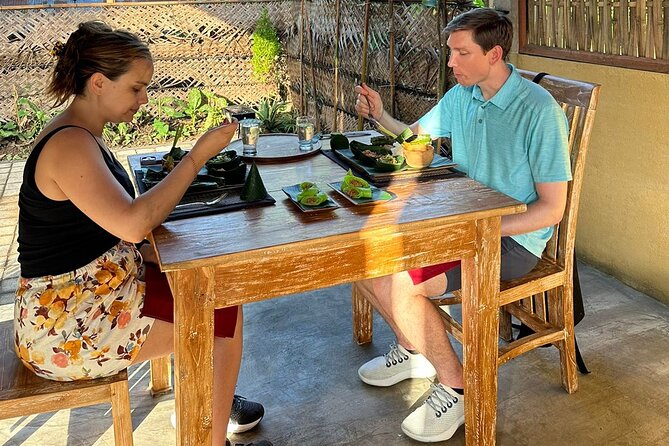
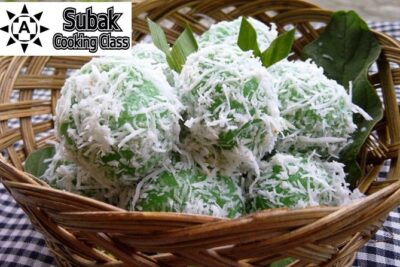
The class includes coffee and/or tea, mineral water, and a Balinese cake. It also includes an AC vehicle and all fees and taxes.
Those details sound minor until you’re sweating in the kitchen. Keeping water and a cool ride built into the experience helps the day feel easier—especially in Ubud humidity.
There’s also a “welcome” vibe. People commonly describe tea/coffee and snacks when you arrive or during the house segment, and then again before the cooking gets serious.
Price and value: what $39.71 buys in real time
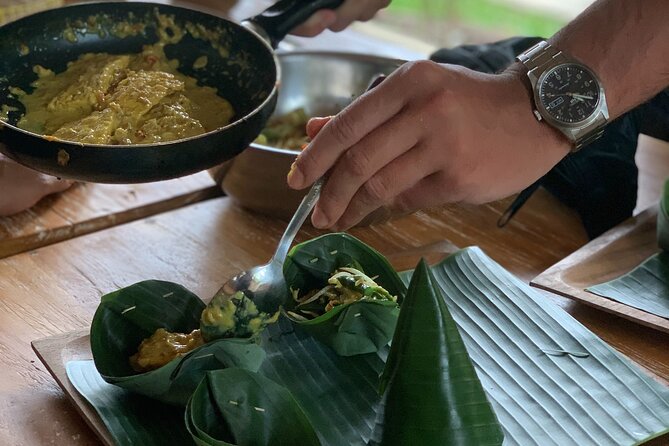
At $39.71 per person, this is priced like a good-value half-day activity—especially because it’s not just a cooking workshop. You also get:
- a cultural house visit,
- a farm harvesting segment,
- in the morning, a traditional market tour with spice buying,
- hands-on cooking instruction,
- and you eat the results.
It also runs with a small group (max 15), so you’re not paying for a crowded class where your questions go unanswered.
Transfers are mostly covered for people staying in Ubud. The experience includes a free shuttle service for the Ubud area only. If you’re outside Ubud—like Nusa Dua, Jimbaran, Uluwatu, Kuta, Seminyak, Sanur, or Canggu—there are extra car fees listed. If you’re staying farther out, factor that into your total cost so the final price still feels fair.
Group size, comfort, and what to pack
The cap at 15 travelers changes the feel of the class. You’re more likely to:
- have elbow room in the cooking space,
- get help with chopping/grinding,
- and actually understand what you’re doing.
Comfort-wise, the day includes multiple walking segments (market, house area, farm area) before you cook. Wear closed-toe shoes or sandals you can trust on uneven ground. Bring a light layer too; mornings and evenings can feel cooler once you’re shaded.
If your session is morning, this is also an early-start choice. One person mentions going solo and getting up early for a morning class with a private market experience. If you don’t mind early hours, the morning version is especially good because you get the spice shopping piece.
Should you book Lesung Bali in Ubud?
If you want a cooking class that feels like Bali-to-your-plate, this one is a strong match. I’d book it if:
- you like hands-on cooking and want to practice techniques like lesung spice grinding,
- you want a cultural add-on beyond just food,
- you’re traveling with a partner or small group and want personal attention,
- or you need a vegetarian/vegan option that’s handled as part of the menu, not an afterthought.
I’d think twice if:
- you hate walking and want zero moving parts,
- you’re extremely time-limited,
- or you can’t be flexible if weather forces a reschedule (the experience requires good weather).
When the reviews name instructors like Ron, Putri, Don, Gustie, and Begul with the same themes—patience, clear explanation, friendliness—that’s a useful signal. You’re likely to leave with both recipes and better instincts for seasoning.
FAQ
How long is the Balinese cooking class?
It runs about 5 hours (approx.).
Where does the experience take place?
The class is based in Ubud (on the west side, in a greener, countryside-feeling area). It includes stops around Ubud and ends with the cooking and meal.
Are there different class times?
Yes. You can choose morning, afternoon, or evening classes.
Is the market tour included?
The traditional morning market tour is included for morning classes only.
Do you offer vegetarian or vegan options?
Yes. There are regular, vegetarian, and vegan menu options.
Is pickup included?
There is free shuttle service in the Ubud area only. Pickup/drop-off outside Ubud area isn’t included, and extra car fees are listed for areas like Nusa Dua/Jimbaran, Uluwatu, and Kuta/Seminyak/Sanur/Canggu.
How big is the group?
The class has a maximum of 15 travelers.
What is the cancellation policy?
You can cancel for a full refund if you cancel up to 24 hours in advance. If you cancel less than 24 hours before the start time, the payment isn’t refunded. The experience also requires good weather, and if it’s canceled due to poor weather, you’ll be offered a different date or a full refund.
What’s included in the price besides cooking?
Included items are coffee and/or tea, air-conditioned vehicle, mineral water, a Balinese cake, all fees and taxes, plus the Ubud-area shuttle.
More Cooking Classes in Ubud
More Ubud Tours We Rate





Cook Balinese in Ubud
Just added around Ubud
- Ubud: White Water Rafting with visit Ubud Monkey Forest
★ 5.0 · 3 reviews - Private Guided Bali Car Charter
★ 5.0 · 3 reviews - East Bali and Lempuyang Temple Tour
★ 5.0 · 3 reviews - Bali Downhill Cycling and White Water Rafting
★ 5.0 · 3 reviews - Cave Tubing Adventure in Ubud
★ 5.0 · 3 reviews
Balinese Cooking Classes, compared.
 ★ 5.0Ubud Cooking Class Bali with Balinese ChefFrom $351,609 reviews
 ★ 4.9Cooking Class with Transfers and Optional Market VisitFrom $21824 reviews
 ★ 5.0PRIVATE Authentic Balinese Cooking Class in Ubud at Putu’s HomeFrom $75644 reviews
 ★ 5.0Balinese Ubud cooking school (9 Dish Cooking and Market Tour)From $58540 reviews
 ★ 4.8Balinese Cooking Class and Market TourFrom $23531 reviews
 ★ 5.0Balinese Farm Cooking Class by Pemulan BaliFrom $39410 reviews
 ★ 5.0PRIVATE Balinese Cooking Class in Ubud with Dewa with TransfersFrom $69213 reviews
 ★ 5.0Balinese Cooking class with traditional morning market visitFrom $35161 reviews
Browse the lists this tour appears in