
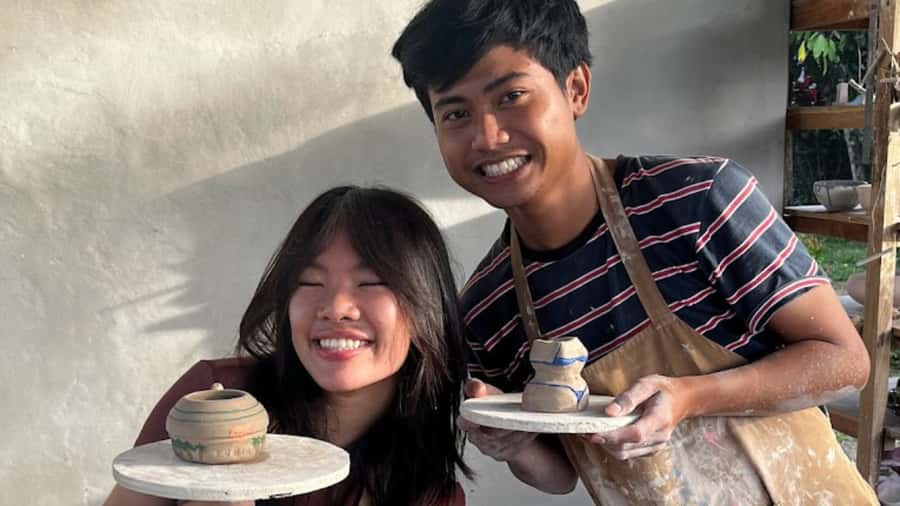
Reviewed · BALINESE CRAFT & ART WORKSHOPS
Ubud: Ceramic Pottery Class with 2 kg Clay
One sentence less than 10 words: Clay time in Ubud, guided and calm. This 3-hour class gives you 2kg clay to shape and decorate your own ceramics with a real instructor standing by, and it’s set in a quieter corner of Ubud that feels more like a studio afternoon than a rushed activity. I love that you get small-group, personalized attention, so beginners don’t feel lost, and intermediate makers still get helpful corrections. One thing to keep in mind: your finished pieces need drying and firing, so you’ll want extra days in Bali.
The studio setup is practical and beginner-friendly: tools, apron, glazing, and even mineral water are included, so you can focus on making. You also have options at the end, including pickup after it’s fired or shipping it to where you’re staying. If you’re short on time at the end of your trip, plan carefully so your pottery doesn’t turn into a souvenir you can’t take home.
In This Review
- Key things I’d prioritize before you go
- Ubud Clay Studio: Why 2kg Makes This Class Feel Like Real Pottery Time
- Hand-Building and Wheel-Throwing in a Private, Calm Setting
- From Shaping to Glazing: What You Do in the 3 Hours
- Firing, Drying, and Getting Your Pieces Home (Plan Ahead)
- Instructors Like Putra (and Why Patience Speeds Up Learning)
- Ubud Logistics That Matter: Finding the Studio and Avoiding Time Wastes
- Price and Value: Why $36 Can Be a Good Deal Here
- Who This Class Fits Best (and Who Might Skip It)
- Should You Book This Ubud Pottery Class with 2kg Clay?
- FAQ
- How long is the Ubud ceramic pottery class?
- How much clay do I get, and can I make more than one item?
- Does the price include firing and glazing?
- Can I take my pottery home the same day?
- Are meals included?
- Is the instruction in English?
Key things I’d prioritize before you go
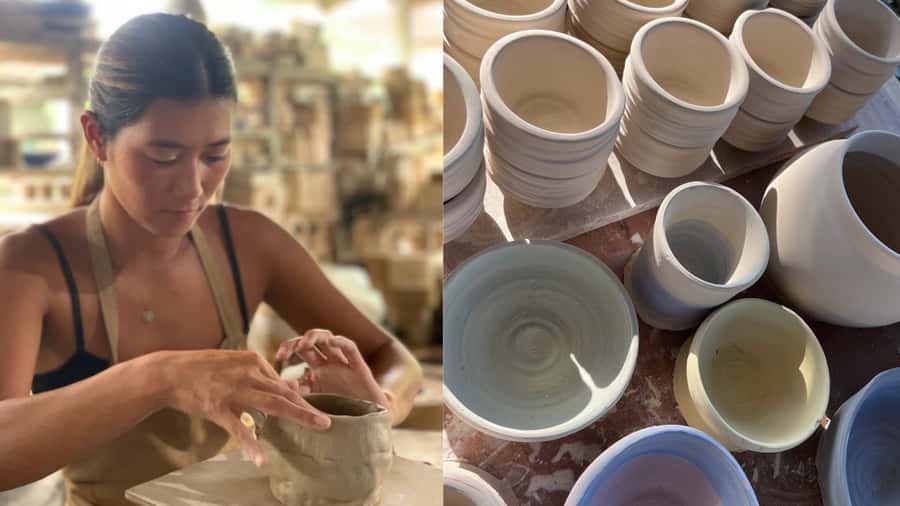
- 2kg clay allowance that supports making two finished items
- Private-group feel with patient, hands-on coaching
- Two techniques: hand-building plus wheel-throwing
- Glazing included, so you’re not stuck only shaping raw clay
- Firing timing matters, so leave room at the end of your trip
Batik wax, wet clay and carving chisels, hands-on.
- Crafting Heritage Batik Painting Workshops★ 5.0 · 164 reviews
- Ubud: Ceramic Pottery Class with 2 kg Clay★ 4.8 · 91 reviews
- Outskirts of Ubud, Gianyar: Pottery Class★ 5.0 · 9 reviews
- 3 Hours Wheel Throwing Basic Ceramic Class★ 4.0 · 3 reviews
Ubud Clay Studio: Why 2kg Makes This Class Feel Like Real Pottery Time
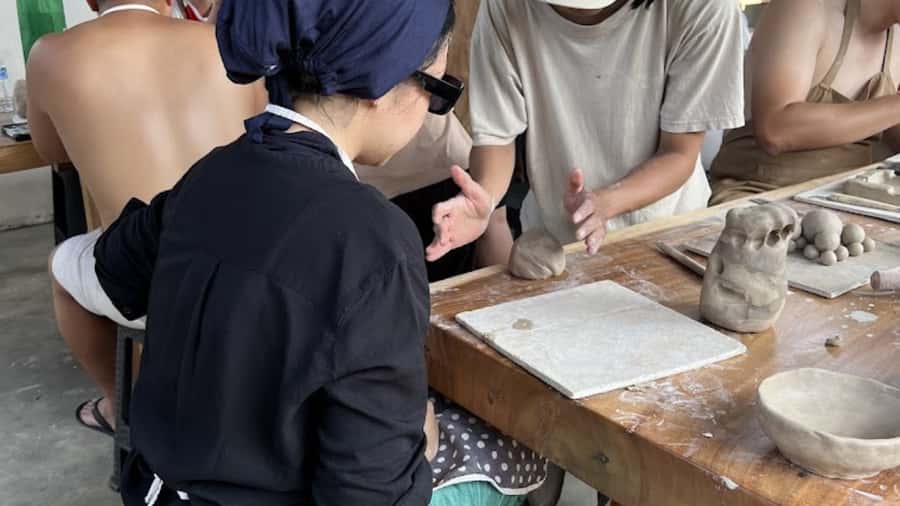
In Ubud, you’ll find plenty of craft experiences that feel more like decoration than actual making. This one is different because you start with 2 kilograms of clay, which is a big deal for beginners. It gives you enough material to learn without panic, make decisions, and still end up with more than one usable piece.
In a class like this, clay is your teacher. If you only get a small amount, you spend your time trying not to mess up. With more clay, you can slow down and experiment: thicker walls vs. thinner ones, different silhouettes, and how much you can refine before the clay fights back. That’s the kind of learning you’ll actually remember at home when you see your own finished piece.
And the “value” angle is not just quantity. It’s what the clay enables: two-piece output. The class includes 2 item firing, and the clay allowance is meant to support that. So you’re not paying for one tiny bowl and a certificate photo. You’re paying to come away with real objects you’ll recognize later.
Hand-Building and Wheel-Throwing in a Private, Calm Setting
The class is designed for learning two main ways to work ceramic clay: hand-building and wheel-throwing. Even if you’ve never touched clay before, that pairing is a smart way to spend 3 hours. You get to compare textures and control—hand-building is slower and more sculptural, while the wheel teaches rhythm and centering fast.
What I particularly like is the private group setup. That matters in pottery. You need quiet enough to watch details, and space enough to get one-on-one fixes. In practice, it’s also easier to keep your momentum when you’re not constantly waiting for other people’s turns or dealing with a crowded classroom mood.
The instructors have reputations for patience. You’ll hear names like Putra and Dalem coming up again and again, and that lines up with the overall feel people describe: calm, attentive coaching with room to breathe. One nice touch in the vibe is that it doesn’t feel like a loud “show.” People talk about the setting being peaceful, with normal background sounds like wind and neighborhood life, which actually helps you settle into the work.
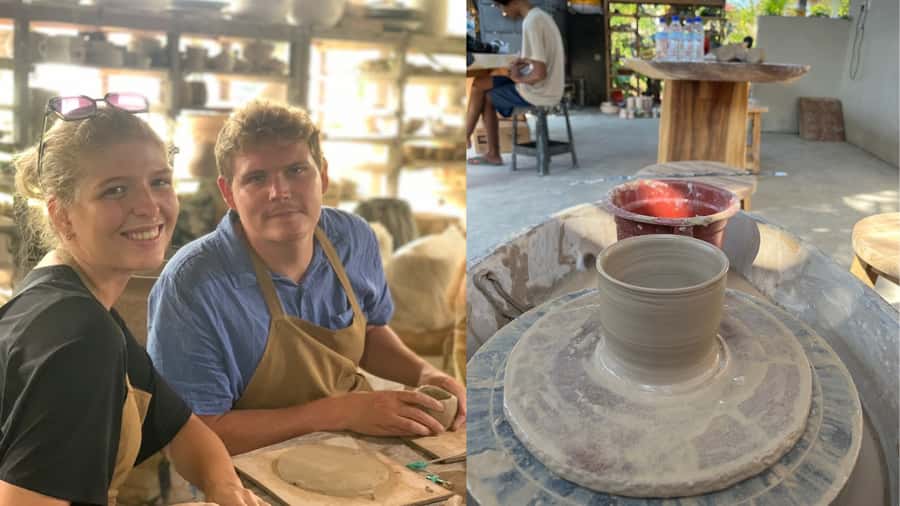
If you’re coming as a couple, it can also be a good shared activity. You’ll both be hands-on, and you can make complementary pieces—like two dishes that actually look good together when you set them on a table later.
From Shaping to Glazing: What You Do in the 3 Hours
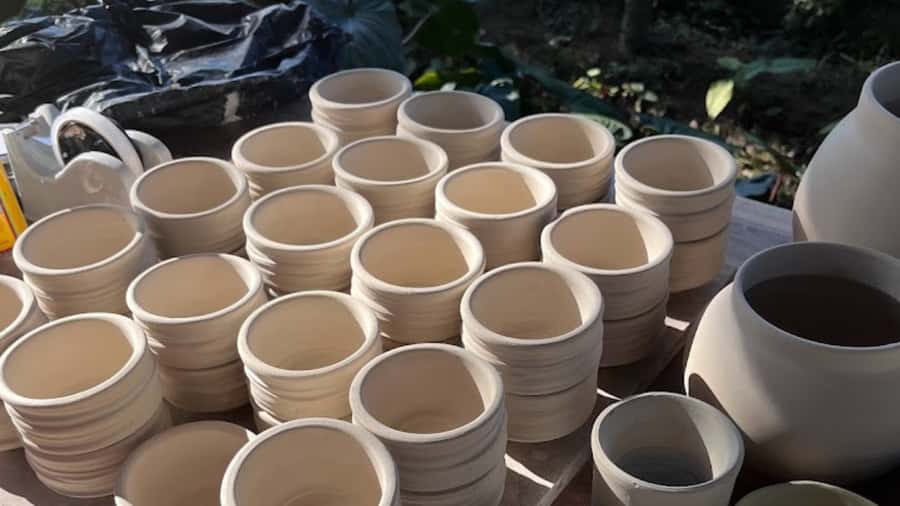
You won’t just sit and listen. The flow is built around doing, then doing some more. Expect an early introduction and instructor demonstration, then a hands-on section where you try both techniques.
Here’s what you can count on based on what’s included and how the class is described:
- Tools and apron are provided, so you’re not hunting around for supplies.
- You’ll work with the 2kg clay to shape your pieces.
- You’ll use a glazing step, since glazing is included (plus clay color is provided).
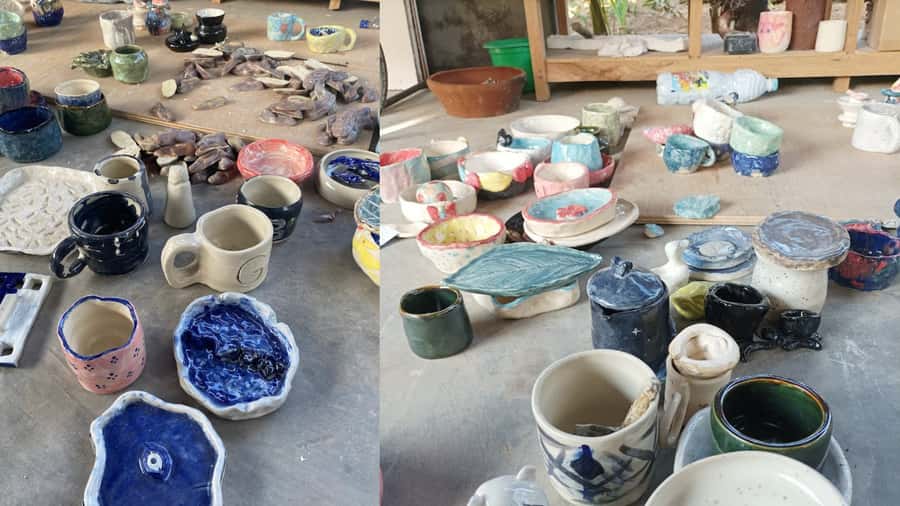
- You’ll finish the class with pieces set up for the firing stage, even though you won’t have them fully finished immediately.
Wheel-throwing and hand-building each come with their own learning curve. When you do the wheel, you’re mostly learning how to position and stabilize the clay so it spins without collapsing. With hand-building, you can focus more on form and personal style, like making a mug silhouette or a bowl shape that feels natural to you.
Then comes glazing. This is where you turn “my thing is brown clay” into “this could actually live on my shelf at home.” Glaze choices can feel small, but they change everything about the final look: shine level, color tone, and how the piece catches light after firing.
At the end, you’ll admire your creations before they go into the production stage. The class doesn’t try to pretend you’re done in 3 hours. It’s honest about the fact that ceramics need time to finish correctly.
Other Ubud tours and experiences to line up next




Firing, Drying, and Getting Your Pieces Home (Plan Ahead)
This is the part that can make or break your trip schedule, so don’t treat it like an afterthought.
The activity note is clear: if you want to take your work with you, plan for at least 4 remaining days in Bali. That’s your warning label, and it’s a good one. Clay needs drying and then firing in the kiln. Reviews also mention kiln time overnight and that pickup can be around a week or up to longer drying/baking timelines.
Practically, you have three realistic options:
- Pickup later after it’s fired (you’ll need enough days before you leave).
- Shipping to your destination, if that’s offered in your case and you arrange it through the experience team.
- If you’re really tight on time, you can ask about what’s possible. Some people report the instructor was able to help with delivery when schedules were short, but that isn’t something you should assume as a guarantee.
Also, think about what you’re packing. These pieces can be fragile, especially if you choose a mug or bowl with more delicate edges. Plan to bring padding, or plan to ship if you want lower stress.
One more detail: because two items are fired, you’re basically committing to two “production tracks.” Even if one piece dries faster, the kiln and process still govern when everything becomes ready.
Instructors Like Putra (and Why Patience Speeds Up Learning)
The instructor quality is a huge reason this class gets such high marks. Putra shows up repeatedly in the experience stories, and the consistent theme is patience plus practical coaching.
In a pottery class, patience isn’t just a personality trait. It’s how learning happens. When the clay is still workable, you need quick feedback: how to thin a wall without collapsing it, how to smooth the surface, when to stop trimming so you don’t overwork it. With a patient teacher, you can fix mistakes early and end up with pieces you’re proud to use.
You’ll also see mentions of different teachers across bookings—Andre is one name that comes up—and that’s worth noticing. If one instructor focuses more on hand-building, another might be stronger at wheel technique. The class format still guides you through both methods, but your personal learning style will be better matched if the instructor explains things clearly and adjusts to your pace.
And for English speakers: the class lists an English-speaking instructor. Many reviews highlight clear guidance and helpful explanations, which matters because pottery involves lots of small decisions. You don’t want to guess. You want to understand what you’re doing and why.
Ubud Logistics That Matter: Finding the Studio and Avoiding Time Wastes
In Ubud, transportation can be the difference between a smooth afternoon and a late start. The meeting instruction is simple: when you arrive, go inside and share your booking name.
One practical thing to know: some visitors found that a ride-hailing drop-off (like Grab) might not drop them right at the exact spot, so they walked a short distance to reach the studio. That’s usually not a deal-breaker, but it’s smart to build in a few extra minutes.
This experience also mentions a transportation service that can drop you back at your hotel, which is ideal if you don’t want to wrestle with traffic right after you get your hands covered in clay. If you’re using a scooter, remember you’ll likely be wearing an apron and could be handling wet materials—so dress with comfort and avoid anything you can’t risk staining.
If you’re the type who wants a calm schedule, this class timing can be a good use of a morning or afternoon slot, especially when you want a break from temple hopping and shopping. Ceramics gives your brain a different kind of problem to solve, and that’s often exactly what people are looking for in Ubud.
Price and Value: Why $36 Can Be a Good Deal Here
At $36 per person for a 3-hour private-group ceramics class, the value is mostly about what’s included, not just the duration.
Here’s where the cost makes sense:
- You get 2kg clay, which is enough to make more than one piece.
- Tools, apron, and glazing are included. That removes the hidden costs that pop up in many “craft” activities.
- 2 item firing is included, which is a real production step (drying and kiln time).
- You get 1 bottle of mineral water.
- The instructor guidance is English, and the experience includes an audio guide in English.
Meals aren’t included, so factor that in. But if you treat this as an active workshop, not a food experience, it’s still a fair trade. If you’re trying to buy handmade ceramics in Ubud, keep in mind that those pieces often reflect kiln time, skilled forming, and finishing. Here, you’re paying to learn and produce, with production steps built into your class.
One last value angle: the class is set up for learning both the wheel and hand-building. If you’re comparing it to separate workshops, doing both in one session can save time and cost.
Who This Class Fits Best (and Who Might Skip It)
This is a great fit if:
- You want a hands-on activity where you leave with objects, not just photos.
- You like quiet, focused time and don’t want constant group shuffling.
- You’re a beginner who wants a patient instructor and a clear path.
- You’re traveling with a partner and want a shared experience that produces complementary items.
It might be less ideal if:
- Your Bali schedule is tight at the end. The pottery needs time to be ready, and you’ll want at least 4 days left if you plan to take your work.
- You need immediate souvenirs the same day. You’ll shape and glaze in class, but the finished readiness depends on drying and firing.
- You’re only interested in one super-simple item. The class is built around producing two items and two techniques.
If you’re the kind of traveler who hates waiting, consider adding a shipping option to your decision. If waiting is fine, this can be a relaxing way to slow down and get something tangible that isn’t another magnet.
Should You Book This Ubud Pottery Class with 2kg Clay?
Book it if you want a calm, guided ceramics session where you make real pieces—two of them—using both hand-building and the wheel. The combination of 2kg clay, included tools and glazing, and instructor attention makes it feel like the price is tied to actual creative work, not just watching.
Skip it or plan differently if your departure date is close. The pottery needs production time after the 3 hours, and the note about leaving at least 4 days is not small fine print.
If you’re willing to plan ahead and you want a break from the usual Bali routine, this class is a strong choice. It’s one of those experiences where your hands learn first, and your brain follows, and the finished pottery becomes a souvenir you’ll actually use.
FAQ
How long is the Ubud ceramic pottery class?
The class lasts 3 hours.
How much clay do I get, and can I make more than one item?
You’re provided with 2 kg clay, and the included firing is for 2 items.
Does the price include firing and glazing?
Yes. The class includes 2 item firing and glazing, along with tools, an apron, and clay color.
Can I take my pottery home the same day?
You’ll need time for drying and firing after the class. The activity notes that if you want to take your work with you, you should have at least 4 days remaining in Bali.
Are meals included?
No, meals are not included.
Is the instruction in English?
Yes. The instructor speaks English, and an English audio guide is included.
Hands-On in Ubud




More Ubud Tours We Rate





Batik, Clay & Carving



Just added around Ubud
- Ubud: White Water Rafting with visit Ubud Monkey Forest
★ 5.0 · 3 reviews - Private Guided Bali Car Charter
★ 5.0 · 3 reviews - East Bali and Lempuyang Temple Tour
★ 5.0 · 3 reviews - Bali Downhill Cycling and White Water Rafting
★ 5.0 · 3 reviews - Cave Tubing Adventure in Ubud
★ 5.0 · 3 reviews
Balinese Craft & Art Workshops, compared.
 ★ 5.03 Hours Batik Making Classes in UbudFrom $26203 reviews
 ★ 5.0Crafting Heritage Batik Painting WorkshopsFrom $29164 reviews
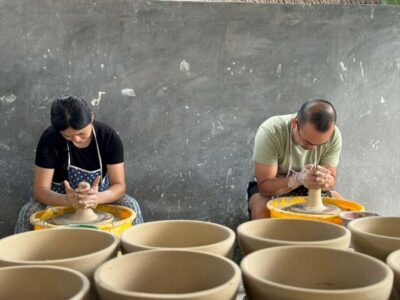 ★ 5.0Outskirts of Ubud, Gianyar: Pottery ClassFrom $409 reviews
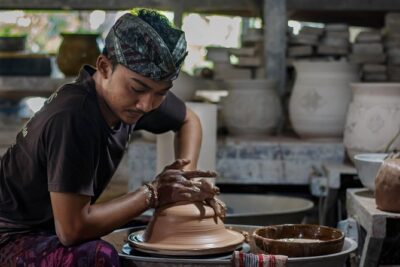 ★ 4.03 Hours Wheel Throwing Basic Ceramic ClassFrom $503 reviews
Browse the lists this tour appears in