
Reviewed · BALINESE COOKING CLASSES
Vegetarian Ubud Cooking Class Bali
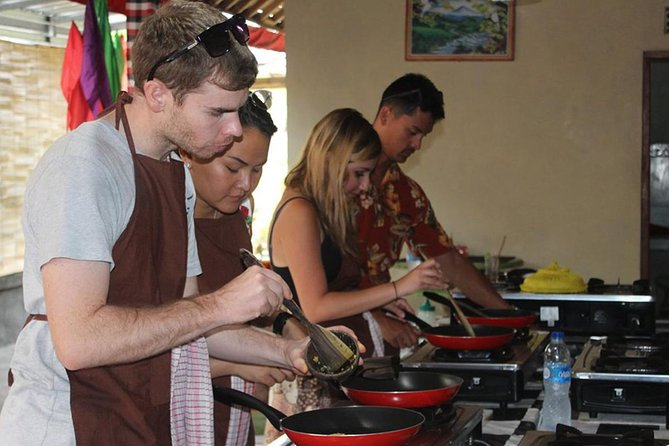
Balinese cooking feels like a shortcut to understanding the island. This vegetarian class is built around real steps—shopping for ingredients, then grinding spices in a traditional ulekan—so you’re not just copying recipes. I like that it’s designed specifically for vegetarians (tofu, tempe, and lots of fresh veg), and I like the hands-on pace with a small group (up to 15).
The main thing to consider is the schedule around pickup. If you’re relying on hotel 2-way transfers in central Ubud, plan to confirm your timing closely so you’re not waiting around at the start.
In This Review
- Key highlights at a glance
- Vegetarian Balinese cooking in Ubud: why this format works
- Pickup and meeting point: how to not lose time on arrival
- Market shopping and rice-field context: the lesson starts before the stove
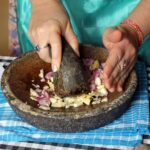
- The ulekan: the hands-on skill you’ll actually use later
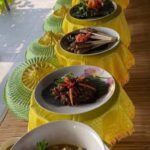
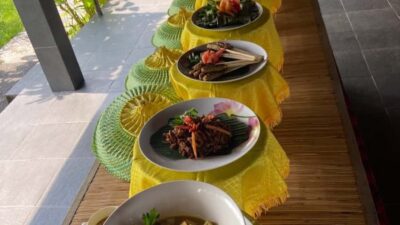
- Nine vegetarian dishes: what you’ll cook and why it’s worth it
- Meals included: lunch or dinner isn’t just a bonus
- Price and value: what $39 really buys you
- Who should book this cooking class (and who may not)
- Should you book Vegetarian Ubud Cooking Class Bali?
- FAQ
- How much does the Vegetarian Ubud Cooking Class Bali cost?
- How long is the cooking class?
- Does this experience offer morning and afternoon options?
- What is included in the class fee?
- Is hotel pickup included?
- Where is the meeting point if I don’t get pickup?
- What should I budget for that’s not included?
- Is it refundable if I cancel?
Key highlights at a glance
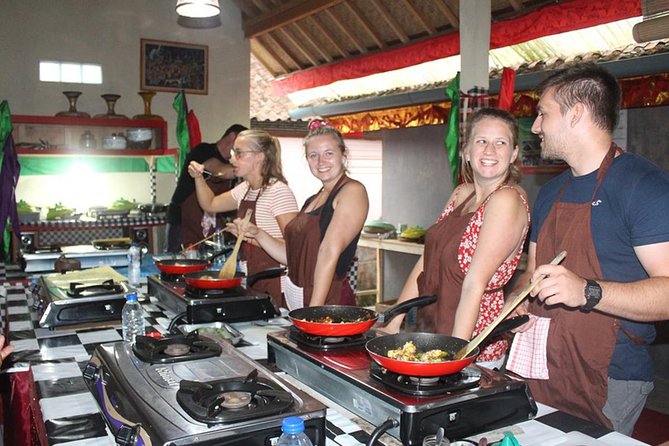
- Vegetarian-focused menu: you’ll cook using tofu, tempe, and fresh vegetables across nine separate dishes
- Market visit first: you shop for ingredients before you start cooking, so the meal makes more sense
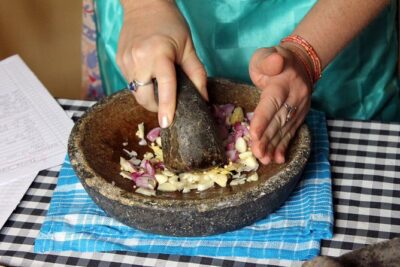
- Ulekan spice grinding: learn the process behind Balinese spice pastes in a traditional mortar
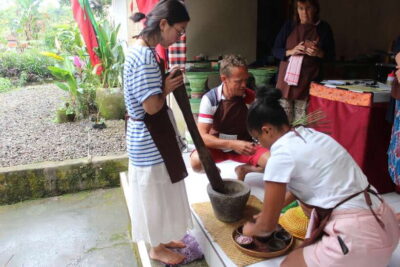
- Small group size: a maximum of 15 travelers keeps the class from feeling rushed
- Chef-led and English-friendly: a professional English-speaking local chef guides you through every step
Market basket to banana-leaf plate. More Ubud cook-alongs.
- Ubud Cooking Class Bali with Balinese Chef★ 5.0 · 1,609 reviews
- Ubud: Cooking Class with Transfers and Optional Market Visit★ 4.9 · 824 reviews
- PRIVATE Authentic Balinese Cooking Class in Ubud at Putu’s Home★ 5.0 · 644 reviews
- Balinese Ubud cooking school (9 Dish Cooking and Market Tour)★ 5.0 · 540 reviews
Vegetarian Balinese cooking in Ubud: why this format works
If you’ve ever tried to make Indonesian food at home, you know the hardest part isn’t heat or timing. It’s the flavor base—the spice paste that gives dishes their Balinese character. That’s why this class’s flow makes sense: you start with ingredients, then you build your dishes from the ground up.
What I like most is that it’s genuinely vegetarian. Many “Indonesian vegetarian” options quietly swap one item and call it done. Here, the dishes are structured for vegetables plus tofu and tempe, so you’re learning a Balinese cooking style rather than adapting a non-veg recipe later. You’ll also get a copy file of 9 recipes, which is what turns the class from a one-off meal into something you can repeat.
The price is also easier to justify when you look at what’s included: a professional chef, cooking equipment, hotel pickup/drop-off in central Ubud, a meal (lunch or dinner depending on session), and bottled water. For many visitors, this is one of the most practical “experiences” you can bring home.
Pickup and meeting point: how to not lose time on arrival
You’ve got two ways to join: hotel pickup or meeting at the location. The pickup is for hotels in central Ubud only, and it’s offered as 2-way transfers. That matters because Ubud traffic and timing can be unpredictable, especially if you’re juggling other plans.
If you’re not using pickup, the meeting point is clearly listed: Subak cooking class & Cooking class in ubud, Jl. Werkudara, Tampaksiring, Kec. Tampaksiring, Kabupaten Gianyar, Bali 80552, Indonesia.
A smart approach: before your session, confirm your pickup details and expected time window. One key reality of tour logistics is that the experience usually starts as soon as you’re collected. If the pickup timing is off, it can throw off your whole day—even for an otherwise great class.
Good news: the class is listed as near public transportation, and it uses a mobile ticket. That gives you options if something changes with your hotel pickup.
Market shopping and rice-field context: the lesson starts before the stove
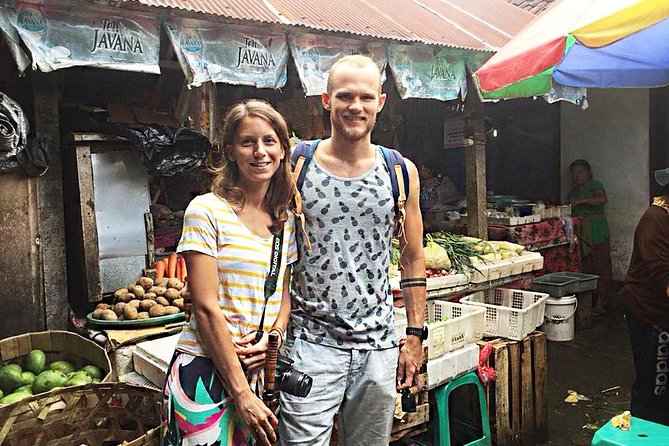
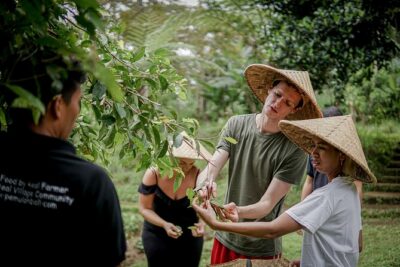
The class isn’t just “cook, taste, repeat.” It begins with ingredient shopping, and that step is more valuable than it sounds. When you pick up items at a traditional market, you learn what’s actually available and how Balinese vendors expect people to buy food—fresh, aromatic, and practical.
This is where many visitors feel the class gets real. The market visit connects what you’ll cook later to the ingredients you see and buy in the moment. And alongside that, you’ll also get a rice-field explanation, which helps you understand why Ubud food culture exists the way it does: farming, seasonality, and the rhythm of daily life.
If you like learning with your eyes open—watching how produce looks, smelling spices, asking quick questions—that market time will likely be one of your favorite parts. Even if you’re not a “market person,” it makes the cooking step easier because you’ll remember what you bought and why.
One practical note: personal expenses in the market aren’t included. So if you want snacks, extra ingredients, or souvenirs, bring a little cash. Keep your hands free early on if you can, because you’ll likely be handling items and moving around.
Other Ubud tours and experiences to line up next
The ulekan: the hands-on skill you’ll actually use later
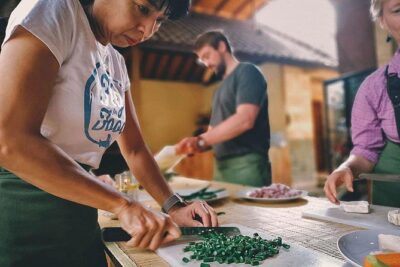
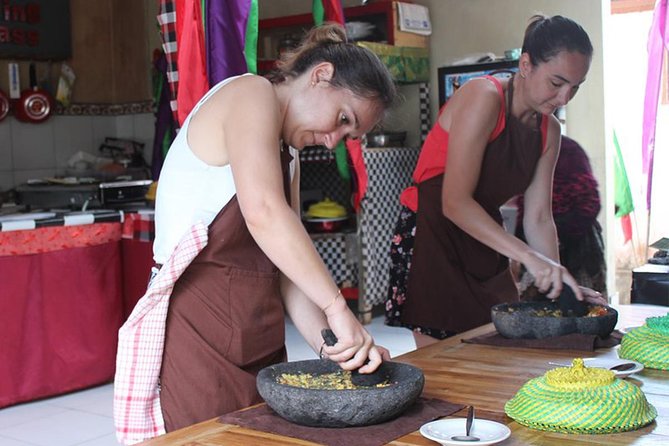
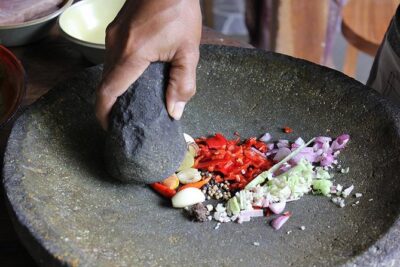
Balinese cooking has a signature: spice pastes. This class teaches you that process using a traditional ulekan, the mortar-and-pestle style tool you’ll see in many local kitchens. Grinding spices isn’t just a cool cultural prop—it’s part of how flavors develop. When you grind fresh spices and aromatics, you get a different result than using pre-ground powders.
In practical terms, this is the part of the class most likely to help you cook at home afterward. Why? Because it teaches technique, not just ingredients. You learn how pastes come together, how texture matters, and how the base flavors should smell and taste before they’re mixed into dishes.
And since this is a vegetarian class, you’ll also see how Balinese flavor building works without meat as the default. Tofu, tempe, and vegetables still absorb spice paste beautifully, especially once you understand the role of the base.
Expect an active session. If your idea of cooking is watching calmly and taking notes, you might find it more energetic than you planned. But if you’re happy to get your hands busy, this is the “why this class matters” moment.
Nine vegetarian dishes: what you’ll cook and why it’s worth it
You’ll prepare nine separate dishes. That’s a lot for a single 4-hour class, and it’s exactly why the structure matters. A good class doesn’t overload you with dishes that never get finished—it breaks things into teachable steps so you can taste results along the way.
What you know ahead of time:
- Vegetarian meals built around tofu and tempe
- Fresh vegetables used throughout
- You’ll learn Balinese vegetarian cooking with the guidance of a professional English-speaking local chef
- You’ll use included cooking equipment
- You’ll leave with recipes in a copy file format (9 recipes)
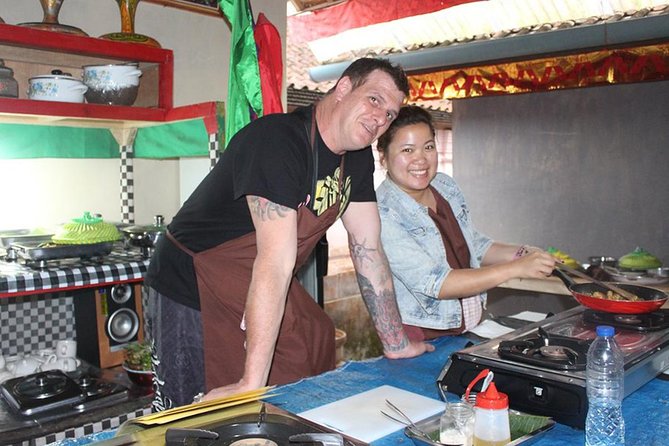
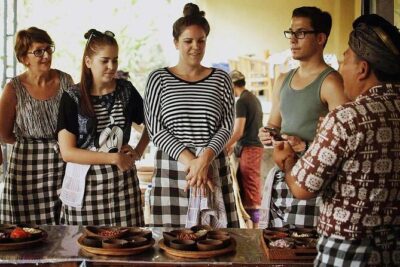
The small group size (maximum 15) also matters here. In bigger cooking classes, you can feel like you’re cooking in a crowd. With this size, you’re more likely to get help when you hit a snag—like getting the spice paste texture right or timing vegetables so they don’t overcook while other items finish.
What you can’t expect is a class that moves like a slow dinner party. This is hands-on and organized, so show up ready to focus for a few hours.
Meals included: lunch or dinner isn’t just a bonus
The experience includes water and a welcome drink, and then you get either lunch or dinner depending on your session:
- Morning session: lunch plus bottled water
- Afternoon session: dinner plus bottled water
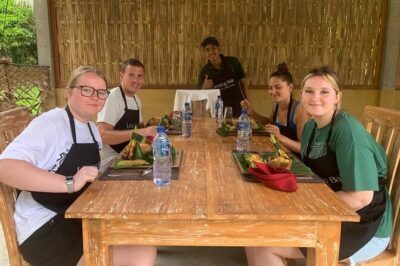
It’s a smart design. Eating what you just made closes the loop. You taste the dishes in context—so you can connect flavor decisions you made (or your chef demonstrated) to the outcome. That makes the included meal feel more like part of the lesson than an afterthought.
You’ll also have other beverages available for purchase. Since beverages aren’t included beyond the bottled water and welcome drink, plan a little extra if you want something beyond water.
If you’re budgeting, remember this: you’re not just paying for instruction. You’re paying for ingredients, equipment, chef time, and a full meal on top. That’s one reason the $39 price can work well—especially compared with experiences where you pay for a class but then still have to buy your own meal.
Price and value: what $39 really buys you
At $39 per person for about 4 hours, the value depends on two things: what you get included and how useful the cooking skills will be for you later.
In your case, the class includes:
- Pickup and drop-off transfers in central Ubud
- Welcome drink plus bottled water (and a meal: lunch or dinner)
- A professional English-speaking local chef
- Cooking equipment
- A recipe file covering 9 Balinese vegetarian recipes
To me, that combination is what turns the price into a practical deal. A cooking class that only gives you recipes can feel like reading a cookbook with extra steps. A class that includes market shopping plus spice technique plus tasting is far more likely to stick.
The main tradeoff is that the experience is not refundable and can’t be changed. So only book if your timing is firm. If you’re flexible with your Bali schedule, this is still a good price. If your plans might shift, you’ll want to plan carefully.
Who should book this cooking class (and who may not)
This class is a great match if:
- You want vegetarian Balinese cooking and not a last-minute swap
- You like structured, hands-on learning (market first, then cooking)
- You’ll actually use the skills later at home—especially spice paste technique
- You prefer small group instruction (up to 15)
You might consider another option if:
- You strongly depend on pickup and your accommodation is outside central Ubud
- You’re not comfortable being active for several hours (you will cook)
- You need a flexible booking due to the non-refundable policy
Also, if you’re coming as a vegetarian with a mixed group, you’ll likely appreciate that the class is built around vegetarian ingredients like tofu and tempe instead of forcing you to adjust a non-veg meal on the fly.
Should you book Vegetarian Ubud Cooking Class Bali?
If you’re looking for a cooking experience that gives you skills you can reuse—especially spice pastes and vegetarian Balinese technique—this is easy to recommend. The combination of market shopping, traditional ulekan grinding, nine dishes, and a chef-led format makes it more than a show-and-taste activity.
My one caution is logistics: since hotel pickup in central Ubud is part of the promise, confirm your pickup details ahead of time. Do that, and you’ll start smoothly and get the full value of the session.
If your dates are solid and you want an actually useful souvenir (a recipe file plus technique), this class is a smart buy.
FAQ
How much does the Vegetarian Ubud Cooking Class Bali cost?
It costs $39.00 per person.
How long is the cooking class?
The duration is approximately 4 hours.
Does this experience offer morning and afternoon options?
Yes. You can choose either a morning or an afternoon session.
What is included in the class fee?
It includes a welcome drink, bottled water, a professional English-speaking local chef, cooking equipment, a copy file of 9 recipes, and pickup and drop-off transport in central Ubud only. Lunch is included for the morning session, and dinner is included for the afternoon session.
Is hotel pickup included?
Pickup and drop-off are included for hotels in central Ubud. If you don’t use pickup, you’ll meet at the listed location in Tampaksiring.
Where is the meeting point if I don’t get pickup?
The meeting point is Subak cooking class & Cooking class in ubud, Jl. Werkudara, Tampaksiring, Kec. Tampaksiring, Kabupaten Gianyar, Bali 80552, Indonesia.
What should I budget for that’s not included?
Personal expenses in the local traditional market and other beverages are not included. Insurance is also not included.
Is it refundable if I cancel?
No. The experience is non-refundable and cannot be changed for any reason.
If you want, tell me your preferred session (morning or afternoon) and your hotel area in Ubud, and I’ll help you decide whether pickup is likely to be convenient for you.
More Cooking Classes in Ubud

More Ubud Tours We Rate





Cook Balinese in Ubud
Just added around Ubud
- Ubud: White Water Rafting with visit Ubud Monkey Forest
★ 5.0 · 3 reviews - Private Guided Bali Car Charter
★ 5.0 · 3 reviews - East Bali and Lempuyang Temple Tour
★ 5.0 · 3 reviews - Bali Downhill Cycling and White Water Rafting
★ 5.0 · 3 reviews - Cave Tubing Adventure in Ubud
★ 5.0 · 3 reviews
Balinese Cooking Classes, compared.
 ★ 5.0Ubud Cooking Class Bali with Balinese ChefFrom $351,609 reviews
 ★ 4.9Cooking Class with Transfers and Optional Market VisitFrom $21824 reviews
 ★ 5.0PRIVATE Authentic Balinese Cooking Class in Ubud at Putu’s HomeFrom $75644 reviews
 ★ 5.0Balinese Ubud cooking school (9 Dish Cooking and Market Tour)From $58540 reviews
 ★ 4.8Balinese Cooking Class and Market TourFrom $23531 reviews
 ★ 5.0Balinese Farm Cooking Class by Pemulan BaliFrom $39410 reviews
 ★ 5.0Balinese Authentic Cooking Class in UbudFrom $39239 reviews
 ★ 5.0PRIVATE Balinese Cooking Class in Ubud with Dewa with TransfersFrom $69213 reviews
Browse the lists this tour appears in