
Reviewed · BALINESE COOKING CLASSES
Ubud: Organic Farm Harvest, Bali Cooking Class by Pemulan
Your next meal starts in the garden. I love how Pemulan builds the day around an organic farm harvest and a local market tour, then guides you through Balinese cooking with an English-speaking chef.
You’ll handle ingredients from start to finish, not just stand around. Expect small-group energy, with a maximum of 14 people and shared cooking stations.
One thing to think about: the class is set up so each cooking station is shared by two people, so it can feel a bit less one-on-one than you might want.
In This Review
- Key things to look for in Pemulan Bali Farm Cooking School
- Ubud’s Market-and-Farm Setup That Makes the Cooking Click
- Meeting Across From Sens Hotel: How to Start Without Stress
- Local Market Tour: Seeing Ingredients Before You Touch the Stove
- Organic Farm Harvest: Picking Your Own Veggies Changes the Day
- The Hands-On Balinese Cooking Class: Six Courses, Real Techniques
- Regular Menu: What You’ll Cook (6 courses)
- Advanced Option: 8–10 courses
- Vegetarian Menu: Balinese Flavor Without the Meat Dishes
- Market-to-Kitchen Rhythm: How the Instructor Keeps It Manageable
- The Feast and the Take-Home Part: Eat What You Made
- Price and Value in Ubud: Why $29 Feels Fair for This Setup
- Who Should Book Pemulan, and Who Might Want a Different Class?
- Day-of Tips That Make the Difference
- Should You Book This Ubud Cooking Class?
- FAQ
- Where is the meeting point for Pemulan’s Bali cooking class?
- Does the experience include transportation?
- Do you visit local markets?
- Is there an organic farm visit or harvesting?
- How many people are in the group?
- Is the class taught in English?
- What dishes are included in the regular menu?
- Is there a vegetarian menu option?
- Do you get a recipe book?
- What should I bring, and is the activity wheelchair-friendly?
Key things to look for in Pemulan Bali Farm Cooking School
- Organic farm harvest where you pick some of the vegetables you’ll cook
- Market tour in the morning to see how Balinese shoppers choose fresh ingredients
- Six-course Balinese cooking menu you prepare hands-on, from savory to dessert
- Regular and vegetarian menus with clearly different dishes
- Max 14 people and shared stations (great for fun; less quiet for solo focus)
- Downloadable recipe PDF so you can recreate what you cooked later
Market basket to banana-leaf plate. More Ubud cook-alongs.
- Ubud Cooking Class Bali with Balinese Chef★ 5.0 · 1,609 reviews
- Ubud: Cooking Class with Transfers and Optional Market Visit★ 4.9 · 824 reviews
- PRIVATE Authentic Balinese Cooking Class in Ubud at Putu’s Home★ 5.0 · 644 reviews
- Balinese Ubud cooking school (9 Dish Cooking and Market Tour)★ 5.0 · 540 reviews
Ubud’s Market-and-Farm Setup That Makes the Cooking Click
This isn’t a cooking class where food shows up already cleaned and chopped. Pemulan sets you up with the story of the ingredients first, then you cook with that in mind. The day moves from a local market to the organic farm, and only then into the kitchen steps.
What I like is the flow. You learn what you’re about to cook, then you cook it, then you eat it. That order matters because Balinese flavors make more sense when you see the raw ingredients and understand what people actually look for in the morning.
You also get English instruction throughout, so you’re not guessing. And the overall tone is relaxed—people aren’t rushed out the door the moment they ask a question.
Meeting Across From Sens Hotel: How to Start Without Stress
The meeting point is easy to find once you know the landmark: across from Sens Hotel, under the big banyan tree. Transportation is included from there in an air-conditioned car, which is a nice relief if your Bali day already started with heat.
For what to bring, keep it practical:
- Comfortable shoes (you’ll be standing and moving)
- Sunglasses (useful in open-air parts of the day)
- A camera (there’s plenty to photograph at the market and farm)
The class is also described as not suitable for wheelchair users. And pets aren’t allowed (assistance dogs are allowed).
If you’re sensitive to scheduling snafus, take this seriously. One past booking issue involved a day with a Hindu holiday, and it affected communication and timing. It doesn’t mean it’s common, but it’s a good reason to arrive at the meeting point early and make sure you can be reached by phone or message.
Local Market Tour: Seeing Ingredients Before You Touch the Stove
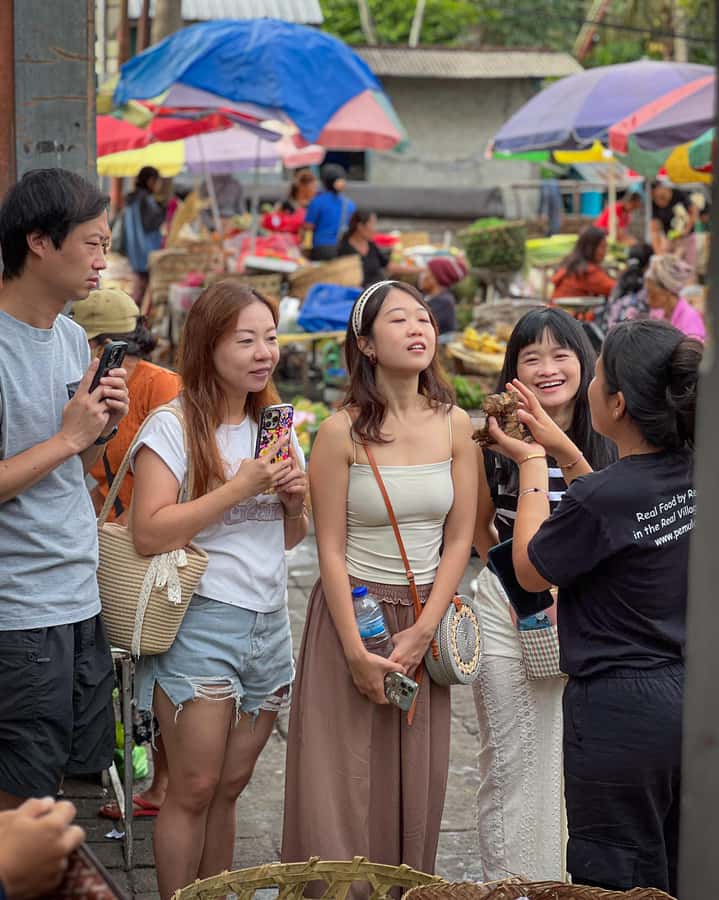
On the morning portion, you go out to local market spots as part of the experience. The market time is where you start connecting ingredients to meals, because it’s not just sightseeing—it’s ingredient shopping.
The experience includes tasting along the way. That small moment helps you understand flavors before cooking ever begins. You’ll also see variety in the produce and spices, and you get a clearer sense of how Balinese people choose what’s fresh for everyday meals.
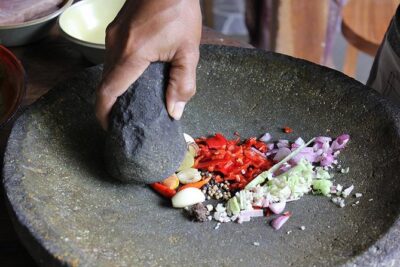
This part is especially valuable if you’ve only eaten Balinese food at restaurants. Once you’ve walked through the ingredients in a market setting, you’ll notice what’s used to build flavor—coconut, spices, chilies, tamarind-type tang, and the balancing act between salty, sweet, and sour.
Other Ubud tours and experiences to line up next
Organic Farm Harvest: Picking Your Own Veggies Changes the Day
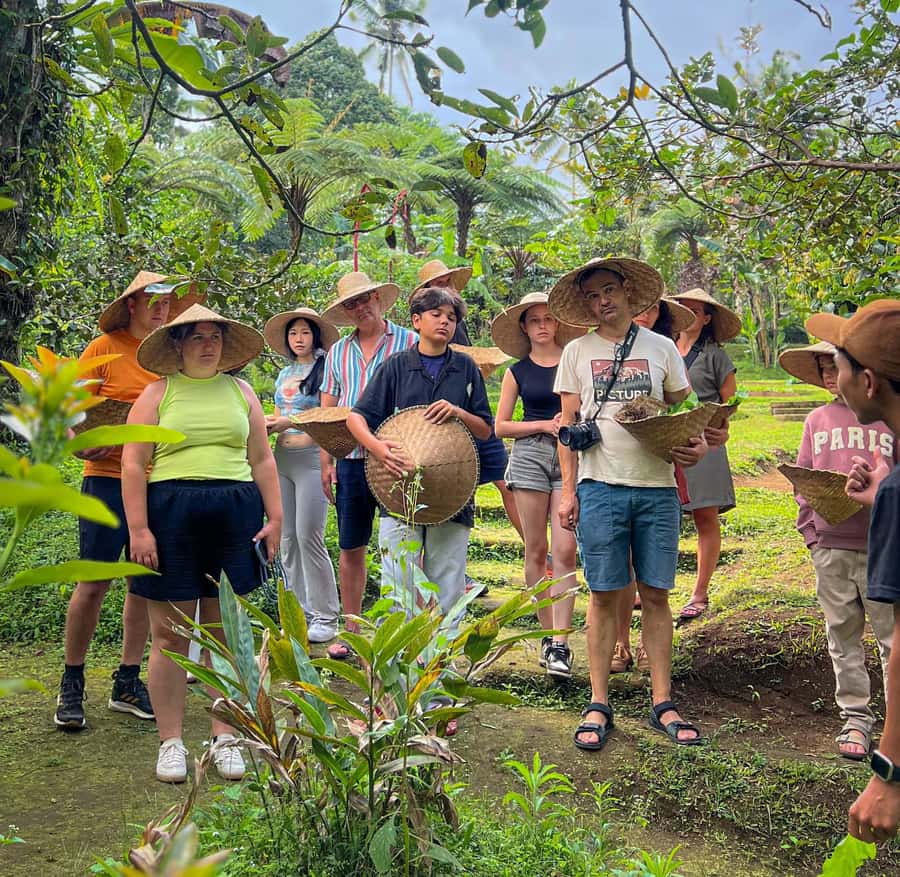
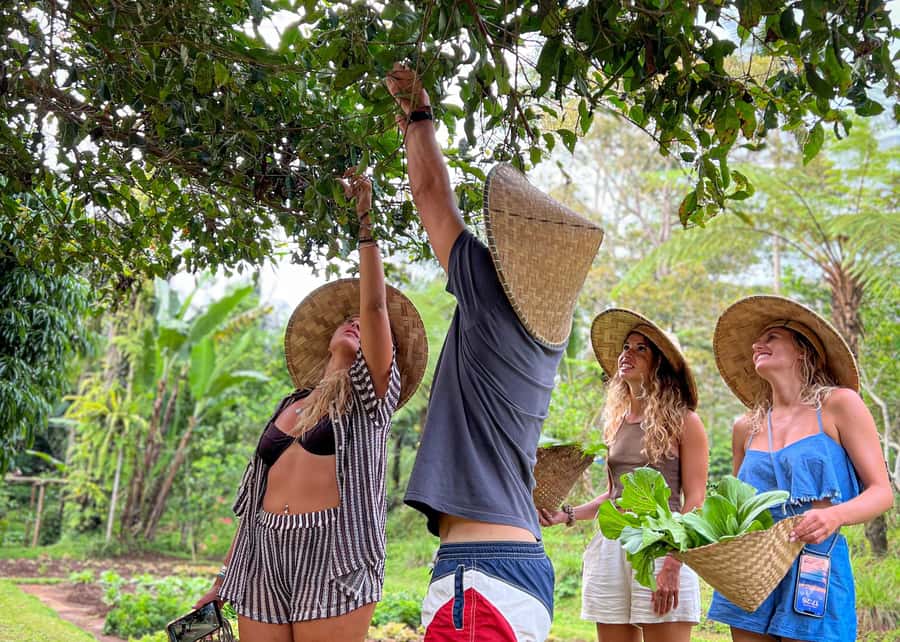
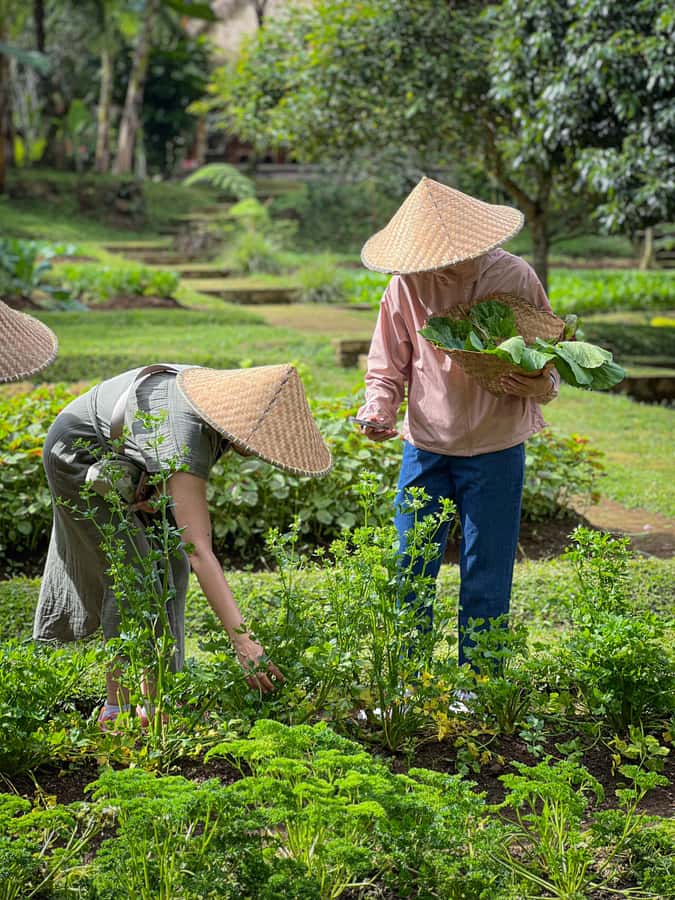
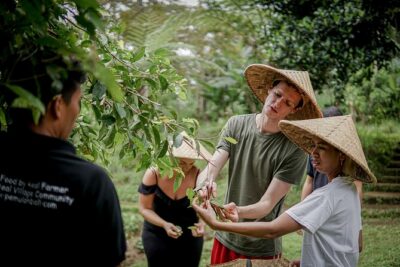
After the market, you head to the organic farm cooking school area for a farm tour and harvesting some ingredients. This is the moment that tends to stick in people’s memories because you’re not only learning cooking techniques—you’re physically collecting part of the food.
Even a partial harvest can make the kitchen steps feel more meaningful. You’ll recognize what you gathered when it hits the chopping board, and that recognition makes the process feel smoother and more doable.
If you like nature breaks during travel days, this is your “breather” section. It also breaks the typical Ubud pattern of studio-style classes by grounding the day in a working farm environment.
The Hands-On Balinese Cooking Class: Six Courses, Real Techniques
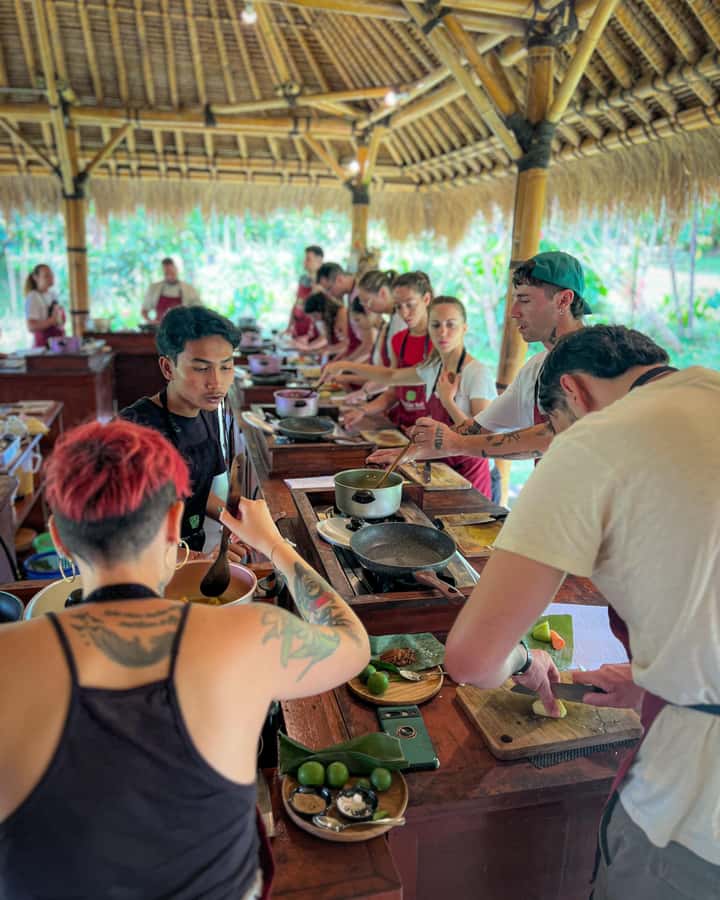
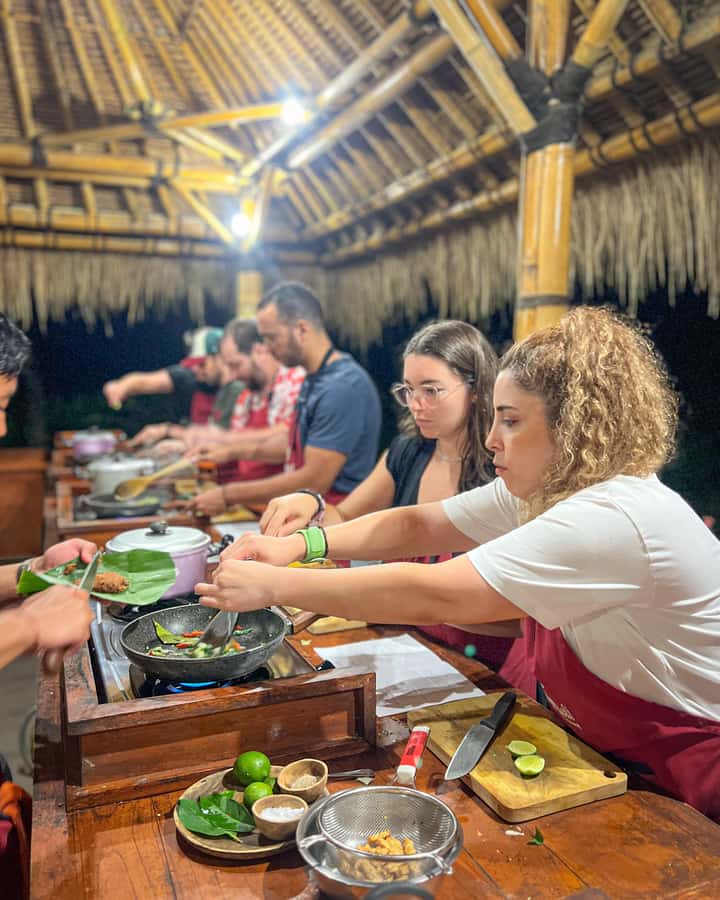
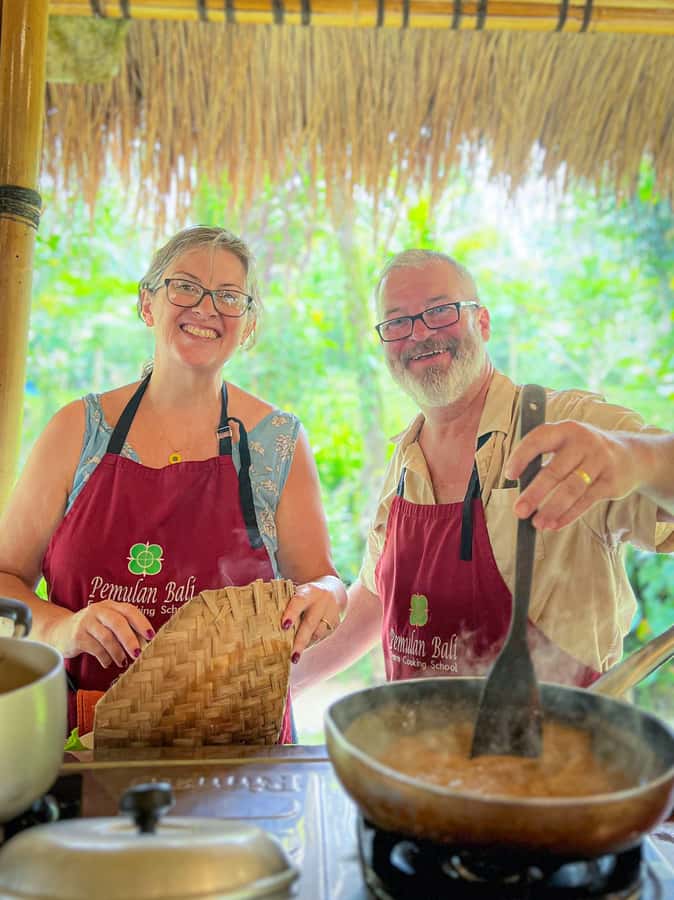
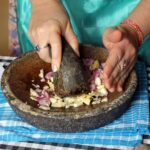
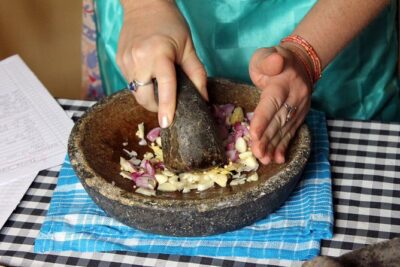
Now for the main event: the hands-on cooking class where you learn from start to finish. The class is designed for you to actively cook, and the instructor guides you step by step in English.
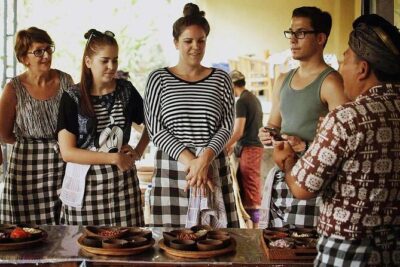
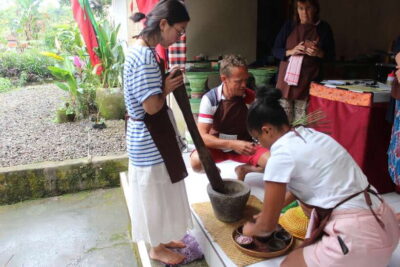
A key detail: each cooking station is shared between two people. That keeps the group social and interactive, but it also means you’ll take turns and coordinate closely. If you’re traveling with a friend, it can feel like double the fun. If you’re traveling solo, it’s still friendly, just a bit more “teamwork” than “solo chef.”
Regular Menu: What You’ll Cook (6 courses)
The regular six-course menu covers a mix of meat, seafood, veg, and dessert. You’ll work through:
- Balinese chicken curry
- Traditional pork kebabs
- Tuna with raw sauce
- Mixed green salad with coconut and spice
- Sweet and sour tempe
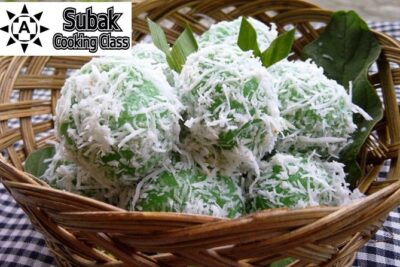
- Crispy banana fritters / black rice pudding for dessert
What makes this menu satisfying is the variety of cooking styles. You get curry-building flavor work, grilled kebab technique, a lighter salad with coconut and spice, and a tempe dish that shows how vegetarian ingredients can still deliver strong Balinese punch. Ending with banana fritters or black rice pudding makes the sweet part feel less like an afterthought.
Advanced Option: 8–10 courses
If you’re a serious food person and want more practice, there’s an advanced class option described as 8–10 courses at Bali Farm Cooking. The extra courses are for people who want to go deeper into Balinese cooking beyond the standard set.
You’ll like this if you already cook at home and want more technique, more dishes, and a longer session where you can really repeat steps until they feel natural.
Vegetarian Menu: Balinese Flavor Without the Meat Dishes
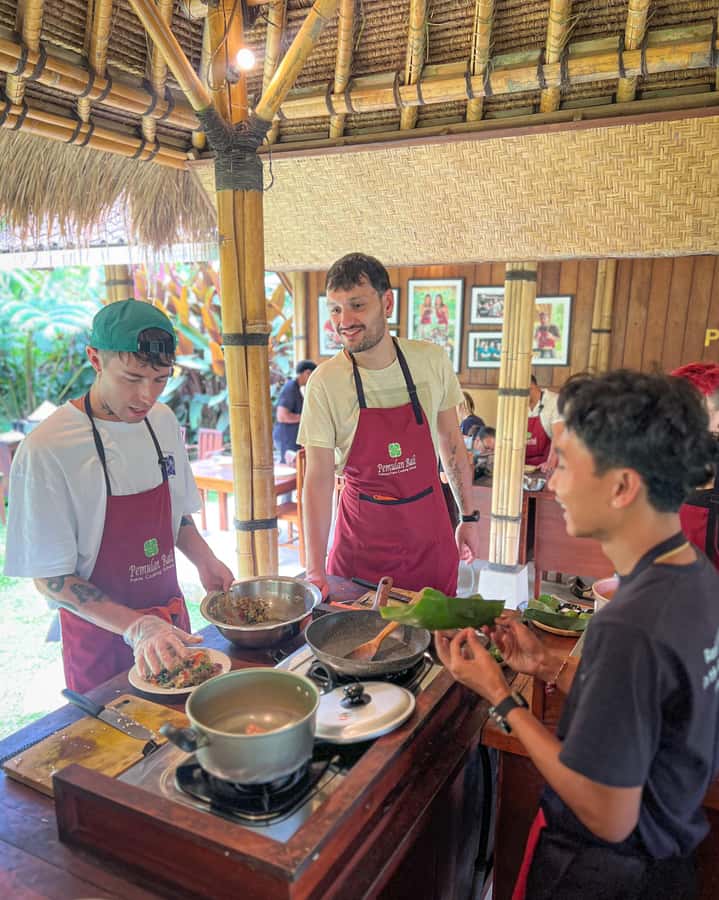
If you prefer vegetarian food, there’s a dedicated six-course vegetarian menu. You’re not forced into a simplified version. Instead, the course list focuses on plant-based Balinese comfort food and spice-forward dishes:
- Tempe curry
- Steamed vegetables with peanut sauce
- Fried corn with Balinese spices
- Plus dessert: banana fritters / black rice pudding
This is the kind of vegetarian menu that feels intentional. Tempe shows up again and again in Balinese cooking styles, and it’s a great way to learn how balancing spice and texture works when you’re not relying on meat.
If you’re bringing a vegetarian friend or you’re eating plant-forward on the trip, this option is a strong fit because you’ll still leave with a full set of recipes to cook at home.
Market-to-Kitchen Rhythm: How the Instructor Keeps It Manageable
The chef/instructor is described as warm and funny, with excellent English and lots of patience while walking you through each step. That matters more than you might think, especially with dishes that have multiple flavor elements.
Balinese cooking often feels layered—curry bases, spice mixes, and the way sweet and sour get balanced. When someone explains it clearly and keeps moving at a good pace, it turns a scary-sounding menu into something you can actually reproduce later.
And because it’s hands-on, you’ll be doing the work. That’s the difference between watching cooking videos and learning cooking as a skill.
The Feast and the Take-Home Part: Eat What You Made
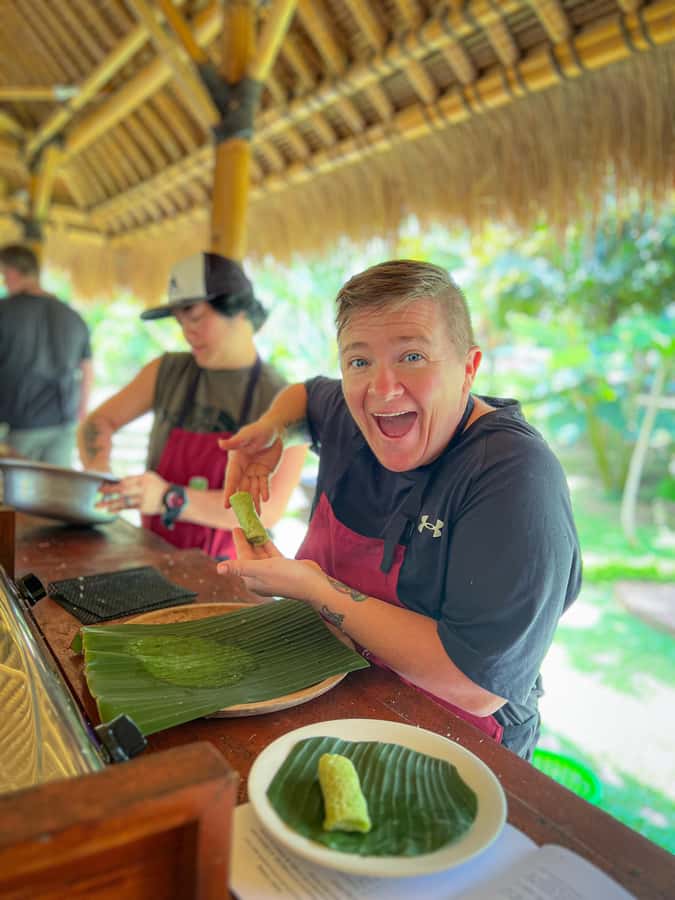
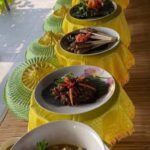
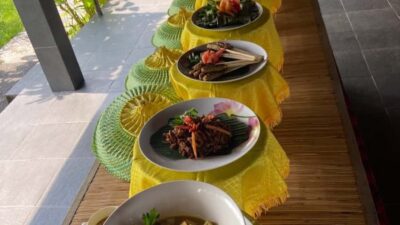
After cooking, you sit down and feast on what you prepared. The meal is included, and it’s not a sad portion size either—it’s the point of the experience.
You’ll also get mineral water, coffee or tea during the class. Soft drinks and beer are available for purchase, so you can keep the day casual without turning it into a big drink budget.
Best part for home cooks: you receive a recipe book in downloadable PDF format. That’s useful because you can actually remember ingredient choices and steps once you’re back in your own kitchen.
Price and Value in Ubud: Why $29 Feels Fair for This Setup
At $29 per person, this is priced like an activity you’ll feel good about even after dinner later. The value comes from what’s bundled, not just the “class” label.
You get:
- Transportation in an air-conditioned car from the Ubud meeting point
- Morning local market tour
- Organic farm tour and harvesting some ingredients
- Hands-on cooking class
- The meal you cook
- Mineral water, plus coffee or tea during the class
- Downloadable recipe PDF
Soft drinks and beer are available for purchase, but you don’t have to add that to get the full experience.
In places like Ubud, cooking classes can range from quick show-and-tell to proper full-food learning. Pemulan’s mix of market + farm + cooking + eating is closer to the “proper learning” end of the spectrum, especially since the group is capped at 14 and the station setup keeps you participating.
Who Should Book Pemulan, and Who Might Want a Different Class?
This one is a great match if you want:
- A hands-on Balinese cooking experience rather than passive watching
- A full menu experience (regular or vegetarian) with curry, spice, and dessert
- A day that connects food to ingredients through market + organic harvest
It’s also good for travelers who like a small-group setting and don’t mind sharing a station with someone else.
Skip it if:
- You use a wheelchair (it’s not suitable for wheelchair users)
- You hate working close with a partner at the cooking station
- You need a super quiet, private cooking setup
And if you’re traveling with dietary needs, note that only the vegetarian menu is specifically listed. Anything beyond that isn’t stated, so you may want to think carefully if you have strict allergies.
Day-of Tips That Make the Difference
A few small moves can help you get the best experience:
- Wear comfortable shoes since you’ll be on your feet.
- Bring sunglasses for the market and farm light.
- Use your phone camera for ingredient photos. The recipe PDF helps, but visuals speed up memory.
- Plan to arrive a little early at the meeting point under the banyan tree.
- If you’re traveling during major Hindu holidays, have a backup way to confirm timing. A past booking problem included a holiday date and communication difficulty when someone couldn’t reach the organizer.
None of this is meant to scare you. It’s just smart travel.
Also, since the class is in English, you’ll get the most out of it if you’re open to asking questions while you cook. The chef’s explanations are a big part of the charm.
Should You Book This Ubud Cooking Class?
If you’re looking for a Balinese cooking class that feels grounded—market ingredients, farm harvest, then real kitchen skills—Pemulan is a very easy yes. The star here is the whole package: organic farm harvest, a morning market tour, and a step-by-step cook session where you actually finish the meal you started.
I’d book it if you want a classic Ubud food day without feeling like a theme park. You get a structured menu, a friendly English instructor, and a recipe PDF you can use later.
If you dislike shared stations, need wheelchair access, or want maximum one-on-one coaching, you might want to compare options. Otherwise, for the price and the ingredient-to-plate structure, it’s a strong pick.
FAQ
Where is the meeting point for Pemulan’s Bali cooking class?
The meeting point is across from Sens Hotel, under the big banyan tree in Ubud.
Does the experience include transportation?
Yes. Transportation in an air-conditioned car is included from the Ubud meeting point.
Do you visit local markets?
Yes, there is a local market tour included, and it is part of the morning class.
Is there an organic farm visit or harvesting?
Yes. You’ll tour the organic farm and harvest some ingredients.
How many people are in the group?
The experience is a small group with a maximum of 14 people, and each cooking station is shared between 2 people.
Is the class taught in English?
Yes. The instructor teaches in English.
What dishes are included in the regular menu?
The regular 6-course menu includes Balinese chicken curry, traditional pork kebabs, tuna with raw sauce, mixed green salad with coconut and spice, sweet and sour tempe, and dessert (crispy banana fritters or black rice pudding).
Is there a vegetarian menu option?
Yes. The vegetarian 6-course menu includes tempe curry, steamed vegetables with peanut sauce, fried corn with Balinese spices, and dessert (banana fritters or black rice pudding).
Do you get a recipe book?
Yes. You’ll receive a downloadable PDF recipe book.
What should I bring, and is the activity wheelchair-friendly?
Bring comfortable shoes, sunglasses, and a camera. It is not suitable for wheelchair users, and pets are not allowed (assistance dogs are allowed).
More Cooking Classes in Ubud

More Ubud Tours We Rate





Cook Balinese in Ubud
Just added around Ubud
- Ubud: White Water Rafting with visit Ubud Monkey Forest
★ 5.0 · 3 reviews - Private Guided Bali Car Charter
★ 5.0 · 3 reviews - East Bali and Lempuyang Temple Tour
★ 5.0 · 3 reviews - Bali Downhill Cycling and White Water Rafting
★ 5.0 · 3 reviews - Cave Tubing Adventure in Ubud
★ 5.0 · 3 reviews
Balinese Cooking Classes, compared.
 ★ 5.0Ubud Cooking Class Bali with Balinese ChefFrom $351,609 reviews
 ★ 4.9Cooking Class with Transfers and Optional Market VisitFrom $21824 reviews
 ★ 5.0PRIVATE Authentic Balinese Cooking Class in Ubud at Putu’s HomeFrom $75644 reviews
 ★ 5.0Balinese Ubud cooking school (9 Dish Cooking and Market Tour)From $58540 reviews
 ★ 4.8Balinese Cooking Class and Market TourFrom $23531 reviews
 ★ 5.0Balinese Farm Cooking Class by Pemulan BaliFrom $39410 reviews
 ★ 5.0Balinese Authentic Cooking Class in UbudFrom $39239 reviews
 ★ 5.0PRIVATE Balinese Cooking Class in Ubud with Dewa with TransfersFrom $69213 reviews
Browse the lists this tour appears in