
Reviewed · BALINESE COOKING CLASSES
Small-Group Farm Tour & Balinese Cooking Class in Ubud with Kadek
A Balinese meal starts in the dirt. This small-group Ubud experience pairs a quick farm walk with a hands-on cooking lesson in a traditional outdoor kitchen. You’ll pick ingredients and spices you’ll later turn into lunch, then sit down to eat what you made.
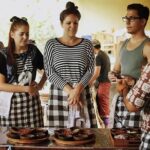
I like the people factor: you cook with a real instructor, with Kadek guiding the kitchen. I also love that it’s not just watching—straw hats, wet towels, and a practical rhythm make the day feel doable even if you’re new to Balinese food.
One thing to plan for: it’s outdoors and can get hot and muddy, so wear shoes you don’t mind getting stained and bring bug spray and sunscreen.
In This Review
- Key Takeaways Before You Go
- Ubud Pickup, Straw Hats, and a Simple 5-Hour Plan
- 30–45 Minutes on an Organic Farm: Picking Ingredients Like a Local
- Kitchen Time in a Traditional Outdoor Community Space
- What You’ll Cook: 2–3 Balinese Dishes (Examples Included)
- The Lunch Moment: Kolak Plus Balinese Coffee or Tea
- Small Group Size and Instructor Attention That Actually Helps
- Transfers and Location Logic: Getting There Without the Stress
- Price Value: Why $49 Feels Fair (Not Just a Cheap Taster)
- Vegetarian and Dietary Planning: Ask Early
- What to Pack for the Heat, Mud, and Working Farm
- Who Should Book This Balinese Farm Tour and Cooking Class
- Should You Book Kadek’s Ubud Farm Tour and Cooking Class?
- FAQ
- How long is the Small-Group Farm Tour and Balinese Cooking Class?
- Where does the tour meet and end?
- Is hotel pickup included in Ubud?
- What if I’m staying outside Ubud?
- Is this a private class?
- Do I need to be an experienced cook?
- What dishes will we learn to make?
- Is there a vegetarian option?
- What’s included with the meal and drinks?
- What should I bring for the outdoor farm walk?
- What happens if the weather is bad or I cancel?
Key Takeaways Before You Go
- Farm walk first: 30–45 minutes picking ingredients and spices for your meal
- Kadek leads the cooking: learn 2–3 authentic dishes in a traditional community kitchen
- You eat what you cook: lunch includes dessert plus Balinese coffee or lemongrass tea
- Take-home recipe book: you’ll leave with a small cookbook to recreate the dishes later
- Round-trip transfers in Ubud: hotel pickup/drop-off applies if you’re staying in the Ubud area
- Small group size: maximum of 10 people, with personalized instructor attention
Market basket to banana-leaf plate. More Ubud cook-alongs.
- Ubud Cooking Class Bali with Balinese Chef★ 5.0 · 1,609 reviews
- Ubud: Cooking Class with Transfers and Optional Market Visit★ 4.9 · 824 reviews
- PRIVATE Authentic Balinese Cooking Class in Ubud at Putu’s Home★ 5.0 · 644 reviews
- Balinese Ubud cooking school (9 Dish Cooking and Market Tour)★ 5.0 · 540 reviews
Ubud Pickup, Straw Hats, and a Simple 5-Hour Plan
This is built as a full half-day: it runs about 5 hours total, and it usually starts with pickup from your Ubud hotel. If you’re staying outside the Ubud pickup zone, you’ll likely start from the Maybank location on Jl. Raya Ubud No.115 in Petulu. Either way, the day ends back at the meeting point.
The first time you hear about it, it sounds like two separate activities—farm tour plus cooking class. In practice, they work together. You walk through the farm, harvest what you’re using, then cook those same flavors in a real community-style kitchen.
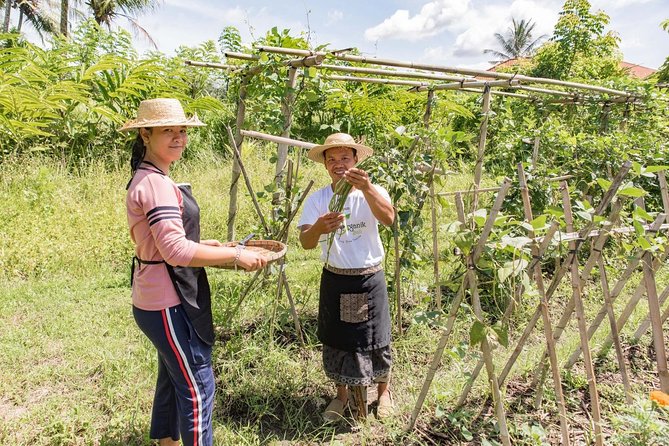
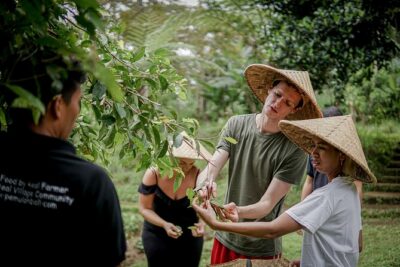
Before the farm portion begins, you’ll be given straw hats for the heat. That small detail matters. In Ubud sun, shade and head coverage help you focus on the experience instead of just surviving it.
30–45 Minutes on an Organic Farm: Picking Ingredients Like a Local
The farm tour is short on purpose: around 30–45 minutes of walking and ingredient hunting. Expect tall bushes, muddy ground, and a hands-on vibe. The goal is not to become a farmer for the day—it’s to understand where ingredients come from and learn what each one does in Balinese cooking.
You gather items you’ll likely use later, including things like beans and lemongrass. You may also notice spices and produce that feel very familiar in dish form but totally different in the field—tough roots, fragrant stems, and leafy greens that you never think to buy individually.
After the walk, you don’t just get dropped at the kitchen. You get a break: a refreshing drink and wet towels to wipe your face before you start cooking. That refresh step is a smart setup for what comes next, because you’re about to do a lot with your hands.
Kitchen Time in a Traditional Outdoor Community Space
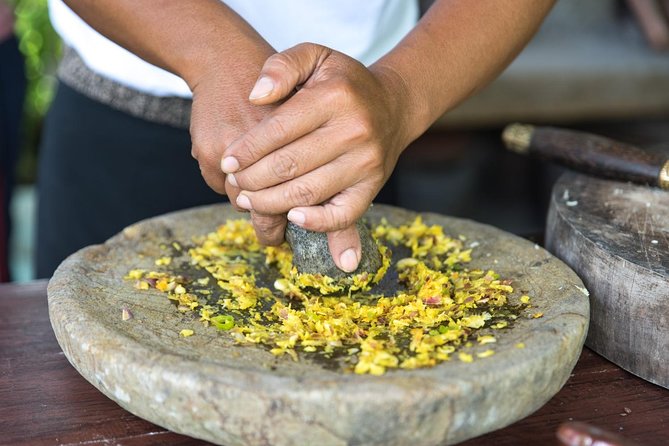
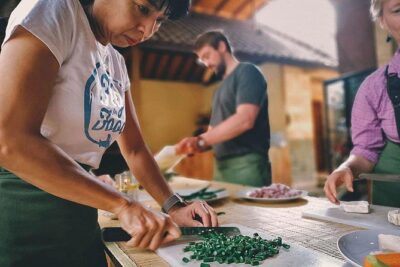
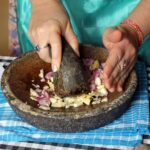
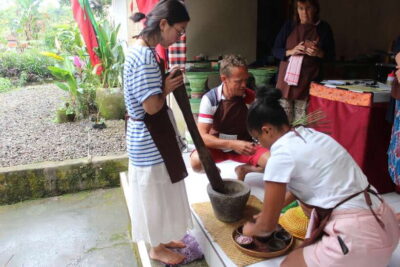
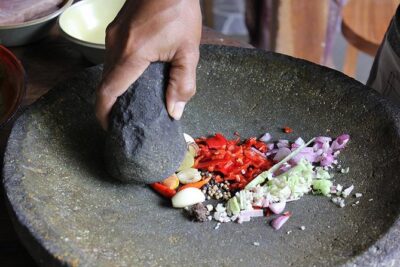
Your cooking class takes place in an outdoor, traditional Balinese style community kitchen. During the cooking portion (about 2 hours), you’ll learn how to make 2–3 dishes. The structure is beginner-friendly: you’re not expected to freestyle. You follow instruction, then cook in a way you can repeat later.
This is where the names matter. Kadek is the lead in the kitchen, and you’ll spend most of the cooking time with him as your anchor. On at least one recent day, the farm side was guided by someone named Apung, with Kadek running the cooking. Even if your day pairs different people, the division of roles is the same: field guidance first, then cooking leadership.
One cultural detail you should know: Kadek won’t join you for the meal right away. He needs to offer the food to mother nature first, and the class doesn’t wait for that ritual to finish before you start eating. It’s part of how the kitchen approach connects to Balinese beliefs and local practice.
Other Ubud tours and experiences to line up next
What You’ll Cook: 2–3 Balinese Dishes (Examples Included)
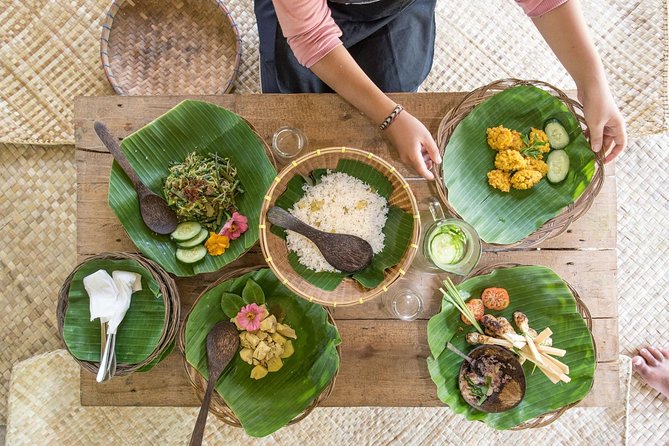
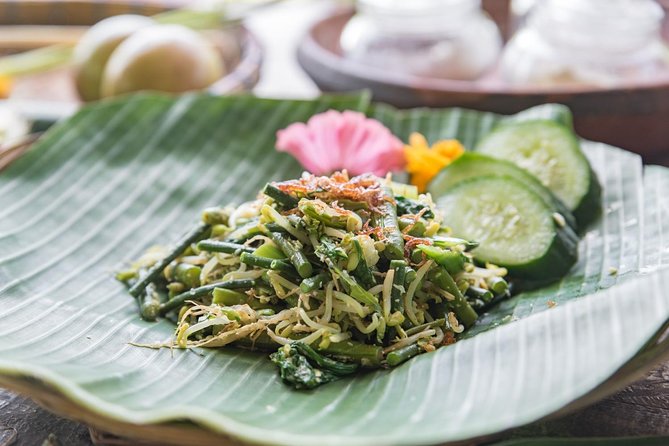
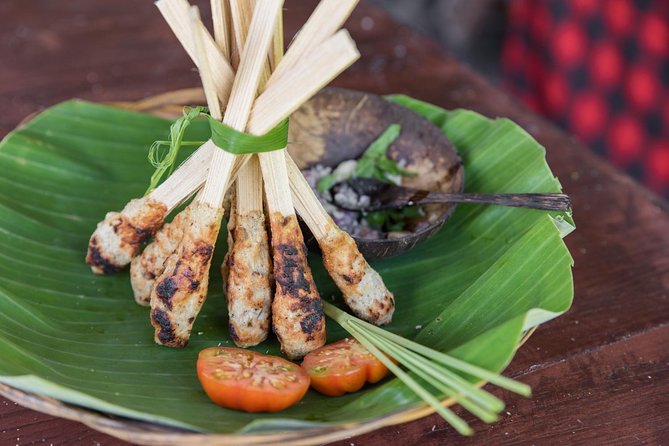
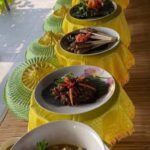
The exact menu can vary, but you’ll learn 2–3 authentic dishes from Balinese cuisine. Common examples include nasi sela, garang asem, tuna satay, and sayur urab.
Here’s what these dishes generally mean for your skill-building:
- Nasi sela (rice with sweet potato)
Comfort food with local ingredients. This teaches you how sweetness and rice work together instead of thinking of rice as bland filler.
- Garang asem (chicken with Balinese spices)
Spiced chicken with a tangy feel. You’ll practice flavor layering and cooking the sauce so it coats the chicken without turning oily or flat.
- Tuna satay (Balinese fish kebabs)
If you get tuna satay, you’re working with a grilled-kebab concept but using Balinese seasoning logic. It’s a great dish to practice because the payoff is immediate.
- Sayur urab (green vegetables with coconut and spices)
This one helps you understand Balinese balance: vegetables plus coconut plus spice. It’s not just about heat—it’s about texture and richness.
Even if your exact dishes differ, you’ll still learn the patterns that make Balinese food work: spice handling, how sauces should taste and behave, and how to build a plate that feels complete.
The Lunch Moment: Kolak Plus Balinese Coffee or Tea
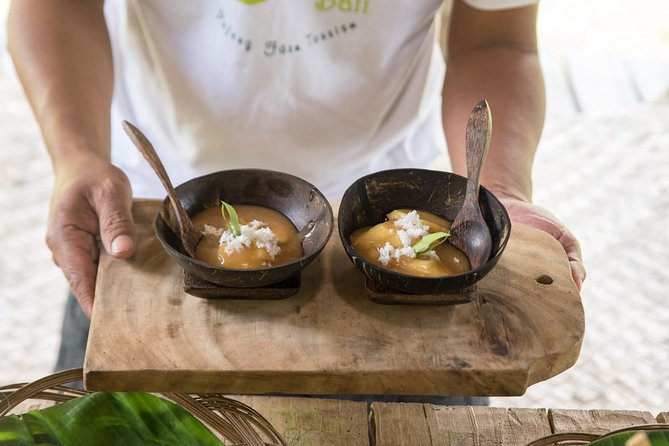
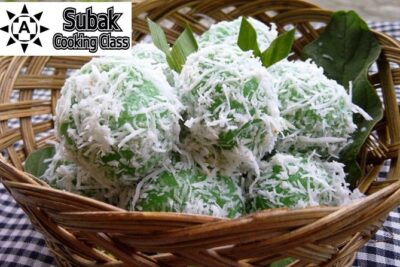
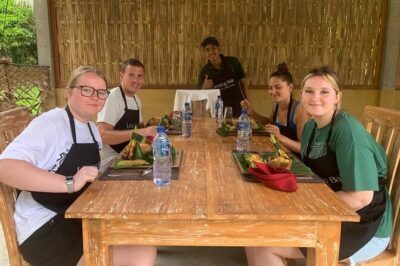
You’ll end with dessert and a warm drink. The dessert is kolak (banana dessert), and you’ll have Balinese coffee or lemongrass tea to close out the meal.
This is more than a nice finish. It ties the day into a full food experience: not just savory cooking, but sweet, fragrant flavors too. In a class like this, dessert is usually where you see how well the cooking instruction translates into real taste.
Also note the drinks. Local alcohol (1–2 glasses) is included. If you don’t drink, you can still enjoy the meal, and you can choose not to take the alcohol portion—just plan for the fact that it’s part of the included offering.
Small Group Size and Instructor Attention That Actually Helps
This is a maximum 10 travelers setup. That small ceiling matters because it keeps the class manageable. You’re not stuck waiting while someone else takes the spotlight, and you have a better chance to ask a question if you’re unsure about a step.
The experience is described as a private class with personalized attention. In plain terms, you should expect your instructor to have time for you even in a small group. That personal attention is part of why the food feels so on-point at the end: you’re cooking with feedback, not just following a worksheet.
If you like lessons that don’t feel rushed, this group size is a sweet spot. Big classes can be fun, but you often lose time to crowd movement. Here, the pace is tuned to cooking.
Transfers and Location Logic: Getting There Without the Stress
Getting to Ubud often means juggling taxis and traffic. This experience helps by offering round-trip transfers from Ubud hotels. The included pickup is specifically tied to Ubud lodging areas, and it references common streets such as Hanoman Street, Monkey Forest Street, and Jl. Raya Ubud.
If you stay outside those pickup areas, you may start at the Maybank location in Petulu (Jl. Raya Ubud No.115). It’s also noted that it’s near public transportation, which is helpful if you’re moving around Ubud on your own.
The practical takeaway: confirm where you’re meeting based on your hotel area. Then you can relax and focus on the farm and kitchen.
Price Value: Why $49 Feels Fair (Not Just a Cheap Taster)
At $49 per person, this isn’t a token tasting. You’re paying for several real components bundled together:
- a farm walk with ingredient gathering
- a two-hour cooking class with instruction
- a home-style meal you eat together
- a recipe book to take home
- round-trip transfers (for hotels in the Ubud zone)
- a couple of glasses of local alcohol included
- taxes and handling charges are included
The value isn’t only the price. It’s what you leave with. The recipe book matters because it turns lunch into something you can recreate instead of eating a great meal and moving on.
If you’re comparing this to cooking classes that charge more but don’t include the farm side, or that don’t include transfers, this often lands in a solid spot for value. Especially if you’re staying in Ubud and don’t want transportation logistics to eat your day.
Vegetarian and Dietary Planning: Ask Early
A vegetarian option is available, but you need to request it during booking. If you have allergies or specific dietary restrictions, you should also advise the provider at the time of booking.
That matters for two reasons. First, Balinese cooking relies heavily on spices and mixed ingredients, and it’s better when the team plans ahead. Second, you’re cooking your own meal, so the class needs to adjust ingredient choices before you start the farm walk and kitchen steps.
If you’re vegetarian, I’d treat this as a great chance to learn the structure of Balinese flavor without missing the satisfaction of eating what you cooked.
What to Pack for the Heat, Mud, and Working Farm
Because you’re going outdoors on a real working farm, dress for movement and cleanup. You’ll walk in muddy land and cook in warm conditions, so plan accordingly.
Bring:
- bug spray
- sunscreen
- a hand towel or tissues
- shoes you don’t mind getting a bit dirty
You’ll get straw hats during the farm walk, and you’ll get wet towels afterward, but you still want your own basics. Think of it as a farm visit plus a cooking class, not a museum tour where you can wear your nicest outfit and relax.
Who Should Book This Balinese Farm Tour and Cooking Class
This is a great fit if you want a hands-on day that doesn’t require culinary experience. You’ll leave with skills you can repeat—picking ingredients, cooking techniques, and a sense of how dishes fit together.
It also works well for:
- food lovers who want authentic Balinese flavors
- first-timers who want a clear, guided lesson
- people who like cultural practice tied to real daily life (like the offering ritual connection)
If you hate heat, mud, or outdoor walking, you may find the farm segment less comfortable. But if you show up prepared, it’s exactly the kind of day that feels meaningful.
Should You Book Kadek’s Ubud Farm Tour and Cooking Class?
I’d book it if you want more than a restaurant meal. This gives you the full loop: harvest ingredients, cook them with instruction, then eat the results—and take home a recipe book so the flavors can follow you home.
Skip it if you’re very short on time, you can’t handle outdoor heat and uneven ground, or you need a fully indoor, climate-controlled experience.
For most people in Ubud who like food and hands-on culture, this one is a strong yes.
FAQ
How long is the Small-Group Farm Tour and Balinese Cooking Class?
It’s about 5 hours total, including the farm tour (around 30–45 minutes) and about 2 hours for the cooking class.
Where does the tour meet and end?
The activity starts at Maybank KCP Gianyar, Jl. Raya Ubud No.115, Petulu, Kecamatan Ubud, Kabupaten Gianyar, Bali 80571, Indonesia, and it ends back at the same meeting point.
Is hotel pickup included in Ubud?
Yes, hotel pickup and drop-off are included only if you’re staying in Ubud.
What if I’m staying outside Ubud?
If you’re staying outside the Ubud pickup area, pickup may not be included, and you may need to start from the Maybank meeting point on Jl. Raya Ubud No.115.
Is this a private class?
It’s described as a private class with personalized instructor attention, and it also operates as a small group with a maximum of 10 travelers.
Do I need to be an experienced cook?
No. The class is designed to teach easy-to-make Balinese dishes, and you’ll learn 2–3 dishes during the cooking lesson.
What dishes will we learn to make?
You may learn dishes such as nasi sela, garang asem, tuna satay, and sayur urab. The class typically includes 2–3 dishes.
Is there a vegetarian option?
Yes, a vegetarian option is available. You should request it at the time of booking.
What’s included with the meal and drinks?
The meal includes the dishes you cook plus kolak (banana dessert). You’ll also have Balinese coffee or lemongrass tea, and local alcohol (1–2 glasses) is included.
What should I bring for the outdoor farm walk?
Wear clothes and shoes appropriate for walking and cooking on a working farm. It can get hot and muddy, so bring bug spray, sunscreen, and a hand towel or tissues. Straw hats and wet towels are provided during the experience.
What happens if the weather is bad or I cancel?
The experience requires good weather. If it’s canceled due to poor weather, you’ll be offered a different date or a full refund. You can also cancel for a full refund up to 24 hours in advance.
More to See and Do in Ubud





More Ubud Tours We Rate

Cook Balinese in Ubud
Just added around Ubud
- Ubud: White Water Rafting with visit Ubud Monkey Forest
★ 5.0 · 3 reviews - Private Guided Bali Car Charter
★ 5.0 · 3 reviews - East Bali and Lempuyang Temple Tour
★ 5.0 · 3 reviews - Bali Downhill Cycling and White Water Rafting
★ 5.0 · 3 reviews - Cave Tubing Adventure in Ubud
★ 5.0 · 3 reviews
Balinese Cooking Classes, compared.
 ★ 5.0Ubud Cooking Class Bali with Balinese ChefFrom $351,609 reviews
 ★ 4.9Cooking Class with Transfers and Optional Market VisitFrom $21824 reviews
 ★ 5.0PRIVATE Authentic Balinese Cooking Class in Ubud at Putu’s HomeFrom $75644 reviews
 ★ 5.0Balinese Ubud cooking school (9 Dish Cooking and Market Tour)From $58540 reviews
 ★ 4.8Balinese Cooking Class and Market TourFrom $23531 reviews
 ★ 5.0Balinese Farm Cooking Class by Pemulan BaliFrom $39410 reviews
 ★ 5.0Balinese Authentic Cooking Class in UbudFrom $39239 reviews
 ★ 5.0PRIVATE Balinese Cooking Class in Ubud with Dewa with TransfersFrom $69213 reviews
Browse the lists this tour appears in