
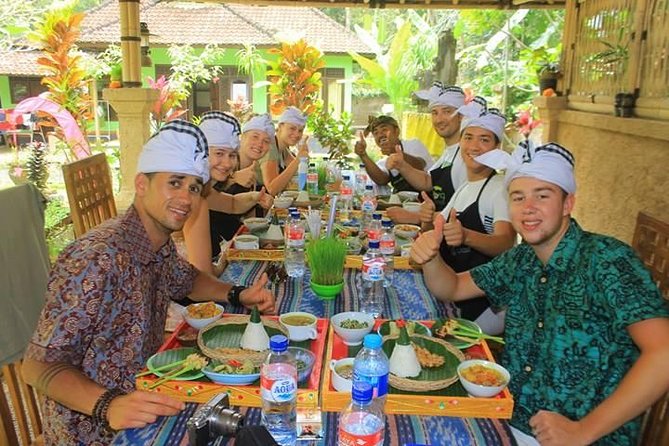
Reviewed · BALINESE COOKING CLASSES
Exclusive Authentic Balinese Cooking Class at Family home
One stop and you get a full meal story. This cooking class near Ubud pairs a real Payangan market visit with hands-on cooking in a family compound kitchen, so you see ingredients before you touch the knife. I love that it’s run like a classroom—your instructor guides, but you do the work.
Two things I particularly like: you’ll learn Balinese spice prep using both wooden chopping and stone mortar grinding, and the menu is vegetarian-friendly if you ask ahead. You also leave with a recipe book and a culinary workshop certificate, which is rare for classes that feel this practical.
One consideration: the schedule can be morning-market or night-market depending on the session, so check your chosen time and plan your day around a roughly 6-hour food stretch. Also, good weather matters because the experience requires it.
In This Review
- Key highlights at a glance
- Why This Ubud Cooking Class Starts at Payangan Market
- Inside a Balinese Compound House Kitchen (Open-Air, Hands-On)
- The Spice Prep Skills You Actually Use Back Home
- Your Menu: Vegetarian-Friendly Dishes and a Chayote Soup
- How Private (and Small) Really Changes the Class
- Worth the $75: What You’re Really Paying For
- Practical Tips for a Smooth 6-Hour Food Day
- Should You Book This Nipala Cooking Class by Kedongding?
- FAQ
- How long is the Balinese cooking class near Ubud?
- Is pickup and drop-off included?
- Is this a private class?
- How many people can join?
- Can I request a vegetarian menu?
- What dishes are included in the class menu?
- Is there an age minimum?
Key highlights at a glance
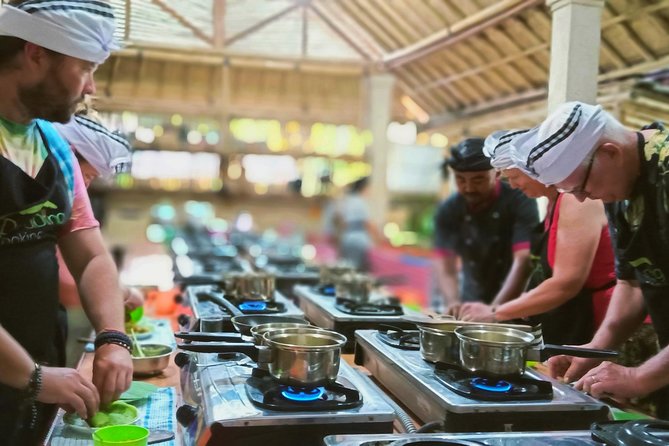
- Payangan market first so you understand ingredients before cooking
- Family compound setting with a traditional open kitchen setup
- Hands-on station for every person, including spice pastes and sauces
- Balinese spice prep techniques using wooden chopping blocks and stone mortars
- Vegetarian meal options available when requested in advance
- Lunch or dinner you make yourself plus coffee/tea and snacks
Market basket to banana-leaf plate. More Ubud cook-alongs.
- Ubud Cooking Class Bali with Balinese Chef★ 5.0 · 1,609 reviews
- Ubud: Cooking Class with Transfers and Optional Market Visit★ 4.9 · 824 reviews
- PRIVATE Authentic Balinese Cooking Class in Ubud at Putu’s Home★ 5.0 · 644 reviews
- Balinese Ubud cooking school (9 Dish Cooking and Market Tour)★ 5.0 · 540 reviews
Why This Ubud Cooking Class Starts at Payangan Market
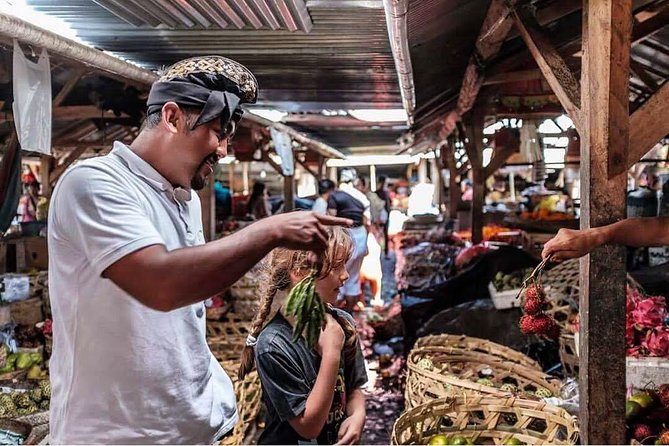
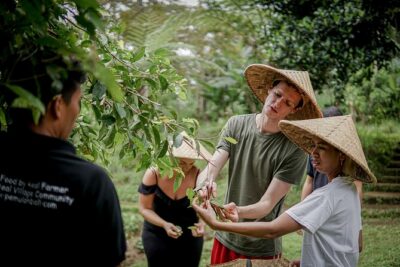
If you only do one “market to meal” experience in Bali, make it this style. Your day begins at Payangan Market, where you get a close look at what local people actually buy and cook with. It’s a fast way to get your bearings—spices, vegetables, and everyday staples all make more sense once you’ve seen them in context.
You’ll also get your first taste of how Balinese cooking thinks. The class includes testing spice ingredients, and that simple step matters: you learn that flavor here isn’t random. It’s built from specific ingredients, then shaped through prep techniques before heat ever touches the pan.
The market stop also gives you something sightseeing usually doesn’t: useful language for the ingredients you’ll be cooking later. You’ll be able to point at what you bought, even if you can’t pronounce everything—your instructor can help with names and what each ingredient does.
Keep in mind that the included market segment can run as a morning class market or an afternoon night market version. That affects timing and the vibe, so pick the session that best fits your day in Ubud.
Inside a Balinese Compound House Kitchen (Open-Air, Hands-On)
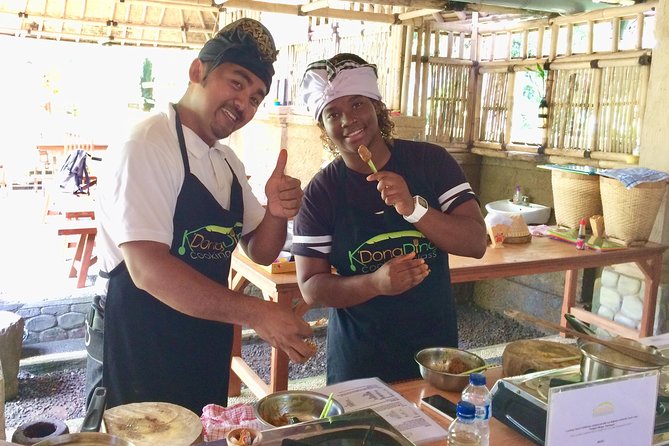
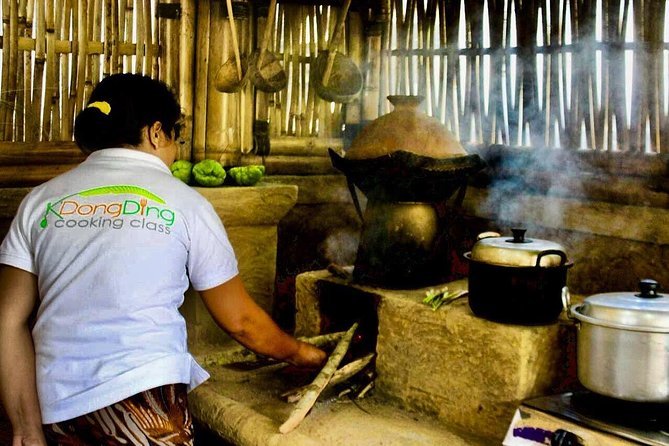
After the market, you head to the family’s Balinese compound house. This is where the experience feels less like a show and more like real life. You’ll see the compound setting and then move into the cooking area, which is described as a traditional open kitchen.
Before cooking starts, you’ll be welcomed with Bali coffee or tea and Balinese cake. It’s a small touch, but it sets the tone. You’re not just arriving hungry; you’re being included in a routine.
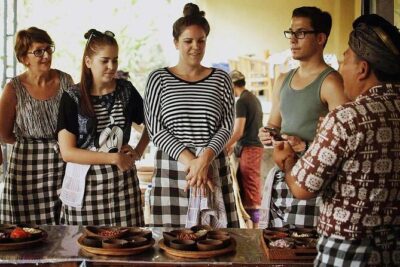
What makes the kitchen part work is the layout. Every participant has their own cooking station, plus kitchen tools and ingredients. That means you’re not waiting around for an instructor to do the “real cooking” while you watch. You’ll chop, process, and cook alongside the others, with guidance when you need it.
In several write-ups, the warmth of the family environment comes through clearly. People also note seeing grounds and life around the home—so if you’re the kind of person who likes learning how a family actually lives, this part will hit.
A practical note: the kitchen is open-air, so wear clothing that works with heat and humidity.
The Spice Prep Skills You Actually Use Back Home
This class doesn’t stop at teaching a recipe. It teaches methods, and that’s where you get lasting value.
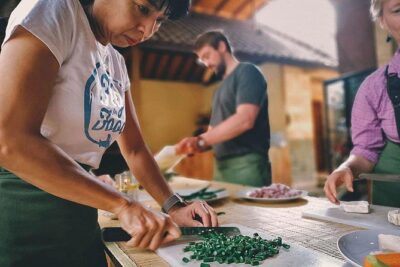
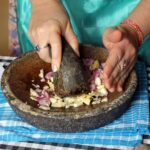
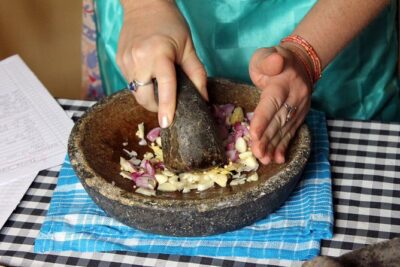
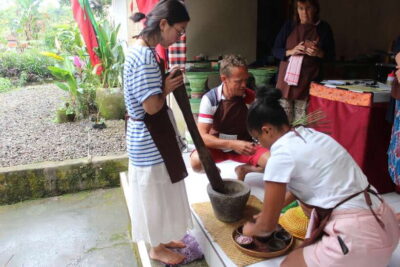
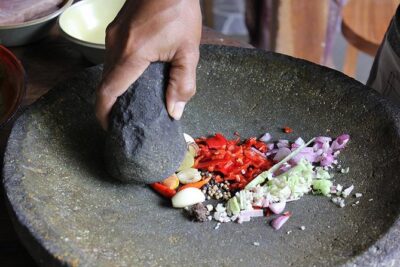
One of the most important parts is how Balinese spice is prepared. You’ll learn that there are two main ways of handling spice: chopped on a wooden chopping block and ground in a stone mortar. Those two textures lead to different cooking results, and once you’ve tried both, you’ll stop thinking of spice prep as a vague step.
You’ll also see why paste and sauce prep is central to Balinese dishes. The class description highlights paste/sauce preparation as one of the most interesting—and important—parts of cooking. Expect to do this work yourself: you’ll process the ingredients using traditional utensils and techniques while the instructor explains what you’re doing and why.
This is the kind of skill that helps you later at home. If you’ve ever cooked a dish and thought it tasted off, it’s often because the spice prep step was too convenient. Here, the prep is treated like part of the flavor engine.
If you have food questions—about ingredients, process, or what to change—this is the moment to ask. The class runs in small groups, so you’re not competing for attention.
Other Ubud tours and experiences to line up next
Your Menu: Vegetarian-Friendly Dishes and a Chayote Soup
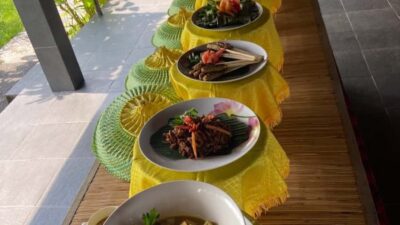
The meal is part of the fun and part of the education. You’ll prepare multiple dishes in a hands-on session, and you’ll get to eat what you make.
The class includes a vegetarian-applicable menu, and it’s specifically noted that you should let them know in advance so they can prepare vegetarian versions. The listed dishes include:
- JUKUT URAB (V)
- SATE LILIT AYAM (V/TOFU)
- CALON BE SIAP WITH CHAYOTE SOUP (V/TOFU)
- TAHU MESANTEN (V)
- DADAR GULUNG (V) ala kdongding
That chayote soup is one of the few items with extra detail provided. The description notes chayote may be low in calories and high in fiber, and it also mentions potential links to digestion and weight support. You don’t need to treat it like a nutrition lecture, but it’s a helpful reminder that local ingredients often get used for both flavor and how people feel day to day.
You’ll also experience how different dishes rely on different prep styles. Some items lean into spice pastes and sauces, while others call for specific mixing or shaping steps. The practical takeaway: by the time you finish, you’ll know what ingredients change texture and what prep steps change flavor.
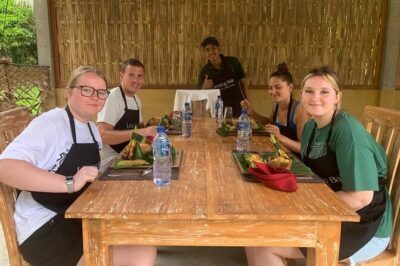
And yes—you eat it. The included lunch (morning class) or dinner (afternoon class) is explicitly described as food you make yourself, then savour afterward.
How Private (and Small) Really Changes the Class
This isn’t a massive bus tour with a quick stop to watch someone else cook. It’s a private class with a small maximum group size.
The limit is minimum 1 person, maximum 12 people per booking, and it’s described as private, meaning only your group participates. That size matters because the class is hands-on and technique-driven. When you’re chopping and processing at your own station, you need enough space and enough instructor attention to correct small mistakes.
There’s another small logistics point you’ll want to plan for: the vehicle is described as fitting up to 6 passengers, with extra cost for people 7–12 ($15 USD per person). So if you’re traveling as a group, the “12 max” is true for the class, but transport may split you into more than one car.
In the kitchen, small group size also means you can ask questions and get answers tied to what you’re doing right then—rather than generic explanations you’ll forget before your next step.
If you’re a solo traveler, this can feel especially satisfying because you get the market visit plus real participation. If you’re traveling with food-loving friends or family, it’s still comfortable because each person works at their own station.
Worth the $75: What You’re Really Paying For
At $75 for about 6 hours, the biggest value isn’t just the recipes. It’s what’s bundled in.
The included items cover:
- round-trip transport in the Ubud area (pickup and drop-off)
- market visit
- welcome coffee/tea with Balinese cake
- snacks during the class
- cooking tools, kitchen set tools, ingredients
- lunch or dinner (depending on morning or afternoon session)
- a recipes book
- a culinary workshop certificate
- an air-conditioned vehicle
When you compare this to a typical cooking class that only includes a demonstration or just a single dish, the “meal + multiple dishes + market + private small group” package is a stronger deal.
There’s also a less measurable value: you get a family-home context. Several class accounts emphasize that you don’t just cook—you learn the way people live around food. That’s why the experience often gets described as more than a cooking class.
One extra note: if you’re staying outside Ubud and Payangan, there are additional transfer charges depending on where you stay (Sanur area is listed separately, and other areas like Seminyak/Legian/Nusa Dua/Jimbaran have a different rate). If you’re optimizing value, pick your pickup area carefully or confirm the transfer cost early.
Practical Tips for a Smooth 6-Hour Food Day
Here’s how to make the day go smoothly and actually enjoy it, not just survive it.
Bring a bottle you can refill. It’s stated that you can refill your bottle water at the class for free, but you should bring your own bottle to reduce single-use plastic. That’s an easy win.
Wear comfortable clothes for hot, humid conditions. Since the kitchen is described as open-air, breathable fabric helps.
If you have allergies, don’t wing it. The class info asks you to contact them for special requests like allergic foodstuffs, and it specifically asks you to advise dietary requirements at the time of booking—especially for vegetarian prep.
Minimum age is 12, and children must be accompanied by an adult. If you’re traveling with teens, this can be a good hands-on day because the class is structured around doing, not just watching.
Weather matters. The experience requires good weather, and if it’s canceled due to poor weather, you’ll be offered a different date or a full refund. So if you’re scheduling on a day that looks stormy, keep your plan flexible.
Should You Book This Nipala Cooking Class by Kedongding?
Book it if you want real technique and real context, not just a meal that happens to taste good. This class is strongest when you care about how flavors are built—especially the two spice prep styles and the hands-on paste and sauce work.
Skip it (or at least think hard) if you’re expecting a low-effort, mostly seated experience. This is built around participation: chopping, processing, and cooking at your own station.
Also consider your group size and transport. The class can run up to 12 people, but the car fits up to 6, so the logistics cost can matter for larger groups.
If you fit the basics—food curiosity, comfort with heat, and a willingness to get hands dirty—then this is one of the best ways to take home something you can actually repeat. Your recipe book and certificate are nice, but the real souvenir is knowing how to recreate the prep steps that make Balinese dishes taste like themselves.
FAQ
How long is the Balinese cooking class near Ubud?
It runs for about 6 hours (approx.).
Is pickup and drop-off included?
Yes, free hotel pickup and drop-off in the Ubud area is included, with extra transfer charges listed for hotels outside Ubud (Sanur area and other areas have different rates).
Is this a private class?
Yes. It’s a private tour/activity, and only your group participates.
How many people can join?
The booking allows minimum 1 person and maximum 12 people.
Can I request a vegetarian menu?
Yes. Vegetarian options are available, but you need to let them know in advance so they can prepare the vegetarian versions.
What dishes are included in the class menu?
The included dishes listed are JUKUT URAB (V), SATE LILIT AYAM (V/TOFU), CALON BE SIAP WITH CHAYOTE SOUP (V/TOFU), TAHU MESANTEN (V), and DADAR GULUNG (V) ala kdongding.
Is there an age minimum?
Yes, the minimum age is 12, and children must be accompanied by an adult.
More Cooking Classes in Ubud
More Ubud Tours We Rate





Cook Balinese in Ubud
Just added around Ubud
- Ubud: White Water Rafting with visit Ubud Monkey Forest
★ 5.0 · 3 reviews - Private Guided Bali Car Charter
★ 5.0 · 3 reviews - East Bali and Lempuyang Temple Tour
★ 5.0 · 3 reviews - Bali Downhill Cycling and White Water Rafting
★ 5.0 · 3 reviews - Cave Tubing Adventure in Ubud
★ 5.0 · 3 reviews
Balinese Cooking Classes, compared.
 ★ 5.0Ubud Cooking Class Bali with Balinese ChefFrom $351,609 reviews
 ★ 4.9Cooking Class with Transfers and Optional Market VisitFrom $21824 reviews
 ★ 5.0PRIVATE Authentic Balinese Cooking Class in Ubud at Putu’s HomeFrom $75644 reviews
 ★ 5.0Balinese Ubud cooking school (9 Dish Cooking and Market Tour)From $58540 reviews
 ★ 4.8Balinese Cooking Class and Market TourFrom $23531 reviews
 ★ 5.0Balinese Farm Cooking Class by Pemulan BaliFrom $39410 reviews
 ★ 5.0Balinese Authentic Cooking Class in UbudFrom $39239 reviews
 ★ 5.0PRIVATE Balinese Cooking Class in Ubud with Dewa with TransfersFrom $69213 reviews
Browse the lists this tour appears in