
Reviewed · BALINESE COOKING CLASSES
Authentic Balinese Cooking Class in Ubud
Spices, pestles, and real Balinese life. This small-group cooking class in Ubud is built around doing, not watching, from grinding spice pastes to wrapping food in banana leaves, and it’s especially fun if you pick the morning market departure. I like how the day mixes practical cooking skills with cultural context, so your meal comes with stories you can actually remember.
The main drawback to plan for is that pickup is included only for the Ubud area—Sanur and farther neighborhoods add an extra car fee, and the experience depends on good weather. If you’re okay with a bit of scheduling and possible weather tweaks, this is one of those activities that earns its souvenir status fast.
In This Review
- Key Things That Make This Class Worth Your Time
- A Day in West Ubud: Cooking in Real Countryside Green
- Market Morning: How the Spice Shopping Changes Your Cooking
- A Typical Balinese Home Visit: Culture You Can Notice, Not Just Hear
- Farm Harvest to Table: Picking Ingredients Before the Lesson
- Lesung, Banana Leaves, and the Hands-On Techniques That Make It Click
- Lunch Included: You’re Not Just Learning, You’re Eating What You Made
- Price and Value: What $49 Really Covers (and What Costs Extra)
- Transfers, Group Size, and Timing: How to Plan Your Day
- Who Should Book This (and Who Might Skip It)
- Should You Book This Balinese Cooking Class in Ubud?
- FAQ
- What location is this cooking class in?
- How long is the experience?
- What’s the group size?
- Is pickup and drop-off included?
- Does the class include a market visit?
- Can I choose vegetarian food?
- What does the price include?
- What about a recipe after the class?
- Is this class affected by weather?
- What’s the cancellation window?
Key Things That Make This Class Worth Your Time
- A 5-hour format that packs cooking, culture, and lunch without dragging
- Small-group size (max 15) so you get help when you need it
- Morning market option where you can buy spices before you cook
- Farm harvest + spice pounding with lesung (mortar and pestle)
- Vegetarian or regular menu choices while you’re there, not after you book
Market basket to banana-leaf plate. More Ubud cook-alongs.
- Ubud Cooking Class Bali with Balinese Chef★ 5.0 · 1,609 reviews
- Ubud: Cooking Class with Transfers and Optional Market Visit★ 4.9 · 824 reviews
- PRIVATE Authentic Balinese Cooking Class in Ubud at Putu’s Home★ 5.0 · 644 reviews
- Balinese Ubud cooking school (9 Dish Cooking and Market Tour)★ 5.0 · 540 reviews
A Day in West Ubud: Cooking in Real Countryside Green
This class runs out of the west side of Ubud, where the setting feels like the edge of town rather than a studio. When you arrive, you’re in a greener, calmer environment that matches the cooking style: fresh ingredients, hands-on prep, and less “show” than many tourist cooking lessons.
You’ll ride in an air-conditioned vehicle with pickup and drop-off in your Ubud area address. That matters in Bali, because traffic can turn a simple plan into a stress test. Here, the tour keeps you on a clear loop so you’re not burning time bouncing around the island.
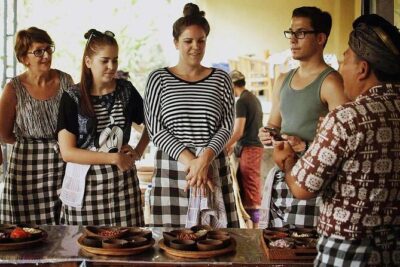
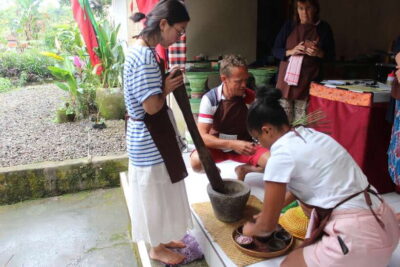
With a maximum of 15 travelers, I think you’ll enjoy the pace more. Large classes can mean long waits for instructions. In a smaller group, you’re more likely to get hands-on guidance while your spice paste is still workable and your station still feels active.
Market Morning: How the Spice Shopping Changes Your Cooking
If you book the morning departure, you get a traditional market stop before the cooking starts. The point isn’t just sightseeing. You’re buying spices locally, which gives you a stronger sense of what goes into Balinese flavor—especially the aromatics that you’ll grind later.
This is a smart way to reset your expectations. Instead of learning recipes from a printed page, you see the ingredients where they actually come from and you select what you’ll bring into your dishes. Even if you’re not a “spice person,” watching how vendors package and sell items helps you understand why certain aromas show up again and again in Balinese cooking.
One practical tip: go with an appetite for variety. Markets have many options, and you’ll likely notice smells that seem similar at first—then become very different once you start pounding and cooking.
A Typical Balinese Home Visit: Culture You Can Notice, Not Just Hear
After the market (on morning tours), you’ll head to a local house to learn about Balinese culture, daily life, and how buildings are placed. This isn’t presented like a lecture. It’s more about helping you look at a home the way locals do: where spaces are positioned and how life is arranged around family and ritual.
A standout detail from real experiences is that the home visit can coincide with a household ceremony. One day described a celebration for a baby’s one-month birthday on the Balinese calendar. That kind of timing changes the feel of the visit. You’re not only hearing about tradition—you’re seeing how it fits into normal life.
If you want cultural “takeaways” that stick, this portion helps. You come away with a few things you can point to next time you see a Balinese home—layout choices, attention to ritual, and the everyday presence of culture in ordinary routines.
Other Ubud tours and experiences to line up next
Farm Harvest to Table: Picking Ingredients Before the Lesson
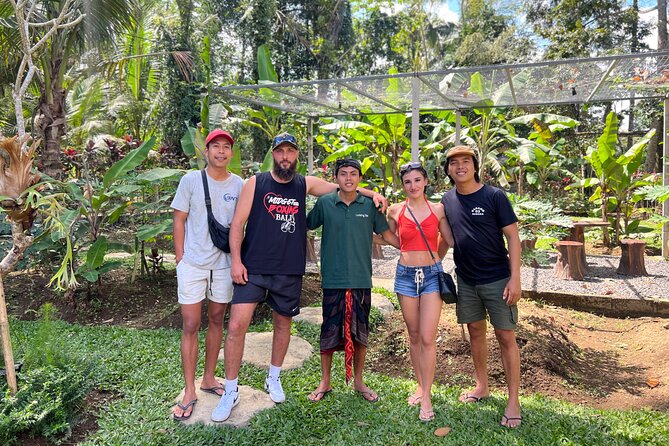
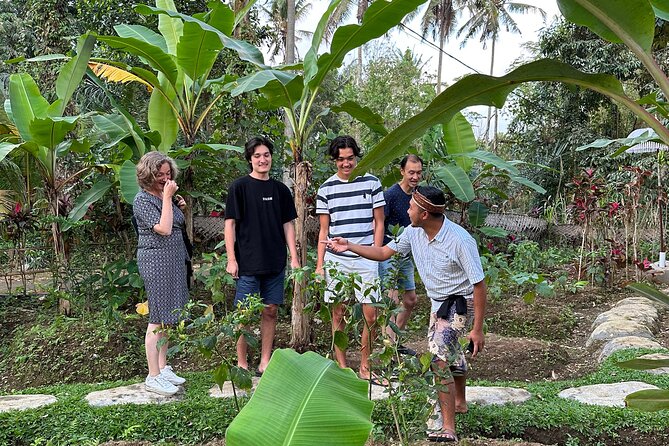
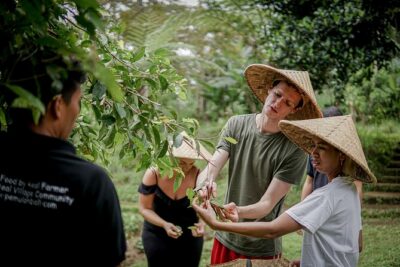
Then you move to the farm, and the day shifts from learning to doing. You’ll explore the farm and harvest the spices used during the class, then decide on the menu you’ll cook.
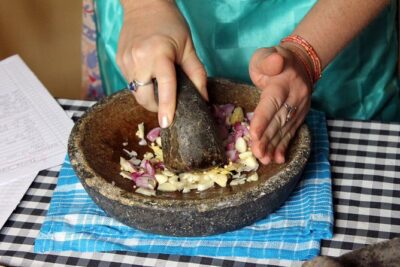
This farm step is more than a scenic stop. It connects the cooking to freshness. When you’re later grinding spices with the lesung (mortar and pestle), the scents feel more intense because you’re working with what you picked. You also get a clear picture of how local ingredients cycle from field to kitchen.
The “choose your menu” moment matters too. Instead of being locked into one set of dishes from the start, you can select vegetarian or regular options during the experience. That flexibility is especially helpful if you’re cooking with dietary needs or if your group wants different flavors.
Lesung, Banana Leaves, and the Hands-On Techniques That Make It Click
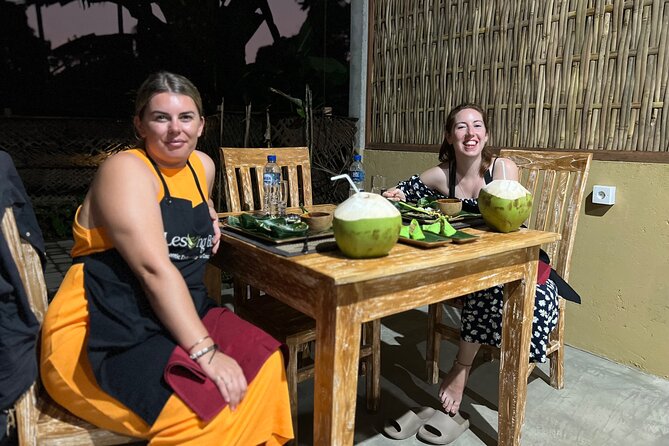
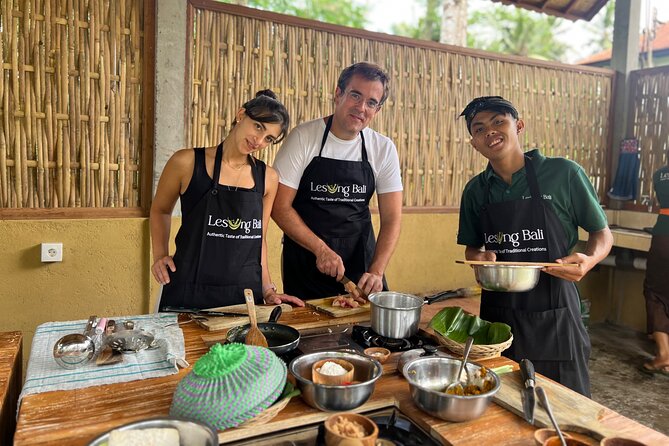
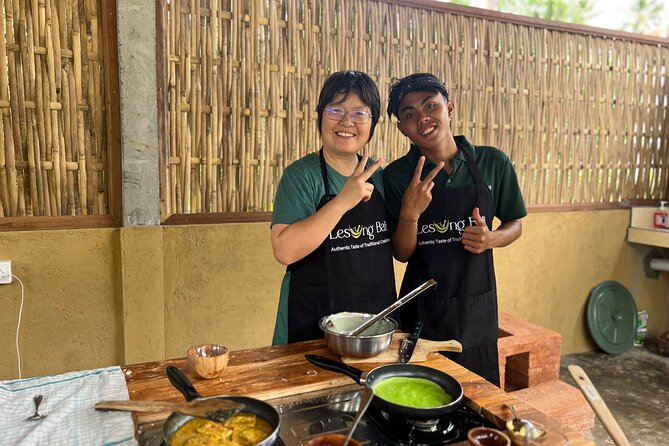
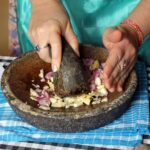
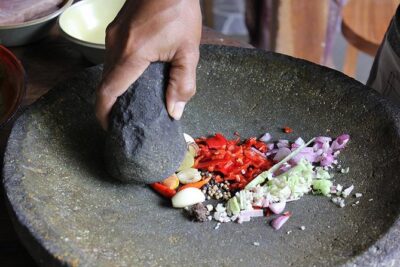
Now comes the part you came for: learning authentic Balinese cooking techniques with fresh ingredients. The chef shows you how to make Balinese food step by step, including the classic labor of grinding spice pastes with the lesung.
In many classes, the “technique” is just chopping a few things and moving on. Here, the emphasis is on how Balinese cooking is built: chopping and pounding spices into workable paste, then using those aromatics as the foundation for flavor.
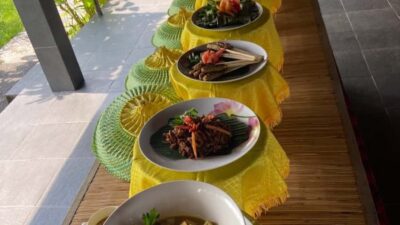
You’ll also cook with banana leaves, which changes the character of the food. Banana leaves help with aroma and wrapping style, and they give your dishes that distinctly Balinese look that’s hard to recreate from memory unless you’ve actually practiced it.
During the cooking, you’ll get an explanation of what to use for the selected menu: ingredients, how to handle them, and what else is needed based on what you’re making. And yes—you’ll use the included cooking gear: utensils and an apron, plus bottled water and coffee and/or tea during the day.
Lunch Included: You’re Not Just Learning, You’re Eating What You Made
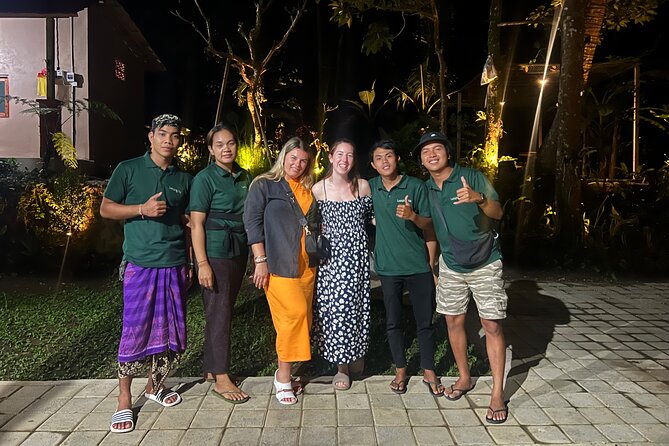
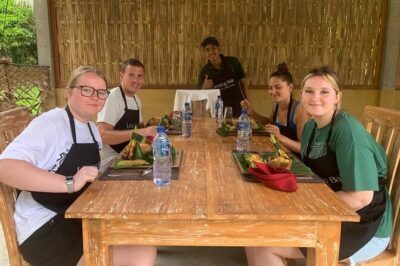
The class includes lunch, which is a big deal for value. It means you’re not budgeting extra meals while you’re out on the farm and in the market. You also get to judge your results with a “real time” taste test.
Because you select your menu and cook it in a live setting, your lunch feels like a finish line, not a separate event. Even if you’re not the world’s most confident cook, you’ll leave with at least one meal you assembled yourself using Balinese techniques.
If you’re someone who likes to bring food skills home, this is where it clicks. You can’t easily forget how banana-leaf wrapping felt, or the rhythm of pounding spices, once you’ve eaten the result.
Price and Value: What $49 Really Covers (and What Costs Extra)
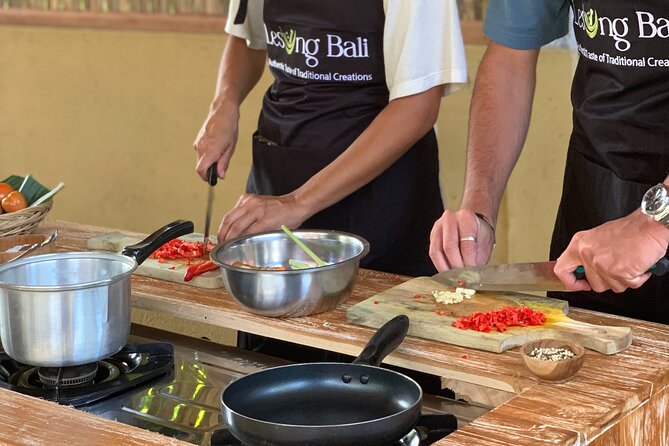
At $49 per person, this class includes a lot of the hard-to-cost items: two-way transfers within the Ubud area, lunch, bottled water, coffee/tea, air-conditioned transport, utensils, an apron, and a recipe PDF you can take home.
That recipe PDF is underrated value. After the hands-on day, it helps you replay the steps later without guessing. If you’ve ever tried to recreate a dish from memory and ended up with a close-but-not-right version, you’ll appreciate having a written reference.
Now the part to watch: pickup/drop-off is included for your Ubud address only. Outside that zone, the tour lists extra car fees:
- Sanur: extra 400k/car
- Kuta, Seminyak, Canggu: extra 450k/car
- Nusa Dua and Jimbaran: extra 550k/car
- Uluwatu: extra 700k/car
Also note that the experience requires good weather. If conditions are poor, you’ll be offered a different date or a full refund. That’s normal in Bali, and it’s good they plan for it.
Bottom line: for a 5-hour experience that teaches real techniques (lesung pounding, banana-leaf cooking), includes lunch, and covers transfers inside Ubud, it’s priced like a serious activity rather than a quick show.
Transfers, Group Size, and Timing: How to Plan Your Day
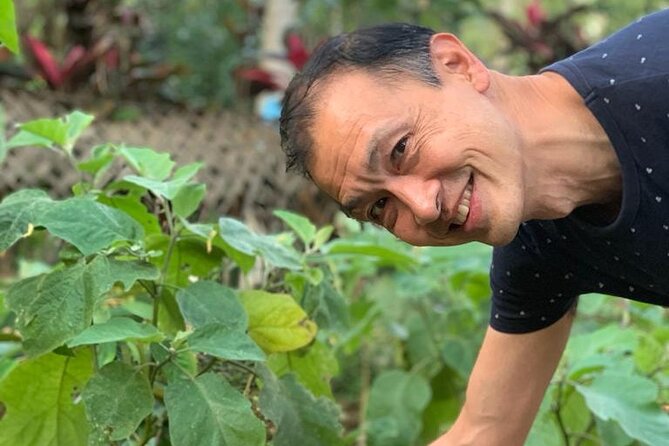
The tour runs for about 5 hours and offers a choice of departure times, which is useful if you want to pair it with other Ubud plans. If you want the market added in, choose the morning class, since the market stop is specifically tied to that departure.
You also get a mobile ticket, and confirmation arrives at booking. Those sound small, but in practice they reduce the “where do I go, what do I show?” friction once you’re already in Ubud.
Group size is capped at 15, so you can expect a more personal flow. You still won’t be cooking alone, but it’s easier to ask questions and get feedback when the room isn’t packed.
Who Should Book This (and Who Might Skip It)
This class fits best if you want a true Balinese cooking skill, not just a fun meal out. If you enjoy food history in plain terms—how ingredients become paste, how wrapping changes aroma—you’ll love the hands-on focus.
It also works well for families and mixed groups because the format is structured: market (morning), house visit, farm harvest, then cooking and lunch. One family experience described a smooth day with a driver who answered questions about local culture and a cooking teacher named Putri, which is exactly the kind of supportive vibe you want when everyone has different comfort levels.
You might consider a different activity if:
- you hate markets and prefer all food prep to happen far from crowds
- you’re very strict about not being outdoors (the farm step depends on weather)
- you’re staying far outside Ubud and don’t want extra car fees
Should You Book This Balinese Cooking Class in Ubud?
If you’re choosing between a generic cooking show and something grounded in how Balinese cooking actually works, I’d pick this. The value is strongest when you take the morning option for the market and you care about technique—especially the lesung spice grinding and the banana-leaf cooking style.
It’s also a good booking if you want a single activity that hits multiple goals: a fresh ingredients story from the farm, a culture stop at a typical home, and a meal you made yourself.
If the added transport fees put it out of reach, it’s still worth it only if the Ubud transfer is easy for you. Otherwise, compare the total cost after your pickup area is factored in.
FAQ
What location is this cooking class in?
It takes place in Ubud, Indonesia, on the west side of town in a countryside-style green area.
How long is the experience?
The cooking class lasts about 5 hours.
What’s the group size?
The tour has a maximum of 15 travelers.
Is pickup and drop-off included?
Pickup and drop-off are included for the Ubud area. Extra fees apply for other areas (Sanur, Kuta/Seminyak/Canggu, Nusa Dua/Jimbaran, and Uluwatu).
Does the class include a market visit?
Yes, the morning class includes a traditional market visit where you can buy spices.
Can I choose vegetarian food?
Yes. There is a vegetarian menu option, as well as a regular menu, and you can choose during the class.
What does the price include?
The package includes pickup and drop-off (Ubud area), lunch, bottled water, coffee and/or tea, air-conditioned vehicle, a recipe (PDF), cooking utensil, and an apron.
What about a recipe after the class?
You receive a recipe in PDF format.
Is this class affected by weather?
Yes. The experience requires good weather. If it’s canceled due to poor weather, you’ll be offered a different date or a full refund.
What’s the cancellation window?
You can cancel for a full refund up to 24 hours before the experience starts. If you cancel less than 24 hours before, it’s not refunded.
More Cooking Classes in Ubud
More Ubud Tours We Rate





Cook Balinese in Ubud
Just added around Ubud
- Ubud: White Water Rafting with visit Ubud Monkey Forest
★ 5.0 · 3 reviews - Private Guided Bali Car Charter
★ 5.0 · 3 reviews - East Bali and Lempuyang Temple Tour
★ 5.0 · 3 reviews - Bali Downhill Cycling and White Water Rafting
★ 5.0 · 3 reviews - Cave Tubing Adventure in Ubud
★ 5.0 · 3 reviews
Balinese Cooking Classes, compared.
 ★ 5.0Ubud Cooking Class Bali with Balinese ChefFrom $351,609 reviews
 ★ 4.9Cooking Class with Transfers and Optional Market VisitFrom $21824 reviews
 ★ 5.0PRIVATE Authentic Balinese Cooking Class in Ubud at Putu’s HomeFrom $75644 reviews
 ★ 5.0Balinese Ubud cooking school (9 Dish Cooking and Market Tour)From $58540 reviews
 ★ 4.8Balinese Cooking Class and Market TourFrom $23531 reviews
 ★ 5.0Balinese Farm Cooking Class by Pemulan BaliFrom $39410 reviews
 ★ 5.0Balinese Authentic Cooking Class in UbudFrom $39239 reviews
 ★ 5.0PRIVATE Balinese Cooking Class in Ubud with Dewa with TransfersFrom $69213 reviews
Browse the lists this tour appears in