
Reviewed · UBUD JUNGLE TREKKING & WALKS
Myth of Pejeng Walking Tour
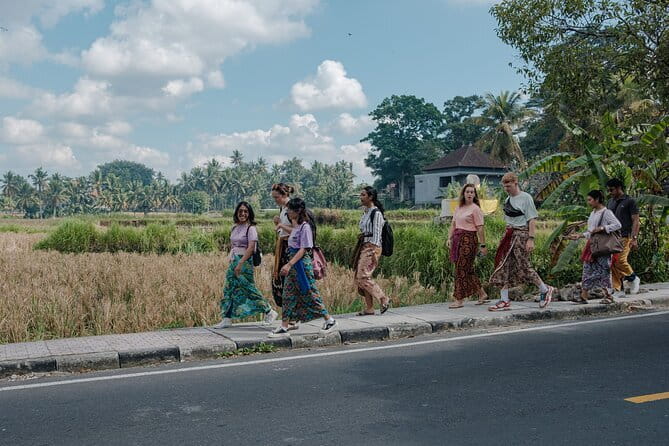
Pejeng hits different than the usual Ubud circuit. This small-group walking tour mixes living Balinese worship with myth talk about the bronze kettle drum, plus a stop that flashes you back to pre-Hindu Bali. I especially like how the guides (including Joe, Bagus, and Win) keep the stories grounded in what you’re actually looking at, and how the route feels calm compared with central Ubud. The trade-off: you’ll handle uneven stairs, steep bits, and patchy sidewalks for up to about 2 hours.
You’ll start at 8:30 am in the Bedulu/Pejeng area, not at a hotel. That means you get a real neighborhood morning—shops, temple walls, and locals going about their day—without the chore of a long transfer. You also need the right mindset: temples are sacred spaces, and the tour includes dress rules, so plan on wearing the sarong and sash provided.
Bring a reusable bottle for water refills, and come ready for sun and bugs. It’s rain or shine, and if conditions get too intense, they’ll contact you before the start. If you want a mostly flat stroll, this isn’t that; if you want a meaningful cultural walk with context, you’ll be in the right place.
In This Review
- Key points before you go
- Why Pejeng instead of Ubud’s usual temple loop
- Price, time, and group size: what you really get for $21.40
- How the walk feels: steps, slopes, and rain-or-shine reality
- Stop 1: Pura Penataran Sasih and the bronze kettle drum stories
- Stop 2: Pura Pusering Jagat and Bali’s directional-temple idea
- Stop 3: Kebo Edan’s Crazy Buffalo temple and the Bhairawa statue
- Stop 4: Arca Building Archaeological Museum and giant sarcophagi
- Temple etiquette that actually matters (sarongs, knees, and respect)
- Included coffee, tea, and the small comfort wins
- What to bring: water bottle, sun, and bug defense
- Who should book this tour (and who should skip)
- Should you book the Myth of Pejeng Walking Tour?
- FAQ
- How long is the Myth of Pejeng walking tour?
- What time does the tour start?
- Is pickup or drop-off included?
- Where do I meet the guide?
- Where does the tour end?
- What’s included in the ticket price?
- Do I need to bring a sarong for the temples?
- What happens if it rains?
- How big is the group?
Key points before you go
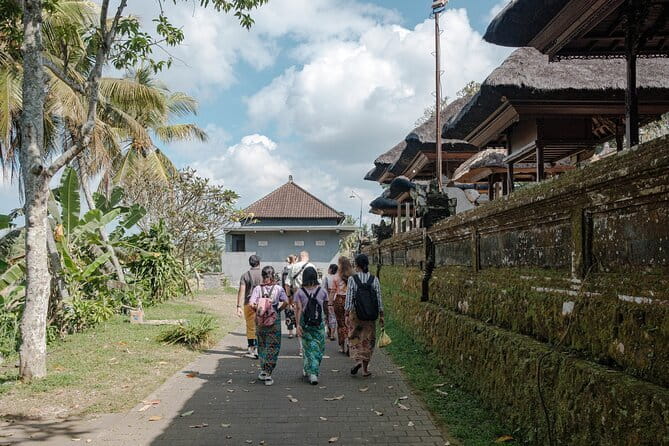
- Four temple-and-history stops with admissions included, plus special access to a Balinese compound
- Myth talk tied to real sites, including stories around the Moon of Pejeng and the bronze kettle drum
- Small group (max 8), so it’s easier to ask questions and hear explanations clearly
- Sarong-and-sash dress support provided, with etiquette built into the experience
- Pre-Hindu stop with giant sarcophagi that changes how you think about Bali’s timeline
- Up to 2 hours of walking on uneven steps and gradients, rain or shine
Footpaths through ridge and rice field around Ubud.
- Bali Jungle Trekking and Lake Canoeing Tour★ 5.0 · 84 reviews
- Ubud Guided Walking Tour★ 5.0 · 79 reviews
- Sidemen Trekking with Cultural Encounters and Nature Views★ 5.0 · 20 reviews
- Sidemen Trekking Through Rice Terraces and Villages★ 4.5 · 12 reviews
Why Pejeng instead of Ubud’s usual temple loop
I like Ubud, but Pejeng has a quieter, more local feel. This tour focuses on historic landmarks around Pejeng/Bedulu, which tends to feel less like a nonstop highlight reel and more like a real morning route. The walking itself matters here: you’re not just hopping between photo points, you’re traveling through the spacing of temple compounds, roads, and neighborhoods.
The biggest payoff is balance. You get current-day religious life at multiple temples, then you switch gears to an archaeological museum stop with pre-Hindu stone objects. That contrast helps you understand that Bali isn’t one single era or one single story. It’s layered, and the tour is built to show that.
Price, time, and group size: what you really get for $21.40
At $21.40 per person, this is strong value for Bali because the price covers more than a guided walk. You’re also getting admissions for the stops, a donation amount (Rp 60,000), a snack with Balinese coffee or tea, and sarong-and-sash attire. There’s also special access to a Balinese compound, which you usually don’t get on generic temple tours.
Timing is also reasonable. The tour is about 2 hours, with planned time at each stop (roughly 20 minutes at the first three, then about 30 minutes for the museum). In real life, it can run a bit longer depending on questions and conditions, but the structure keeps it from dragging. The group limit of 8 is another quiet win. With fewer people, guides can slow down when you have questions, instead of racing everyone through.
How the walk feels: steps, slopes, and rain-or-shine reality
Let’s talk legs. This tour is around historic landmarks, which means you deal with uneven temple stairs, steep gradients, and patchy sidewalks. The operator is clear about it: you should be physically capable of climbing temple steps and comfortable walking around an urban environment for up to about 2 hours.
One practical tip: wear shoes with grip. Temple stairs and stone paths can be slick, especially after rain. If you’re the kind of traveler who packs a little blister care, bring it—small discomforts can get big when you’re walking temple-to-temple.
Weather is handled as rain or shine. If there’s severe weather like an intense downpour, they’ll call you before the start. That matters because it helps you avoid showing up in a dangerous scramble. Still, plan on changing conditions, and bring sun protection anyway.
Other Ubud tours and experiences to line up next




Stop 1: Pura Penataran Sasih and the bronze kettle drum stories

The first stop is Pura Penataran Sasih, and it’s a classic “start with something older than you expected” moment. You’ll enter one of Bali’s oldest temples, and you’ll likely be wearing the traditional sarongs and sashes as part of the experience. This isn’t a quick peek from the outside. The tour is designed to give you time to see and listen.
The headline here is the bronze kettle drum—described as Southeast Asia’s largest bronze kettle drum. That detail isn’t just trivia. It’s the hook for the mythology and the local meaning you’ll hear explained as you stand near the temple’s context. The tour also connects this area to famous stories from Pejeng, including the Moon of Pejeng themes that guides talk through at a human scale.
You’ll get about 20 minutes here with an admission ticket included. If you’re into religion-as-practice (not just religion-as-museum), this is the kind of stop where you’ll appreciate the way the guide frames what you’re seeing.
Stop 2: Pura Pusering Jagat and Bali’s directional-temple idea

Next up is Pura Pusering Jagat, a temple tied to the idea of Bali’s directional system. It’s one of Bali’s six main Kahyangan (directional) temples, believed to be at the island’s center. That concept can sound abstract at first, but the tour’s value is that it turns the idea into something you can visualize while you walk and observe the complex.
You’ll explore the sacred temple complex for around 20 minutes, with admissions included. The guide helps you read the space: what’s meant to be seen, why certain areas matter, and how the direction-and-center idea fits into Balinese religious geography.
This is also where good pacing shows. If you rush, you’ll miss how temples like this work as part of a wider map of belief. If you slow down, you’ll notice the carvings and the feel of how the complex is arranged for worship and ritual.
Stop 3: Kebo Edan’s Crazy Buffalo temple and the Bhairawa statue

Then you move to Kebo Edan Temple, known as the Temple of the Crazy Buffalo. It’s smaller than the big-name complexes, but the story is memorable because of the 13th-century Bhairawa statue.
The tour explains that this statue was recovered from nearby rice fields. That’s a fascinating detail because it raises questions about origins, symbolism, and how objects move through time in Bali. Your guide then shares theories about the unusual origins—enough mystery to keep it interesting, without turning it into wild guessing.
This stop also runs about 20 minutes, with admission included. It’s a good mid-walk reset: you’ve been building context at the first two temples, and now you get a more specific focal object and a story that makes you look longer.
Stop 4: Arca Building Archaeological Museum and giant sarcophagi
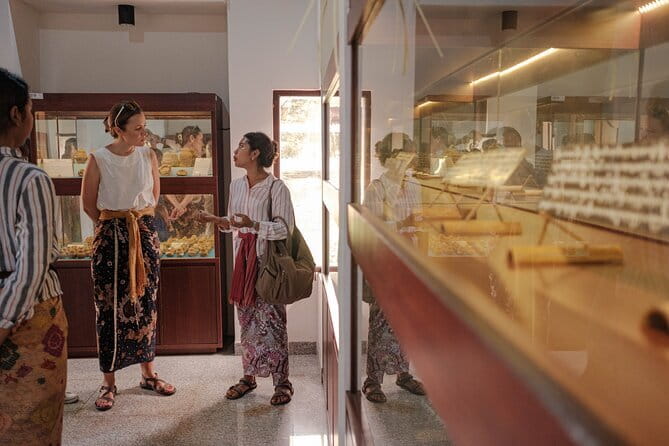
The final stop is a curveball—in the best way. You step back to pre-Hindu Bali at the Arca Building Archaeological Museum and focus on ancient stone forms, including giant sarcophagi in an open courtyard.
About 30 minutes is scheduled here, and that time matters. You’ll need a little slow looking to make sense of scale and what these objects suggest about early Balinese life and customs. This is the stop that often changes a traveler’s mental timeline. Instead of Bali as only a set of Hindu-era temples, you see how much earlier layers matter.
If you love history but hate lectures, this stop can still work because it’s grounded in physical artifacts. You’re not just hearing dates—you’re seeing stone objects and letting the guide connect them to the broader idea of how Bali’s past shaped its present.
Temple etiquette that actually matters (sarongs, knees, and respect)
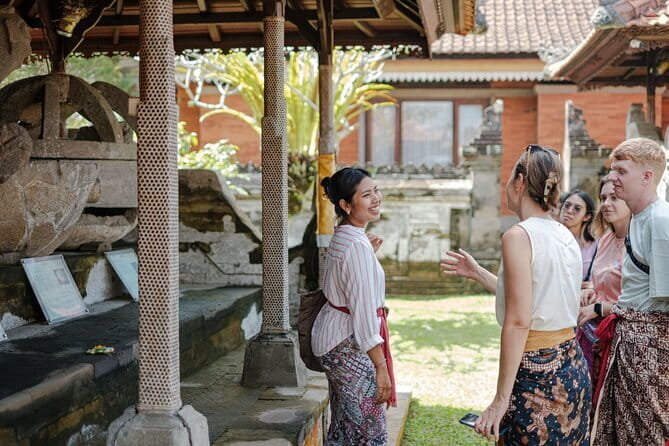
Balinese temples are religious and sacred places. So the tour makes etiquette part of the experience, not a checklist you ignore.
Both men and women must dress modestly and wear a sarong that covers the legs below the knee. You can bring your own sarong, or you can use the one provided by the tour. On top of that, there’s also a sash as part of the traditional setup.
I appreciate that the operator builds this into the plan. When you show up already in the right clothing, you spend less time worrying and more time observing respectfully.
One more timing note: the tour can sometimes align with a local ceremony. When that happens, you’ll likely see temple activity in full swing, and the guide can help interpret what you’re watching. You can’t count on ceremonies every day, but it’s worth keeping your schedule flexible in Bali.
Included coffee, tea, and the small comfort wins
This tour includes Balinese coffee or tea and a snack. It’s a simple inclusion, but it helps because it keeps you from needing to hunt for food mid-walk. You’re also less likely to show up hungry, which matters when you’re climbing stairs and moving between sites.
Also included is an Indonesian guide option, and the main guide speaks English. That combination can be useful if you want more than one layer of explanation, especially when you ask questions.
The tour also includes temples donations (Rp 60,000). That’s not just a feel-good line. It signals that your visit is part of a respectful support system for the sites you’re learning from.
What to bring: water bottle, sun, and bug defense
The environmental commitment is clear: bring a reusable bottle for water refills to help reduce plastic waste in Bali’s rivers. This is one of those small habit upgrades that doesn’t slow you down and makes the day more comfortable.
Beyond that, come prepared for the real Bali morning conditions. Even if the weather looks fine, you can get sun and bugs. In one case, guide Win helped with practical extras like sunblock and bug repellent. You may want to bring your own anyway, but it’s comforting to know your guide may help if you’re short on essentials.
For clothing, your sarong and sash are handled, but your outerwear still counts. Wear something comfortable that you can move in while climbing stairs. Leave valuables minimal; focus on the day, not your phone battery.
Who should book this tour (and who should skip)
I think this is a great fit for you if:
- You want a meaningful mix of temple worship, myth, and pre-Hindu history in one morning
- You enjoy asking questions and want a small-group pace
- You’re curious about how objects like the bronze kettle drum fit into local storytelling
- You’re comfortable walking between historic sites and handling uneven steps
I’d think twice if:
- You need mostly flat paths or step-free movement
- You’re easily slowed by uneven stairs or steep gradients
- You’re hoping for hotel pickup or a door-to-door experience (there’s no pickup/drop-off)
If you’re a planner, you can also use this as a way to get your bearings in the Pejeng area without the intensity of a full-day route.
Should you book the Myth of Pejeng Walking Tour?
Book it if you want the best kind of Bali morning: temples you can see in real use, stories tied to specific places, and a museum stop that expands your view of Bali beyond the usual temple list. The price-to-inclusions ratio is solid because admissions, donations, sarong setup, and a snack/coffee are built in.
Skip it if you want a light stroll or you’re not comfortable with stairs and slopes. This one asks a bit of physical effort, but it pays you back with clear context and a route that feels more local than central-Ubud standbys.
FAQ
How long is the Myth of Pejeng walking tour?
The tour lasts about 2 hours.
What time does the tour start?
It starts at 8:30 am.
Is pickup or drop-off included?
No. There is no pickup or drop-off from your accommodation.
Where do I meet the guide?
You meet at Indomaret Pejeng, Jl. Raya Dr. Ir. Sukarno No.552, Bedulu, Kec. Blahbatuh, Kabupaten Gianyar, Bali 80552, Indonesia.
Where does the tour end?
It ends at Museum Arkeologi (F7JV+563, Bedulu, Blahbatuh, Gianyar Regency, Bali).
What’s included in the ticket price?
The ticket includes a local English-speaking guide, temple donations (Rp 60,000), Balinese coffee/tea and a snack, special access to a Balinese compound, sarong and sash, and admissions for the stops.
Do I need to bring a sarong for the temples?
You don’t have to. Sarongs and sashes are provided, but you can also bring your own.
What happens if it rains?
The tour operates rain or shine. If the weather is severe, such as an intense downpour, the operator will call you before the start.
How big is the group?
The tour has a maximum of 8 travelers.
More to See and Do in Ubud





More Ubud Tours We Rate

Walks & Jungle Treks Around Ubud





Just added around Ubud
- Ubud: White Water Rafting with visit Ubud Monkey Forest
★ 5.0 · 3 reviews - Private Guided Bali Car Charter
★ 5.0 · 3 reviews - East Bali and Lempuyang Temple Tour
★ 5.0 · 3 reviews - Bali Downhill Cycling and White Water Rafting
★ 5.0 · 3 reviews - Cave Tubing Adventure in Ubud
★ 5.0 · 3 reviews
Ubud Jungle Trekking & Walks, compared.
 ★ 5.0Sidemen Trekking: A Walk from a Different PerspectiveFrom $1394 reviews
 ★ 5.0Bali Jungle Trekking and Lake Canoeing TourFrom $3484 reviews
 ★ 5.0Ubud Guided Walking TourFrom $2879 reviews
 ★ 5.0Sidemen Trekking with Cultural Encounters and Nature ViewsFrom $1220 reviews
 ★ 4.5Sidemen Trekking Through Rice Terraces and VillagesFrom $912 reviews
 ★ 5.0Bali Sidemen Silver Class Making with 7 Gram of SilverFrom $249 reviews
 ★ 5.0Munduk Twin Lake Jungle Trek with Sacred Forest Temples&CanoeingFrom $237 reviews
 ★ 5.0Mystery Mountain Cooking Class SidemenFrom $496 reviews
Browse the lists this tour appears in