

Reviewed · WALKING TOURS
Hikaria: Bali’s First Immersive Night Walk
Ubud glows after dark in an unusual way. I love the Japan-style projection mapping and how it turns rice fields and Balinese temples into part of the show. One caution: the whole experience can feel tight on time, and the directions you rely on may not match the exact drop-off spot you end up using.
I also like that it’s an open-air setting where you can slow down. You get time at the outdoor venue for the sights, local refreshments, and there’s a photographer on hand to help you capture the moment.
Plan with the weather in mind. The show needs good conditions, and it runs late, with 6:30 PM to 10:30 PM operating hours in the season window listed.
In This Review
- Key points at a glance
- Ubud after dark: what Hikaria turns into your night walk
- Price, timing, and how far $13.76 really goes
- The light show itself: projection mapping across rice fields and temples
- Myths, legends, dance, and live music: what you’re actually watching
- Refreshments and photos: using the venue like a pro
- Getting there in Ubud and avoiding the most common confusion
- Weather matters: your best chance at clear skies and full sound
- Who should go (and who might want to skip this one)
- Should you book Hikaria’s night walk in Ubud?
- FAQ
- Where is Hikaria located?
- How much does the experience cost?
- How long is Hikaria?
- What time does it run?
- Is there a mobile ticket?
- What do I get with the ticket?
- Is the show outdoors?
- Are service animals allowed?
- What should I do if the weather is poor?
- What is the cancellation policy?
Key points at a glance
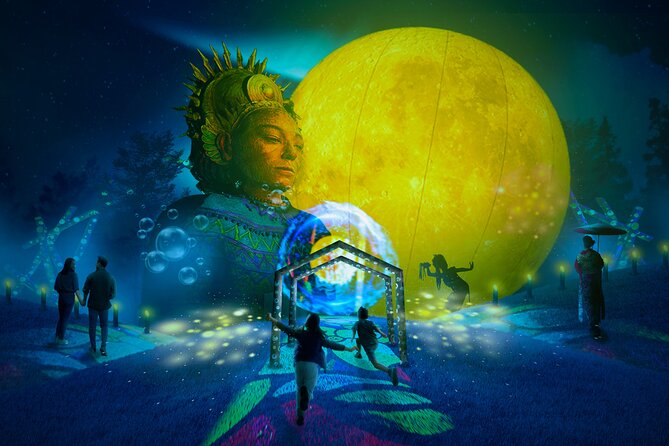
- Projection mapping over natural backdrops that makes myths feel physical
- Water, stone, and trees become part of the story canvas
- Traditional dance plus live music in the middle of the light show
- Refresthments and a photographer so you’re not left figuring it out
- Service animals welcome in the open-air venue
- Short, focused timing (roughly 45 minutes to 1 hour) so you’ll plan your evening around it
Other Ubud tours and experiences to line up next
- Sidemen Trekking: A Walk from a Different Perspective★ 5.0 · 94 reviews
- Ubud Guided Walking Tour★ 5.0 · 79 reviews
- Ubud Countryside Tour: Campuhan Ridge Walk and Rice Terrace★ 5.0 · 72 reviews
- Ubud: Campuhan Ridge Walk, Tegallalang Rice Terrace & More★ 4.7 · 15 reviews
Ubud after dark: what Hikaria turns into your night walk

Hikaria is a nighttime walk-and-show experience in Ubud that uses light, music, and dance to tell Balinese myths, legends, and nature themes. The big idea is simple: you’re not just watching indoors. You’re in an open-air venue where the surroundings matter as much as the visuals.
I like this approach because it fits Ubud’s vibe. During the day, the area can feel busy and scattered. At night, the setting shifts into something calmer and more cinematic, especially when light hits rice fields and temple forms around you.
If you’re planning a date night, this is the kind of activity that doesn’t require a whole extra plan. You arrive, take your seat or position around the show area, and the story carries you. For solo travelers, it’s also nice because it gives you something shared to focus on without forcing you into long conversations.
The main thing to keep expectations aligned: this is still a show with a set run time. If you’re expecting a long roaming night walk through multiple stops, you may feel a bit rushed.
Price, timing, and how far $13.76 really goes
A ticket is listed at $13.76 per person, and the experience lasts about 45 minutes to 1 hour. That pricing can feel like a bargain in Bali because you’re getting more than one component: projection mapping visuals, live music, traditional dance, plus time in an outdoor venue with refreshments and photo support.
Value, for me, comes from what’s included and what you don’t have to arrange. You’re not assembling separate tickets for food, entertainment, and photos. You also get a mobile ticket, so you can keep your phone ready and skip the hassle of paper.
Timing matters because the opening hours run late: 6:30 PM to 10:30 PM. That means you can slot it into your evening without stealing time from daytime activities. It also means you’ll want to eat earlier or be ready for the refreshments offered during the event.
One more practical note: on average, this gets booked about 14 days in advance. That doesn’t mean you can’t go last minute, but it does suggest popularity. If you have a narrow vacation window, it’s smart to reserve sooner rather than later.
The light show itself: projection mapping across rice fields and temples
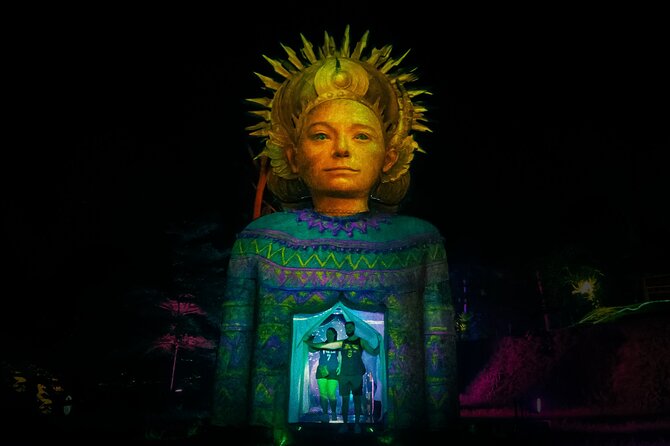
When the sun sets, the venue comes alive with projection mapping technology described as coming from Japan. The creative trick is that the projections aren’t just floating images. They’re blended with the natural setting—rice fields and Balinese temples—so the show uses the environment instead of fighting it.
The story visuals are projected onto a giant show canvas described through elements like water, stone, and trees. I find this matters because it changes how you perceive the myths. Instead of listening and hoping for imagination, you get a visual world that shapes your attention.
What makes it especially appealing is the fusion angle: tradition plus innovation working together. You’re still seeing cultural performance elements, but the presentation style uses modern projection to make the story feel like it’s moving through the space.
One potential drawback to consider is that the experience can feel like it moves quickly. The overall duration is about 45 minutes to 1 hour, so the pacing is tight. If you show up late, you may end up feeling like you missed the start and then just pass through quickly.
My advice: treat it as a focused show stop, not a slow wandering event. You’ll enjoy it more when you give it your full attention.
Other Ubud tours and experiences to line up next



Myths, legends, dance, and live music: what you’re actually watching
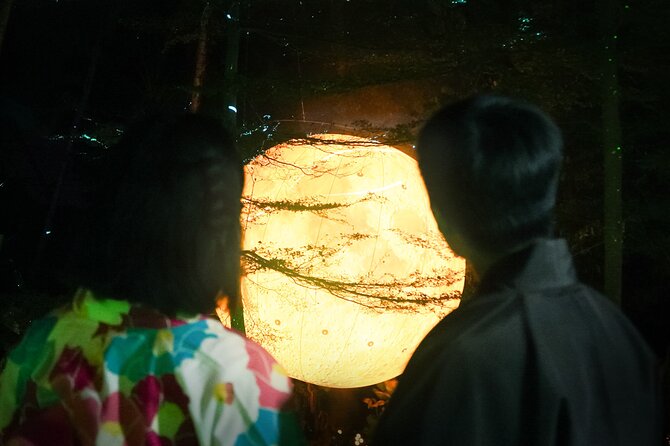
The show tells a story of Balinese myths and legends while nature is part of the theme. Colorful visuals guide you through the narrative, and the performance elements arrive in the middle of the light and sound experience.
Here’s what that means for you in plain terms. You’re getting more than a light spectacle. The dancers and live music help translate the myth themes into something you can feel emotionally, not just watch visually.
Traditional dance is a key part of the experience, and live music supports it throughout. This combination is often where cultural shows can become either too abstract or too staged. In this case, the pacing is built to keep you oriented: the lighting sets the mood, then the performance adds meaning and rhythm.
If you want to get the most out of it, don’t multitask. Put your phone away for the core moments. Use photos as a tool, not a distraction. The reason: the best bits are the transitions where the projections shift and the story visually changes.
Also, keep your ears open. Light shows can trick you into focusing only on what your eyes catch. Live music and sound design do a lot of the storytelling work, so let that audio layer do its job.
Refreshments and photos: using the venue like a pro
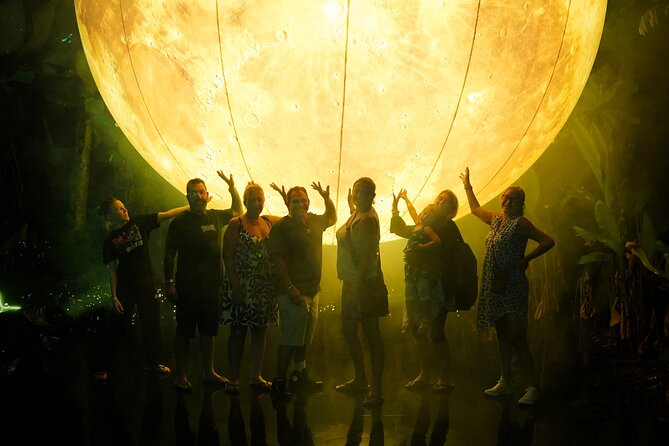
Hikaria includes refreshments at the outdoor venue, which is a big practical win. It means you can handle the evening without turning the night into a scavenger hunt for snacks.
There’s also a photographer on hand to help you capture memories. That’s valuable because night light conditions can be tricky for casual phone photos. A photographer can help with framing and timing so you don’t just walk away with blurry shots and regret.
I’d treat the photographer as part of your planning. If you want one nicer photo, decide where you’ll stand before the show peaks. Then step in when it’s convenient, rather than waiting until you’re rushed at the end.
The overall setup encourages a relaxed vibe. You can explore the outdoor venue while waiting for the story to unfold. That window is perfect for soaking in the surroundings—especially if you’re the type who likes to notice small details before a performance begins.
And if you’re traveling with someone on the fence about cultural shows, this is one of those experiences where the visuals help break the ice. The dance and music still matter, but the lighting keeps things accessible.
Getting there in Ubud and avoiding the most common confusion
You’re in Ubud, and the experience is near public transportation. That’s helpful if you don’t want to rely entirely on private rides for one stop.
The key risk is navigation accuracy. The address you use might not match the drop-off location exactly, and you could end up walking a bit from where your map expects you to arrive. One person found a roughly 10-minute mismatch between the address pin and the actual drop-off point used.
So here’s the practical move: follow the directions provided during your booking confirmation, and be willing to walk a little. If you’re arriving close to show time, build in extra buffer so the start isn’t a scramble.
Also, the experience runs in a fairly wide evening window, 6:30 PM to 10:30 PM. That flexibility can help you avoid stress—choose a time that gives you breathing room to get there calmly.
Lastly, bring your phone for the mobile ticket. “Mobile ticket” sounds obvious, but at night it’s easy to show up with a drained battery and then you’re the person asking everyone for charger access. Keep it topped up.
Weather matters: your best chance at clear skies and full sound
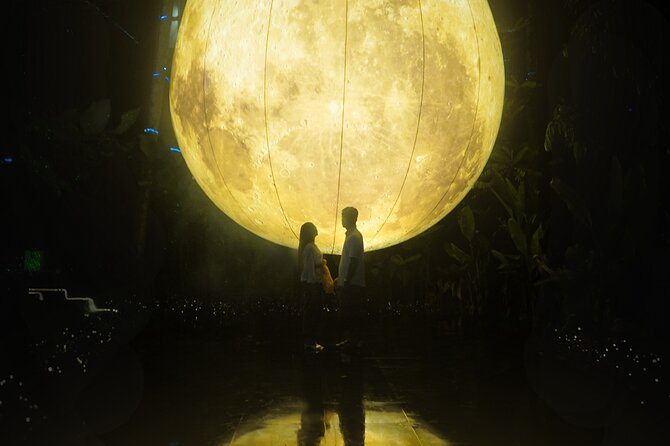
Hikaria requires good weather. Since it’s open-air, rain and poor conditions can interfere with comfort and the show experience itself.
If the event is canceled due to poor weather, you’ll be offered a different date or a full refund. That’s the kind of policy you’ll be glad exists in Bali, where evenings can shift quickly.
For your decision-making, think about what you can control. You can’t control clouds or sudden showers, but you can control how late you schedule your night. If you’re flexible, pick a time slot earlier in the operational hours so you still have room to pivot if weather changes.
Wear practical evening clothes for Ubud humidity, and bring a light layer. Even when it’s warm, night air can feel cooler when you’re waiting outdoors.
And one more tip: if you come with a camera-heavy plan, remember that weather plus night lighting can change everything. Keep your plan flexible so you don’t end up disappointed by conditions outside the experience.
Who should go (and who might want to skip this one)
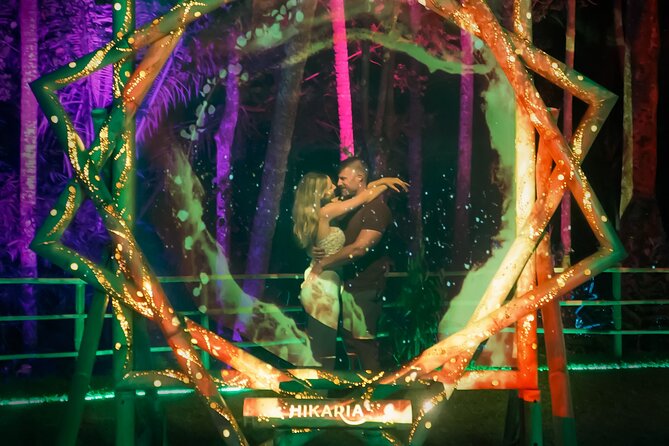
This is ideal if you want a date night activity with atmosphere. The combination of light, story, dance, and live music is built for romance and for shared attention.
It’s also a good fit if you like culture but don’t want a long, complicated itinerary. You can treat it as a single focused evening event that starts when the sun goes down and finishes within about an hour.
Service animals are welcome, which is genuinely useful for people planning their Bali trip with real-world needs.
You might want to reconsider if you hate short, timed experiences or if you’re the type who needs lots of walking and exploring across multiple areas. The experience is concentrated around the show, and the time on-site is limited by design.
If you’re expecting a very long night walk, this may feel too compact. The better mindset is: arrive ready for a powerful story moment, then leave on time feeling satisfied rather than looking for a second adventure right after.
Should you book Hikaria’s night walk in Ubud?
I’d book it if you want a modern-meets-traditional cultural show in an open-air setting where the environment is part of the artwork. The strongest reason is the production style: projection mapping tied to rice fields and temple forms, with myth storytelling supported by traditional dance and live music.
The second reason is practical value. For the price, you’re not only buying a ticket to lights. You’re also getting refreshments and photo support, plus it’s set up for a smooth evening out with a mobile ticket.
My main booking caution is logistics and pacing. Double-check the directions you receive and give yourself buffer time for arrival. Also, accept that it’s roughly 45 minutes to 1 hour, so don’t stack it right on top of another late-night obligation.
If you’re going on a clear weather night and you want a cinematic Ubud experience that’s easy to slot into your itinerary, Hikaria is a smart choice.
FAQ
Where is Hikaria located?
Hikaria is in Ubud, Indonesia.
How much does the experience cost?
The price is $13.76 per person.
How long is Hikaria?
Plan for about 45 minutes to 1 hour.
What time does it run?
Hours are 6:30 PM to 10:30 PM, Monday through Sunday, during the season window listed (10/29/2025 to 02/16/2027).
Is there a mobile ticket?
Yes. The ticket is available as a mobile ticket.
What do I get with the ticket?
You’ll have admission to the open-air nighttime show, plus refreshments at the outdoor venue and access to a photographer on hand to help capture memories.
Is the show outdoors?
Yes. It’s described as an open-air cultural attraction set with the natural surroundings.
Are service animals allowed?
Yes. Service animals are welcome.
What should I do if the weather is poor?
This experience requires good weather. If it’s canceled due to poor weather, you’ll be offered a different date or a full refund.
What is the cancellation policy?
Cancellation is free up to 24 hours before the experience start time for a full refund. Within 24 hours of the start time, refunds aren’t available.
Evenings Out in Ubud



More Walking Tours in Ubud




More Ubud Tours We Rate





Just added around Ubud
- Ubud: White Water Rafting with visit Ubud Monkey Forest
★ 5.0 · 3 reviews - Private Guided Bali Car Charter
★ 5.0 · 3 reviews - East Bali and Lempuyang Temple Tour
★ 5.0 · 3 reviews - Bali Downhill Cycling and White Water Rafting
★ 5.0 · 3 reviews - Cave Tubing Adventure in Ubud
★ 5.0 · 3 reviews
Walking Tours, compared.
 ★ 5.0Sidemen Trekking: A Walk from a Different PerspectiveFrom $1394 reviews
 ★ 5.0Ubud Guided Walking TourFrom $2879 reviews
 ★ 5.0Ubud Countryside Tour: Campuhan Ridge Walk and Rice TerraceFrom $4072 reviews
 ★ 4.7Campuhan Ridge Walk, Tegallalang Rice Terrace & MoreFrom $3415 reviews
 ★ 5.0Myth of Pejeng Walking TourFrom $216 reviews
 ★ 5.030 Minutes Ocean Walking in Nusa Dua, BaliFrom $554 reviews
 ★ 5.0UNESCO Sites Cultural Walking Tour in BaliFrom $584 reviews
 ★ 5.0Keliki Village Tour And Rice Field Walk Including Lunch Or DinnerFrom $413 reviews
Browse the lists this tour appears in