
Reviewed · UBUD JUNGLE TREKKING & WALKS
Sidemen Trekking: A Walk from a Different Perspective
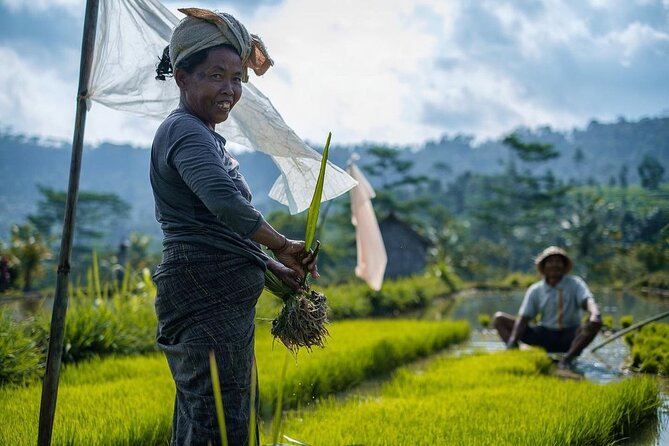
Sidemen Trekking is a simple walk that turns into a real look at daily Bali. You’ll start at Pasar Sidemen and finish with Mount Agung looming above the rice terraces, with stops that feel like they belong to locals, not tour buses. I especially like the way guides share how rice farming actually works, and I like the viewpoints you reach by taking the small paths farmers use.
One heads-up: this is not a long, hard climb, but you do need good balance. Some sections on narrow, elevated rice paths and water edges can be slippery, so good shoes matter.
In This Review
- Key things I found most special
- Why Sidemen Feels Like a Different Side of Bali
- The 2-Hour Walk: From Pasar Sidemen to Ume Anyar
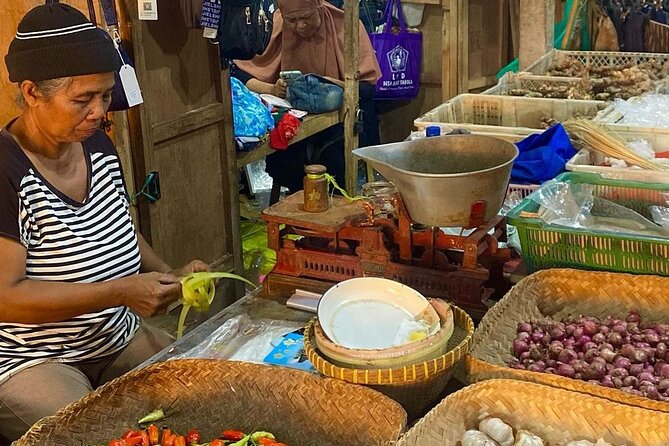
- Start: Market energy and local orientation
- Climb into rice terraces: viewpoints without rushing
- The hanging wooden bridge: a real crossing
- Through village and temple: religion in everyday flow
- Up-and-down streets, then irrigation paths again
- Finish: Warung Ume Anyar
- Rice Fields, Mount Agung, and Why This Walk Matters
- Learning about crops and farming life
- Guide Style: What People Mean When They Say This Feels Local
- What to Expect on the Ground: Easy Pace, Tricky Footing
- What you should bring (not optional for comfort)
- Physical fitness: moderate, with balance required
- Getting There and Planning the Rest of Your Day
- From your hotel
- After the trek: choose pickup ahead of time
- Slot it between meals
- Price and Value: Why This $13.75 Trek Feels Fair
- Who This Trek Is For (and Who Might Want a Different Plan)
- Quick Practical Tips Before You Go
- Should You Book Sidemen Trekking?
- FAQ
- How long is the Sidemen trekking experience?
- Where do I meet for the trek?
- Where does the trek end?
- Is bottled water included?
- Is hotel pickup included?
- What should I bring?
- How difficult is the walk?
- How many people are in the group?
- Can I visit the market before the trek?
- Is there free cancellation?
- What if the weather is poor?
Key things I found most special
- Small-group feel (up to 10 people) for a calmer pace and more time to ask questions
- Real farmer routes along irrigation ways, including a hanging wooden bridge used by locals
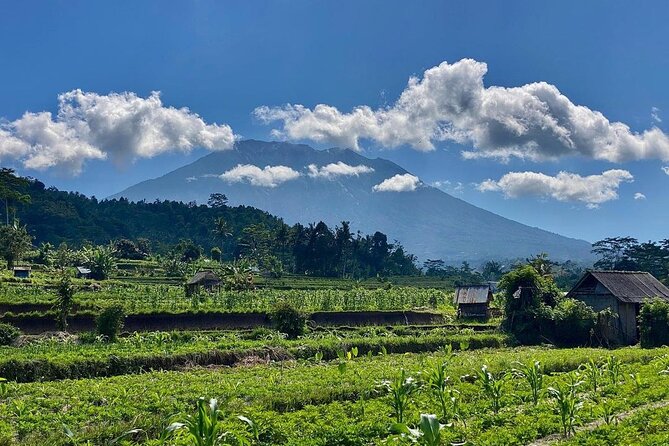
- Mount Agung viewpoints that you get only when you walk the fields instead of watching from a road
- Culture stops with a village temple used for local prayers during the trek
- A low-stress duration at about 2 to 2.5 hours, with a built-in place to relax afterward
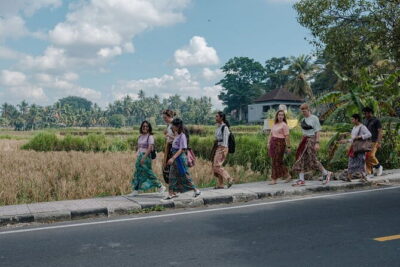
Footpaths through ridge and rice field around Ubud.
- Bali Jungle Trekking and Lake Canoeing Tour★ 5.0 · 84 reviews
- Ubud Guided Walking Tour★ 5.0 · 79 reviews
- Sidemen Trekking with Cultural Encounters and Nature Views★ 5.0 · 20 reviews
- Sidemen Trekking Through Rice Terraces and Villages★ 4.5 · 12 reviews
Why Sidemen Feels Like a Different Side of Bali
Sidemen is one of those places where the scenery looks peaceful, but life keeps moving. From the first steps near the traditional market, the trek doesn’t feel like a checklist of photo spots. It feels like you’re walking through the rhythms of the village—markets in the morning, workers heading to the fields, and temple life woven into ordinary days.
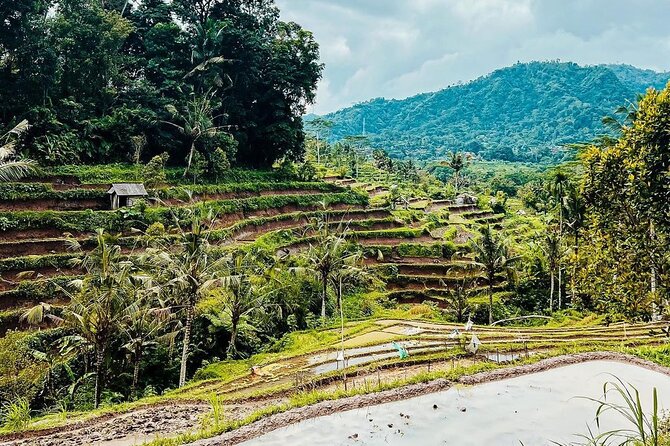
I like that this tour gives you a different camera angle on Bali. Most visitors see rice terraces from viewpoints above the valley. Here, you walk through the terraces themselves, using the same practical routes people use every day. That changes how you understand what you’re seeing—how water runs, how fields connect, and why Mount Agung matters to the landscape and the agriculture around it.
And the guide energy really helps. Names show up again and again in the feedback—people mention guides like Adi, Daria/Darya, Adidas, and Wayan—and the common theme is storytelling with local context. You’re not just staring at greens and blues. You’re learning what rice-growing looks like in different seasons, and how people live alongside it.
The 2-Hour Walk: From Pasar Sidemen to Ume Anyar
You’ll meet at Pasar Sidemen (Sidemen Traditional Market), specifically at the shop marked Upa Boga. It’s a good meeting point because it places you right where the local day starts, instead of starting on a quiet street outside town.
Start: Market energy and local orientation
You’ll begin with the village and the market area before heading toward the rice paddies. The tour pace is steady, not sprinty, but you’re walking from the start—not wandering around for 20 minutes to “find the group.”
If you want extra time in town, the traditional market is open from 5:00 AM to 10:00 AM. The info also suggests booking a morning session if you’d like to explore the market before you trek.
Other Ubud tours and experiences to line up next


Climb into rice terraces: viewpoints without rushing
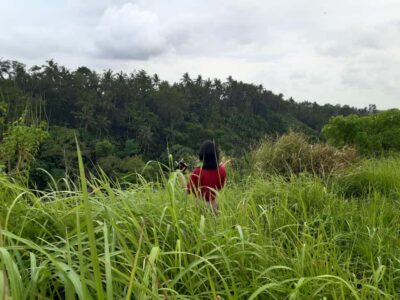
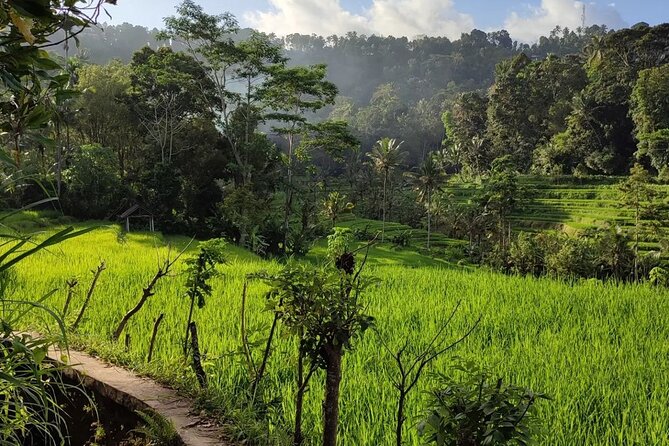
As you move up toward the terraces, you’ll follow paths that don’t always have obvious steps. Expect uneven footing and muddy bits in places—this isn’t a manicured garden trail. In exchange, you get the kind of perspective most people miss: rice terraces viewed from afar, but also rice terraces right at hand level.
You’ll also notice how the area is shaped for water management. The trek follows irrigation ways—the practical channels that connect fields and keep the system working. That’s one of the reasons the walk feels authentic instead of staged.
The hanging wooden bridge: a real crossing
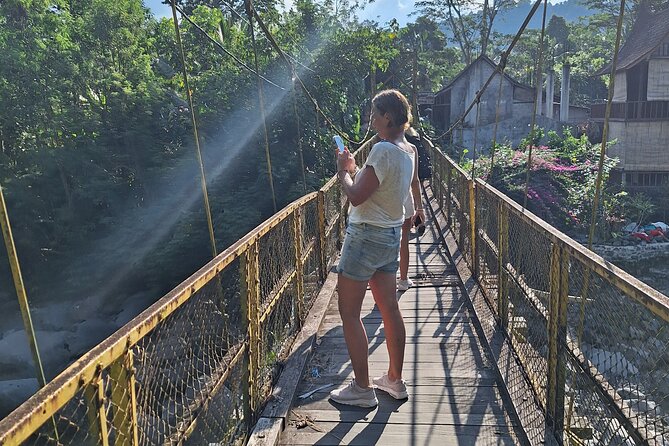
At one point you’ll pass through a hanging wooden bridge that’s fit for both motorbikes and humans. It’s the kind of detail that doesn’t exist on most “easy photo hike” routes because it serves daily life, not just scenic purposes. It also gives you a quick, memorable moment of contrast: village streets and farming paths in one walk.
Through village and temple: religion in everyday flow
You’ll pass through parts of Sidemen that include a temple used for local villagers’ prayers. This is a subtle but meaningful stop. It’s not a museum-style visit. It’s part of the same route you’re walking, which helps you see how faith and farming life overlap here.
Up-and-down streets, then irrigation paths again
The walk includes going up and down through village streets before returning to the field network. The route keeps shifting between village activity and farm work, so the experience doesn’t become repetitive. Around the rice fields, you follow irrigation lines and small paths—some narrow, some elevated—so your attention stays on your footing.
Finish: Warung Ume Anyar
After about 2 to 2.5 hours, the trek ends at Warung Ume Anyar Restaurant in Ogang Village. It’s a smart finish location because it gives you an easy place to cool down and grab a drink or meal right after walking.
Rice Fields, Mount Agung, and Why This Walk Matters
This is one of those experiences that changes your mental map of Bali. When you walk among the terraces, you start noticing how the farming system shapes everything: the paths are where they are because people need access; the irrigation is where it is because it keeps the fields alive; the views matter because they connect the valley to the volcano above.
Mount Agung shows up as a strong presence. You’ll appreciate it more once you see it framed by terraces and field edges, not just as a distant icon from a car window. Several guides and reviews focus on those moments where the view opens up in a way you simply cannot replicate from the roadside.
Learning about crops and farming life
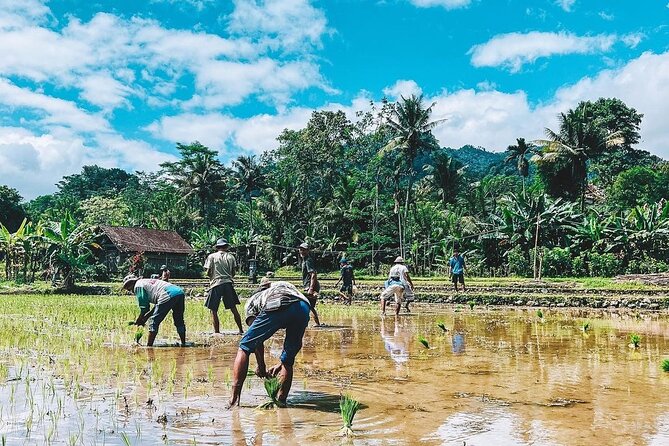
A standout theme in the feedback is how guides explain the rice-growing process and how seasonal harvests affect what’s planted next. One review notes that in December some rice crops have been harvested, and the guide tied that to what’s planted afterward and how crops connect to local cuisine.
Even if you don’t memorize every step, the value is in understanding what you’re looking at. You stop thinking of rice terraces as scenery and start thinking of them as a living, managed system.
Guide Style: What People Mean When They Say This Feels Local

A common compliment in the reviews is that guides don’t just point out views—they connect the walk to people. That’s where names like Adi, Daria/Darya, Adidas, and Wayan come up.
Here’s what that usually means on the ground:
- You get explanations of what you’re seeing (fields, irrigation, and village life) in plain terms.
- You’ll likely hear small stories about how farming changes over time.
- You’ll get help finding the less obvious paths, which is a big part of why the trek feels special.
I also like that this kind of guiding helps you ask better questions. When you’re walking through working land, you’ll naturally wonder how things work. A good guide answers without making it feel like a lecture.
What to Expect on the Ground: Easy Pace, Tricky Footing

Let’s keep expectations accurate. The tour is often described as not taxing and suited to a casual hiking level. But it’s still a walk through real terrain: narrow paths, elevated edges, water channels, and spots that can be muddy.
From the feedback, the big caution is watch your step. Some sections in the rice fields can be narrow and slippery, especially where the ground is smooth or wet. If you’re the type who hikes with sandals, this is where you’ll regret it.
What you should bring (not optional for comfort)
The tour lists mandatory items you should have:
- Sun hat
- Hiking boots/shoes
- Suncream (sunscreen)
- Sunglasses
That list is practical because the sun can be strong and the paths can be slick. Good shoes protect your ankles and give you traction when the path turns damp.
Physical fitness: moderate, with balance required
The tour says you should have moderate physical fitness. A review also adds a useful line of thinking: it’s not about extreme steepness, but about balance and agility on narrow terrace routes. So if you feel unsteady walking on uneven ground at home, don’t ignore that.
Getting There and Planning the Rest of Your Day
You’ll start at Pasar Sidemen and finish at Warung Ume Anyar, so your transport plan matters more than it does on a city walking tour.
From your hotel
The guidance recommends arranging transport through your hotel if you’re staying in Sidemen. It also says Grab can be limited because some hotels in Sidemen don’t allow Grab drivers to pick guests up from the hotel (drop-off only). That matters because it can turn a short ride into extra time and confusion.
After the trek: choose pickup ahead of time
For the ride home, you’ll want to be ready at the finish point around 2 to 2.5 hours after the trek starts. The area may have fewer drivers, and there can be issues like offline payment or extra payment requests.
If you can, arrange a driver in advance. It’s the simplest way to keep your day calm instead of rushed.
Slot it between meals
Since the trek ends at a restaurant, it’s easy to plan the rest of your day around food. I’d treat it like a morning or late-morning activity when you can follow with lunch nearby.
Price and Value: Why This $13.75 Trek Feels Fair
At $13.75 per person, this isn’t a budget-to-savings “toy tour.” The value comes from what you get for the price:
- A 2-hour walking experience in rural Sidemen
- A small group capped at 10 travelers
- Bottled water included
- A route that includes places you likely wouldn’t find alone, like the narrow field paths and the hanging wooden bridge
It also uses mobile tickets, and the listing notes group discounts, which can matter if you’re traveling with friends. The total cost is low enough that you can book confidently, but not so low that you should expect the walk to feel empty or generic.
The main thing you’re paying for is time with a guide who knows routes and can explain what you’re seeing. The reviews strongly suggest that guiding is the difference-maker here.
Who This Trek Is For (and Who Might Want a Different Plan)
This trek fits best if you:
- Want a rural Bali experience away from the crowded beach areas
- Like agriculture and local life more than big landmarks
- Prefer easy hiking that still keeps you engaged and moving
- Appreciate stories from people who live in the area
You might want a different option if you:
- Have trouble with balance on narrow, uneven paths
- Hate the idea of muddy shoes after field sections
- Want a fully paved, slip-free walk
The good news is the pacing is generally relaxed. You’re not racing up a mountain; you’re walking through active farmland and village life.
Quick Practical Tips Before You Go
A few real-world tips that match the walk style:
- Wear hiking shoes you don’t mind getting dirty.
- Bring sunscreen and a hat even if skies look mild.
- Plan for a careful footing moment, not just sightseeing.
- Keep your transport simple: pickup at the end is easiest when arranged beforehand.
- Expect the trek to be scenic enough that you’ll want photos, but don’t let stops slow you down too much—your guide will manage the flow.
Should You Book Sidemen Trekking?
If you want to see Sidemen rice terraces in a way that feels like daily life—not just a viewpoint—this is an easy yes. The price is reasonable, the walk length works for a half-day slot, and the small-group setup helps the guide connect the dots about farming and village culture.
Just book it with the right expectations: it’s an easy walk for distance and time, but you’ll need good balance on narrow paths. If that sounds fine, you’ll leave with a stronger sense of how Sidemen actually runs—water, rice, people, and Mount Agung keeping the whole system in view.
FAQ
How long is the Sidemen trekking experience?
It runs about 2 hours, and the info also notes you should allow around 2 to 2.5 hours from start time to finish.
Where do I meet for the trek?
You meet at Pasar Sidemen (Sidemen Traditional Market), at the shop with the sign Upa Boga.
Where does the trek end?
The trek ends at Warung Ume Anyar Restaurant in Ogang Village.
Is bottled water included?
Yes. Bottled water is included.
Is hotel pickup included?
No. Hotel pickup and drop-off are not included.
What should I bring?
You’re required to bring a sun hat, hiking boots/shoes, sunscreen, and sunglasses.
How difficult is the walk?
It’s described as moderate and generally not taxing, but you do need to watch your step. Some paths in the rice fields can be narrow and slippery, so balance matters.
How many people are in the group?
The tour has a maximum of 10 travelers.
Can I visit the market before the trek?
Yes. Pasar Sidemen is open from 5:00 AM to 10:00 AM, and it’s recommended to book a morning session if you want extra market time.
Is there free cancellation?
Yes, free cancellation is offered. You can cancel up to 24 hours in advance for a full refund.
What if the weather is poor?
The experience requires good weather. If it’s canceled due to poor weather, you’ll be offered a different date or a full refund.
More Walking Tours in Ubud


More Ubud Tours We Rate





Walks & Jungle Treks Around Ubud

Just added around Ubud
- Ubud: White Water Rafting with visit Ubud Monkey Forest
★ 5.0 · 3 reviews - Private Guided Bali Car Charter
★ 5.0 · 3 reviews - East Bali and Lempuyang Temple Tour
★ 5.0 · 3 reviews - Bali Downhill Cycling and White Water Rafting
★ 5.0 · 3 reviews - Cave Tubing Adventure in Ubud
★ 5.0 · 3 reviews
Ubud Jungle Trekking & Walks, compared.
 ★ 5.0Bali Jungle Trekking and Lake Canoeing TourFrom $3484 reviews
 ★ 5.0Ubud Guided Walking TourFrom $2879 reviews
 ★ 5.0Sidemen Trekking with Cultural Encounters and Nature ViewsFrom $1220 reviews
 ★ 4.5Sidemen Trekking Through Rice Terraces and VillagesFrom $912 reviews
 ★ 5.0Bali Sidemen Silver Class Making with 7 Gram of SilverFrom $249 reviews
 ★ 5.0Munduk Twin Lake Jungle Trek with Sacred Forest Temples&CanoeingFrom $237 reviews
 ★ 5.0Myth of Pejeng Walking TourFrom $216 reviews
 ★ 5.0Mystery Mountain Cooking Class SidemenFrom $496 reviews
Browse the lists this tour appears in