
Reviewed · WORKSHOPS
From Ubud: Traditional Bali Coconut Oil Class
Coconut oil starts with a family. In Delodsema Taro Village north of Ubud, you learn a traditional method step by step and actually get to see how it fits into everyday Balinese life. It’s not just a kitchen demo; it’s a small window into how a skill passes down through generations.
I love that the class happens in a real family compound, with garden time and backyard animals built into the visit. You’ll enjoy Balinese coffee or tea (plus snacks), and you’ll get a calm, human pace that makes the whole thing feel more like visiting a home than buying a souvenir.
The one catch: the total class is listed at 90 minutes, but the real oil-making takes longer than an hour. So plan for some waiting and heat while the mixture does its job.
In This Review
- Key Things to Know Before You Go
- Why Make Coconut Oil in Taro Village Instead of a Big Workshop
- From Ubud to Delodsema: Countryside Views and Village Life First
- The Family Compound Tour: House, Garden, and Backyard Animals
- Step-by-Step Coconut Oil Making: Traditional Method, Real Time
- While the Oil Cooks: Herbal Tea, Traditional Snacks, and Feeding the Animals
- What You Take Home: Your Coconut Oil Souvenir (and How to Use It)
- Price and Value: Does $21 Make Sense for a Ubud Coconut Oil Class?
- Who This Is Best For (and Who Should Rethink It)
- Tips to Make Your 90 Minutes Go Smoothly
- Should You Book the Traditional Bali Coconut Oil Class?
- FAQ
- How long is the traditional Bali coconut oil class?
- Where does the class take place?
- Is the instructor able to teach in English?
- Is pickup available from Ubud?
- What’s included in the price?
- Will I get to take coconut oil home?
- Is there free cancellation and reserve-and-pay-later?
Key Things to Know Before You Go
- A countryside prelude near Ubud: you start with a village-life look and rice-terrace views before heading into the home compound.
- Family-style hosting: the experience is taught in English, with a friendly, step-by-step approach in a small group setting.
- Traditional coconut oil process: you’ll make 100% real coconut oil using the traditional method, not an industrial shortcut.
- Garden and animal moments: you may see roosters and pig nearby, and you’ll help feed them with coconut grated during the waiting time.
- You take coconut oil home: you leave with coconut oil as a souvenir right after the session.
- Sometimes it’s very small: the class can be intimate, including just you and your partner depending on schedule.
Other Gianyar tours and experiences to line up next
- From Ubud: Traditional Bali Coconut Oil Class★ 5.0 · 22 reviews
- Threads of Tradition Miniature Keliki Painting Workshops★ 5.0 · 11 reviews
- Ubud: Balinese Cooking Class with Traditional Dishes★ 5.0 · 9 reviews
Why Make Coconut Oil in Taro Village Instead of a Big Workshop
If you’ve done Bali classes before, you might expect a neat, polished studio. This one is different. It’s based in Taro Village in the north Ubud area, where you get countryside views and a real sense of daily rhythm.
That matters, because coconut oil isn’t just a product here. It’s part of how a family remembers and uses old knowledge. The host explains the process with that context, and it changes how you experience the activity.
Also, the price feels fair for what’s included. For $21 per person, you’re getting not only the making part, but also the village walk, tea or coffee, traditional cake or cookies, and the coconut oil to take home.
From Ubud to Delodsema: Countryside Views and Village Life First
The session starts by bringing you to Delodsema Taro Village, which is north of Ubud. If you’re meeting on your own, the map listing Traditional Bali Coconut Oil points about two minutes south from Meson Elephant Park Taro.
Before you get to the home, you explore local life and you’ll have rice terrace views along the way. This isn’t a long sightseeing detour. It’s more like a warm-up—enough to slow you down and set the tone.
If you choose pickup, it’s offered from hotels in the Ubud area. I like this for people staying central, because you can show up without worrying about navigating small roads.
The Family Compound Tour: House, Garden, and Backyard Animals
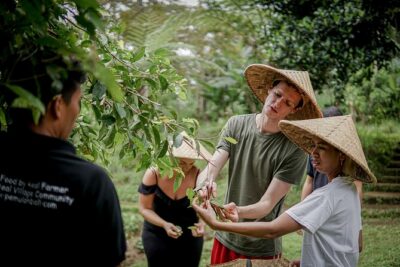
When you arrive, you’re not led to a classroom. You’re welcomed into a family space—house, garden, and pets like roosters and pig.
This is one of the most praised parts of the experience. People consistently point out the garden visit and the natural sounds of village life—something you won’t get inside a hotel or on a cruise-style tour.
You’ll also be introduced to the plants and fruits around the property. In particular, you may taste fruits during the garden time, and you might even receive extra pieces to bring along (depending on what’s available).
Practical note: this part can involve uneven ground and outdoor time, so wear something comfortable you don’t mind getting a little dusty.



Step-by-Step Coconut Oil Making: Traditional Method, Real Time
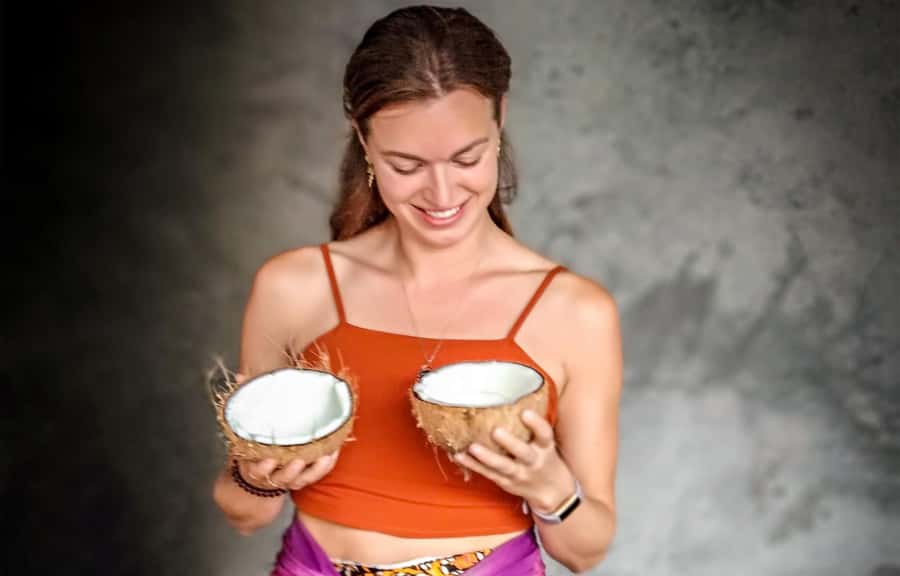
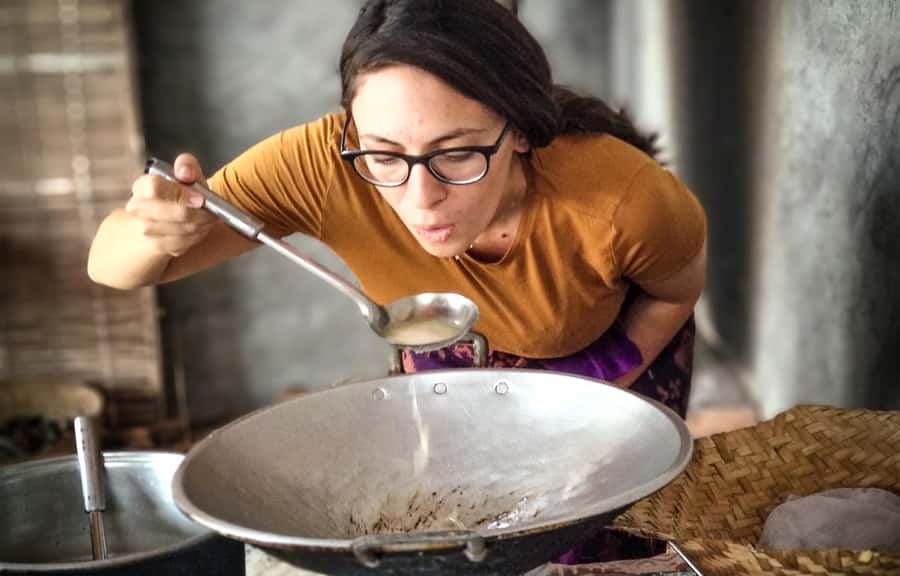
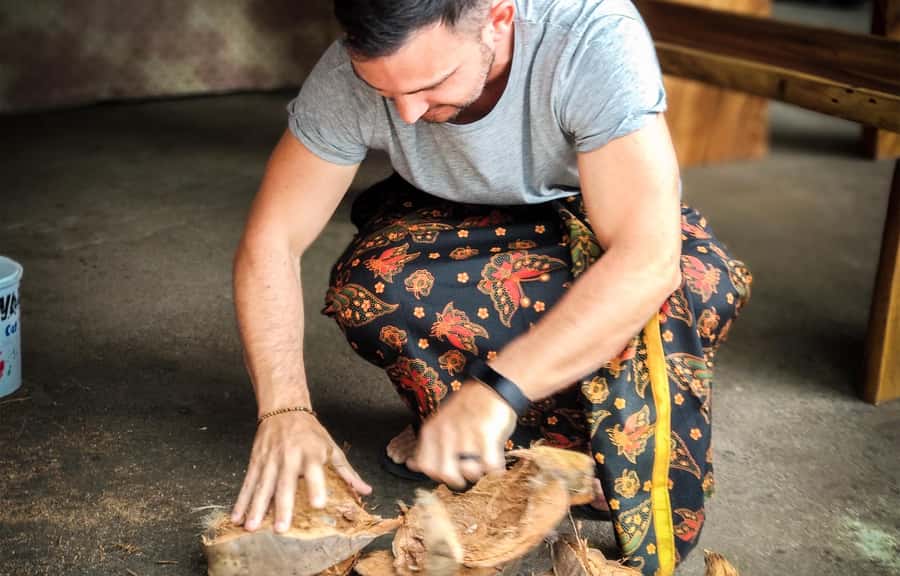
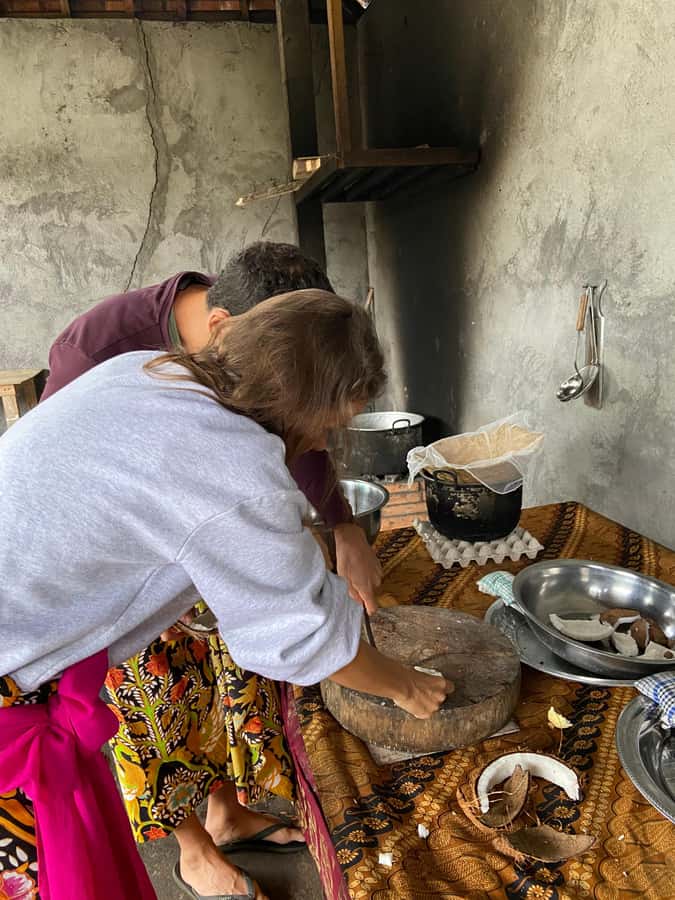
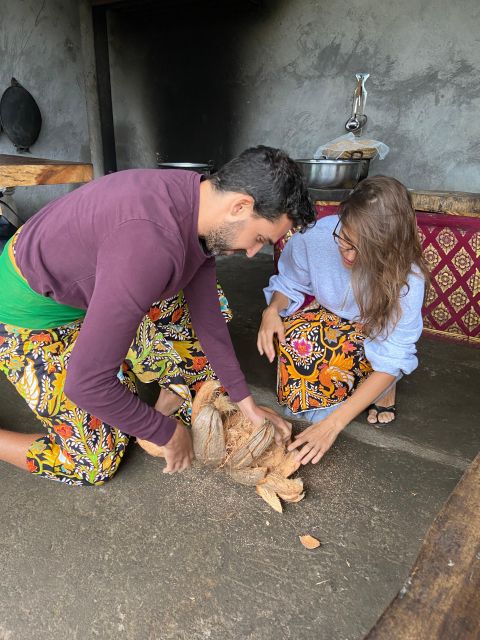
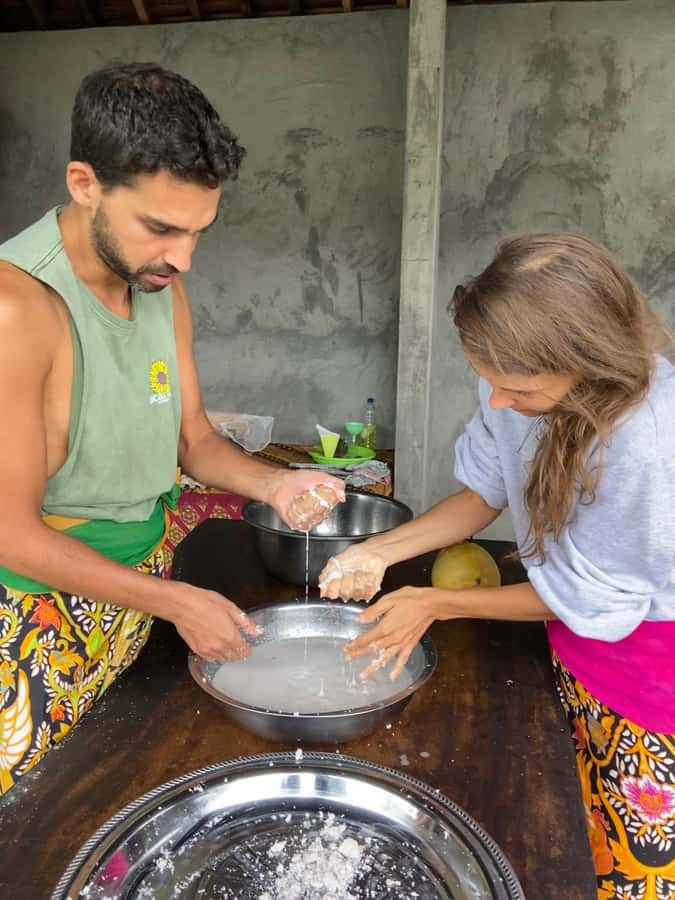
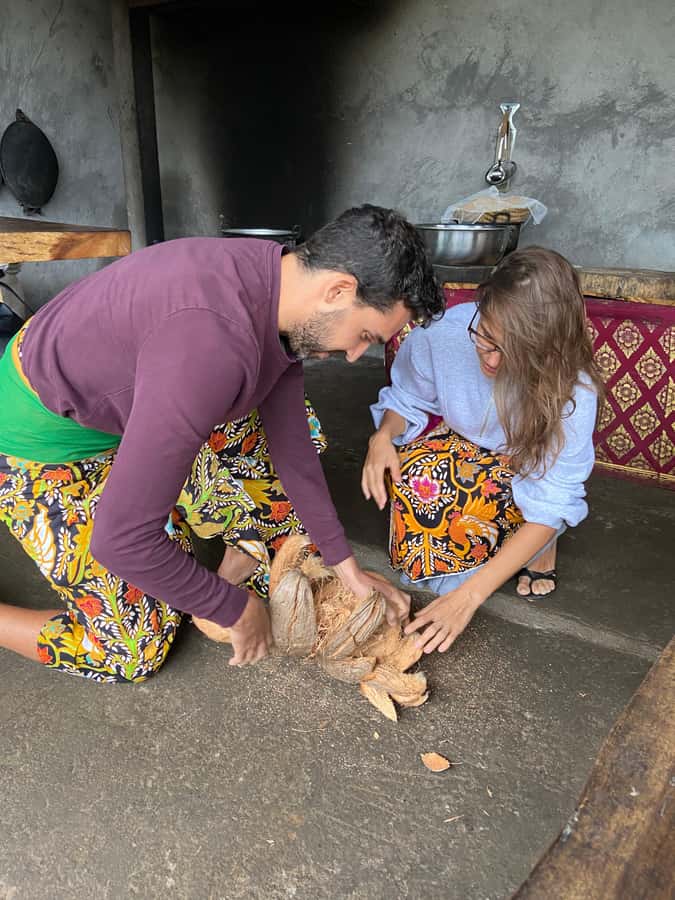
The main event is making traditional Bali coconut oil. The key word here is traditional. You’ll be shown how to create 100% real coconut oil using the home process, and it’s expected to take more than 1 to 1.5 hours to finish.
The host typically teaches in English, and you’ll get the steps explained clearly—especially if you’re the type of person who wants to understand what’s happening, not just watch. One review specifically mentioned Putu as the kind, helpful guide who explained the process and shared a lot about Balinese culture.
What I like about this approach: you learn in the context of daily use. Coconut oil has become popular in wellness circles, but here it’s framed as something families make and carry for travel because it has practical value.
You should also know the pace. The making process takes time, so the class doesn’t rush you through the “fun part.” It lets the oil work, and you wait in a laid-back way instead of constantly changing stations.
While the Oil Cooks: Herbal Tea, Traditional Snacks, and Feeding the Animals
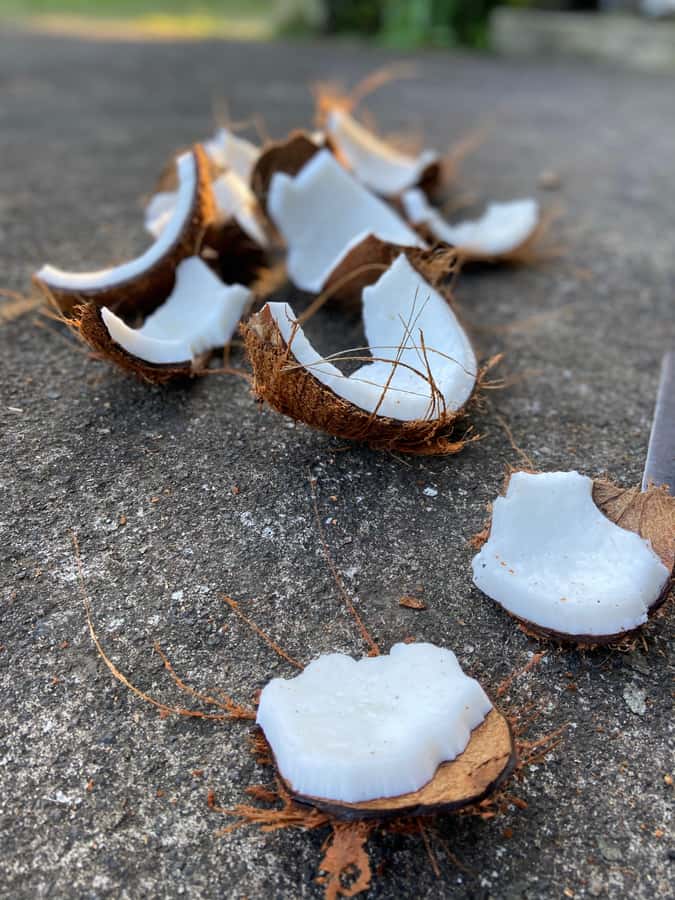
Here’s where the experience feels genuinely local. While the oil is finishing, you’ll do something that fits the property.
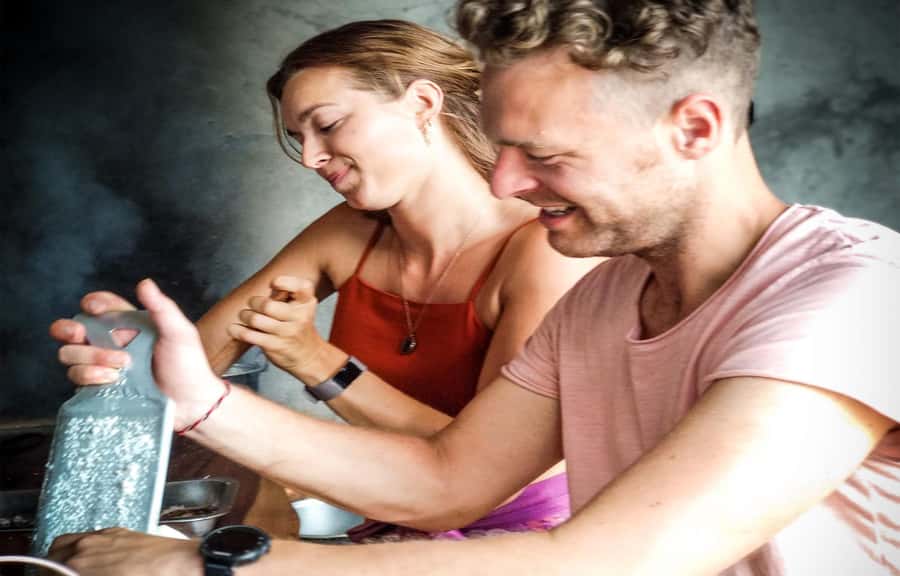
You’ll use the coconut grated for feeding the roosters and pig in the backyard. It’s simple, but it’s also memorable, because it connects the activity to a working home.
During the waiting time, you’ll enjoy fresh herbal tea together. You’ll also be offered Balinese coffee or tea or mineral bottle water (depending on what’s provided for your group), plus traditional cake or cookies.
This is a smart design. If you’ve ever done a food class that treats waiting like a nuisance, you’ll appreciate how they turn the downtime into something useful. You taste, you chat, and you see more of the compound instead of getting bored.
What You Take Home: Your Coconut Oil Souvenir (and How to Use It)
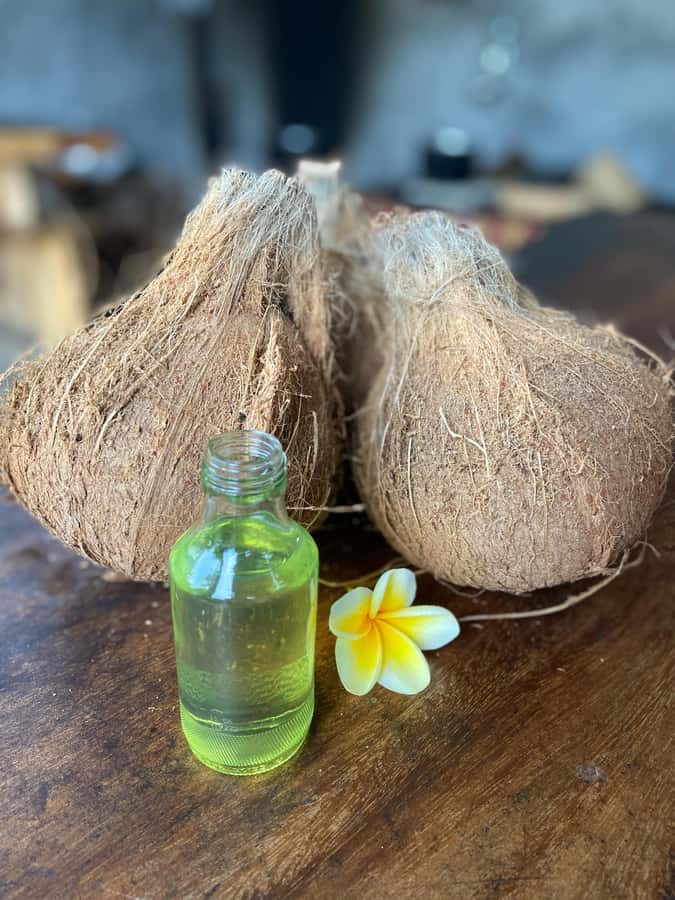
When the oil is done, you bring it home after the session ends. The tour includes coconut oil as your souvenir, so you’re not leaving with just a photo or a label you could buy anywhere.
One of the nicest parts is that the oil isn’t presented as a mystery product. It’s made in front of you, using the traditional process, and taught as family knowledge. That makes it feel more personal than a typical shopping stop.
As for how you might use it at home: coconut oil is commonly used for beauty and everyday household routines. If you’re choosing it because you like natural products, this class gives you the confidence of knowing what you’re buying—because you watched it being made.
If you’re bringing it back through airport security, keep it in its provided container. Also, pack it carefully so it doesn’t leak if it gets jostled.
Price and Value: Does $21 Make Sense for a Ubud Coconut Oil Class?
Let’s be practical. $21 for a class that includes:
- time in a village and garden setting
- Balinese coffee or tea (or mineral bottle water)
- towels or a sarong
- traditional cake or cookies
- coconut oil to take home
- an English-speaking instructor
- a small-group experience
…is a decent deal, especially because the product isn’t the only takeaway. You’re also paying for access to a private home compound and the time it takes to do the real traditional process.
Where the value really shows up is in the experience design:
- You’re not only watching; you’re part of the activity flow.
- You get downtime with tea, snacks, and garden time instead of standing around.
- You leave with something tangible.
The biggest “hidden value” is cultural context. The host shares how the family learned it from grandmothers, and how they use it during travel. That connection is hard to get from a mass-market shop.
Who This Is Best For (and Who Should Rethink It)
This tour is a great match if you want:
- a low-key cultural class near Ubud
- hands-on food making in a real Balinese home environment
- small-group attention in English
- something practical to bring back, like a coconut oil souvenir
It’s also a good fit for couples. Some schedules can be very small, even just you and your partner, which makes it easier to ask questions and go at the host’s pace.
You might rethink it if you only want quick, action-packed tourism. The oil-making takes time, and part of the class involves waiting while the process completes.
You also might want to skip or plan carefully if you dislike animal contact. Feeding roosters and being around a pig is part of the experience.
Tips to Make Your 90 Minutes Go Smoothly
A few simple moves make the day better:
- Wear clothes that can handle a little outdoor mess. You’ll be on property grounds and in warm air.
- Bring sunscreen and keep water in mind. You’ll have drink options, but this is still Bali heat.
- Expect some waiting while the oil finishes cooking. Use that time to ask questions about ingredients and daily uses.
- If you’re sensitive to smells, know coconut oil production can be fragrant. It’s not unpleasant, but it is real coconut aroma.
If you’re coming from Ubud by pickup, confirm the meeting plan with your operator. If you’re meeting yourself, use the map listing and aim for the area about two minutes south of Meson Elephant Park Taro.
Should You Book the Traditional Bali Coconut Oil Class?
Yes—if you’re looking for a small, authentic Ubud-area experience that goes beyond souvenir buying. This class gives you traditional Bali coconut oil made by hand, plus countryside views, garden time, and a gentle peek into a real family compound.
I’d book it if you care about where your food and products come from, and if you enjoy learning from people who learned from their grandmothers and still make it the old way. It’s also a smart choice for a lighter day when you want something hands-on but not exhausting.
Pass if you want only fast thrills, or if animal feeding and prolonged cooking time would annoy you. For everyone else, this is one of the better “leave with something real” activities in the Ubud orbit.
FAQ
How long is the traditional Bali coconut oil class?
The experience is 90 minutes.
Where does the class take place?
It’s located at Delodsema Taro Village, north of Ubud. The meeting point is about 2 minutes’ drive south from Meson Elephant Park Taro, using the map listing Traditional Bali Coconut Oil.
Is the instructor able to teach in English?
Yes. The instructor is listed as English-speaking.
Is pickup available from Ubud?
Pickup is optional. You can be picked up from your hotel in the Ubud area.
What’s included in the price?
Included items are Balinese coffee or tea or mineral bottle water, towels or a sarong, traditional cake or cookies, and coconut oil to take home. You’ll also explore the traditional village and the house and garden area with pets such as roosters, chicken, and pig.
Will I get to take coconut oil home?
Yes. You’ll bring home coconut oil as your souvenir after the session ends.
Is there free cancellation and reserve-and-pay-later?
The activity offers free cancellation up to 24 hours in advance for a full refund, and reserve now & pay later is available.
If you tell me your travel dates and whether you prefer pickup or self-driving, I can help you time this alongside the rest of your Ubud plans.
Hands-On in Gianyar

More Gianyar Tours We Rate

Just added around Gianyar
- Bali: A Full-Day Tour to Goa Raja, Tibumana and Tukad Cepung
★ 5.0 · 3 reviews - Bali: 3 best waterfall and tegalalang rice terrace
★ 5.0 · 3 reviews - Bali: Temples, waterfall, and Rice Terrace Guided Tour
★ 5.0 · 3 reviews - Bali: Sacred Water Temple Ritual and Balinese Healing Spa
★ 3.6 · 3 reviews - Ubud: Healing & Purification with Shaman at Hidden Temple
★ 3.3 · 3 reviews
Workshops, compared.
 ★ 4.9Hands-On Silver Jewelry Making Near Ubud’s Monkey ForestFrom $281,789 reviews
 ★ 5.0Ubud Cooking Class Bali with Balinese ChefFrom $351,609 reviews
 ★ 5.0Ubud Silver Class Jewelry making in baliFrom $36978 reviews
 ★ 4.9Cooking Class with Transfers and Optional Market VisitFrom $21824 reviews
 ★ 5.0PRIVATE Authentic Balinese Cooking Class in Ubud at Putu’s HomeFrom $75644 reviews
 ★ 4.9Canggu: Bali Turtle Silver & Gold WorkshopFrom $49643 reviews
 ★ 4.8Balinese Cooking Class and Market TourFrom $23531 reviews
 ★ 5.0Balinese Farm Cooking Class by Pemulan BaliFrom $39410 reviews
Browse the lists this tour appears in