
Reviewed · MONKEY FOREST TOURS
Balinese Traditional Food Cooking Class with Ubud Monkey Forest and SPA
Ubud can be a lot of temples and selfies, or it can be a full day that explains what makes Balinese life tick. This combo pairs a hands-on Balinese traditional food cooking class with market and rice-farm stops, then tops it off with Sacred Monkey Forest and a 2-hour spa treatment.
I especially like that you’re not just watching a demo. You learn ingredient basics first, then cook and eat your own dishes for lunch, so the day feels practical and satisfying. I also love the human scale: small group size means you’re more likely to get real guidance from the cooking class guide, not just a crowd shuffle.
One thing to consider: the schedule is long (about 10 hours), and you’ll be out from morning through early afternoon before the spa reset. If heat and early starts don’t play nice with you, plan your energy accordingly.
In This Review
- Key highlights to look for
- 7am Pickup and a smart, full-day flow in Ubud
- The 8:30 market stop: learn ingredients, not just recipes
- Rice-farm learning: why farmers still matter in your lunch
- Cooking class: small group attention and a lunch you made
- Sacred Monkey Forest Sanctuary: what you’ll actually notice
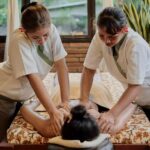
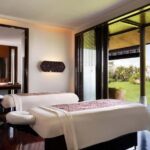
- The spa reset at 2 hours: massage and scrub, not just a lounge
- Price and value: what $135 gets you in real terms
- Group size, privacy, and timing: what to expect day-of
- Who should book this Ubud day?
- Should you book Balinese cooking + Monkey Forest + spa?
- FAQ
- How long is the experience?
- What time does pickup start?
- What happens in the morning?
- What is included in the lunch?
- Is the cooking class private?
- What is included in the spa treatment?
- How long do you spend at Monkey Forest?
- How many people can be in the group?
- What is the minimum number of people required?
- Is free cancellation available?
Key highlights to look for
- Market-to-farm ingredient learning before you touch a stove
- Small group cooking for more direct help from the instructor
- Lunch included so you actually dine on what you make
- Sacred Monkey Forest timing that helps you see monkeys calmly in the morning window
- A real spa block: 1 hour body massage plus 1 hour body scrub
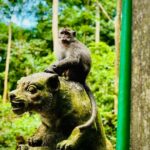
Long-tailed macaques and mossy temple gates, up close.
- Ubud: Monkey Forest, Jungle Swing, Rice Terrace, and Water Temple★ 5.0 · 7,160 reviews
- Ubud: Full-Day Rice Terrace, Monkey Forest & Waterfall★ 5.0 · 2,634 reviews
- Hands-On Silver Jewelry Making Near Ubud’s Monkey Forest★ 4.9 · 1,789 reviews
- Ubud: Monkey Forest, Ceking Rice Terraces and More– Full Day★ 4.7 · 917 reviews
7am Pickup and a smart, full-day flow in Ubud
This tour is built like a day with momentum. You’ll start with hotel pickup in Bali at 7:00 am, and you’ll be headed out early enough to beat the worst of the day’s crowds and heat. A private driver handles the driving, while a tour escort stays part of the plan so the transitions don’t feel chaotic.
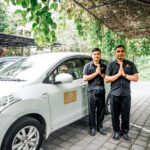
In the review I read about the experience, the driver was Dananjaya, and the big detail that stood out was how on-time he was, plus how patiently he waited at each stop. That matters in Ubud, where it’s easy for a day to go sideways if your transport isn’t organized.
The rest of your day runs in clear chunks: market and farm learning, cooking class with lunch, Monkey Forest, then spa. At about 1:00 pm you switch gears from cooking to wildlife, and by around 2:00 pm you’re finishing the Monkey Forest visit and heading to the spa.
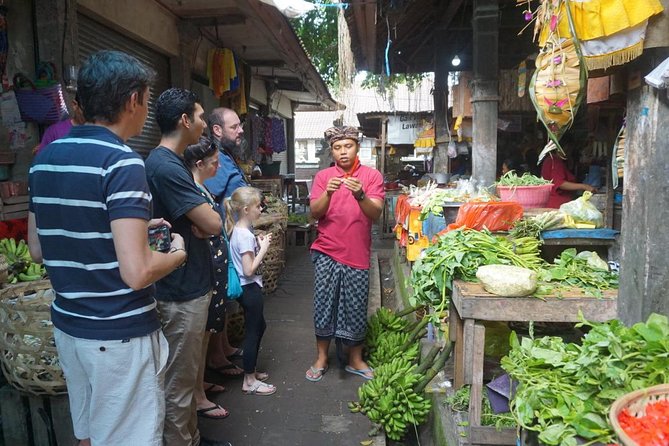
The 8:30 market stop: learn ingredients, not just recipes
Your first key stop is the local or traditional market around 8:30 am. This is where the tour earns its keep. Instead of only teaching you techniques, you learn what ingredients look like, what they smell like, and how they show up in Balinese cooking.
Markets also help you understand the logic behind the dishes. Balinese food relies on flavors that come from herbs, spices, aromatics, and ingredients that you might not find the same way at home. Even if you don’t recognize every item right away, you’ll start building a mental map of what “Balinese” means flavor-wise.
Practical tip: markets can be visually loud and busy. Keep your camera away until you find one ingredient you’re actually curious about. Then ask your cooking guide about what it contributes to the dish. You’ll remember the answer when you cook later.
Rice-farm learning: why farmers still matter in your lunch
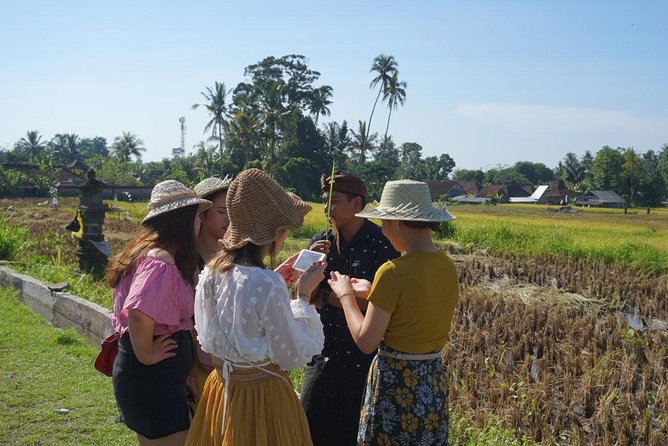
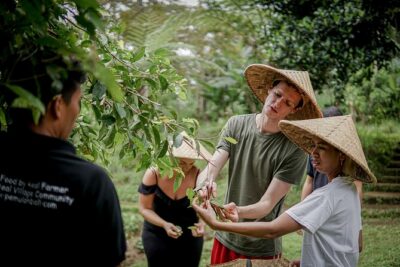
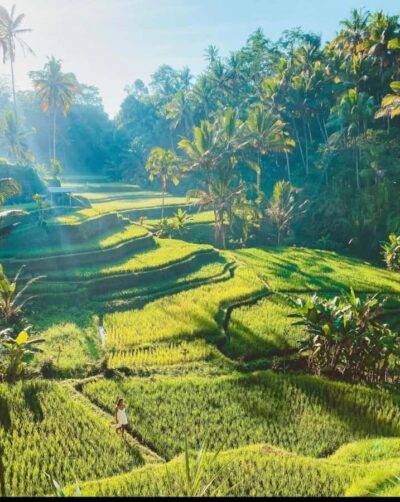
After the market, you meet farmers and learn how rice is grown. This isn’t just scenic background. Rice farming connects directly to Balinese cooking because rice is the base for everyday meals, and the culture around growing food is part of daily life.
This stop also gives you context for why the cooking class feels more grounded. When you understand where staple ingredients come from, the recipes you cook later stop being random steps and start being part of a system—land, water, seasonal growth, and tradition.
If you’re the type who likes to know the story behind a dish, this is a highlight. If you’re only hungry and want to get cooking fast, it may feel like “extra time” at first. But it tends to make the class more meaningful once you start cooking.
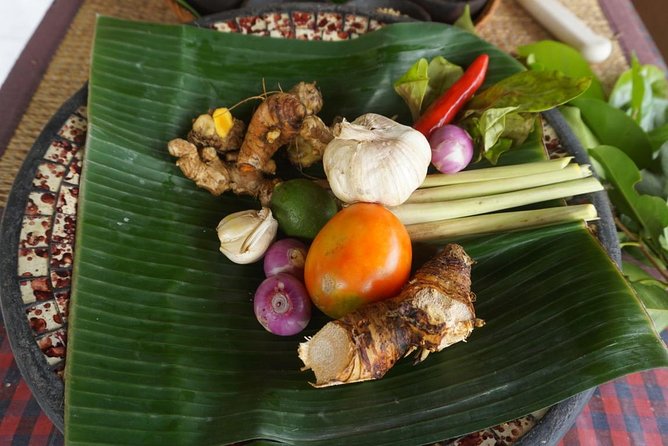
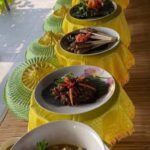
Market basket to banana-leaf plate. More Ubud cook-alongs.
Cooking class: small group attention and a lunch you made
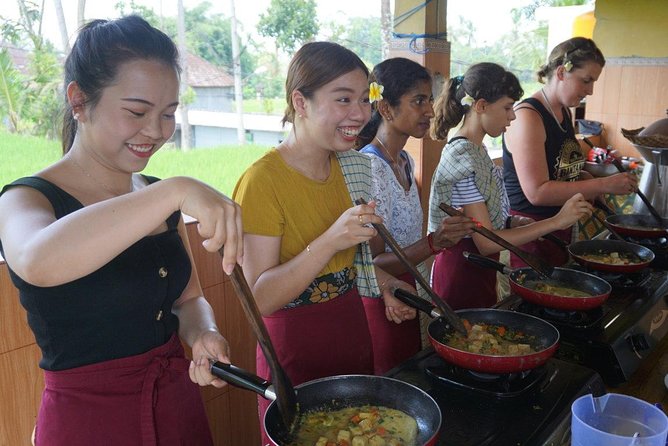
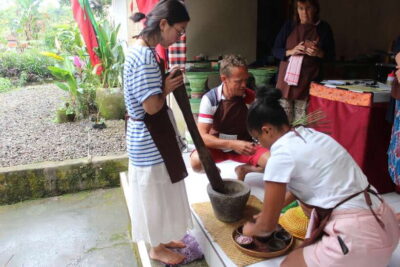
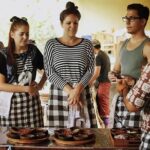
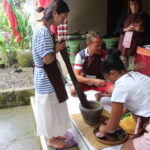
The cooking class is not private, but the experience keeps things controlled: the tour and spa are private, and the maximum group size is 15 travelers. In real terms, that usually means less waiting, fewer distractions, and more chance to ask questions while you cook.
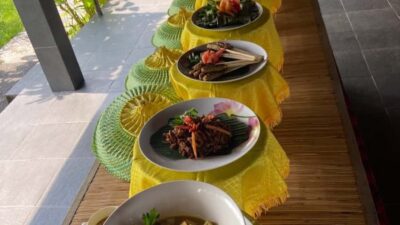
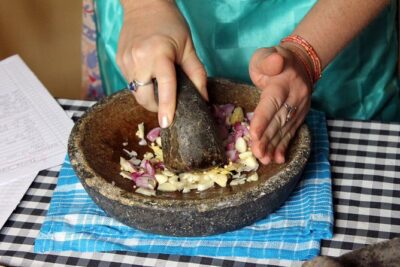
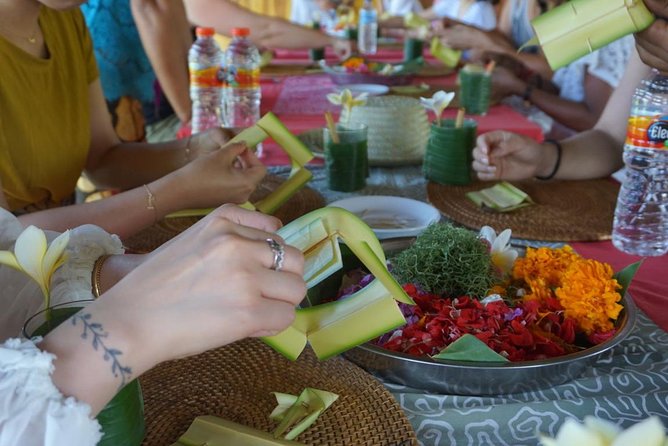
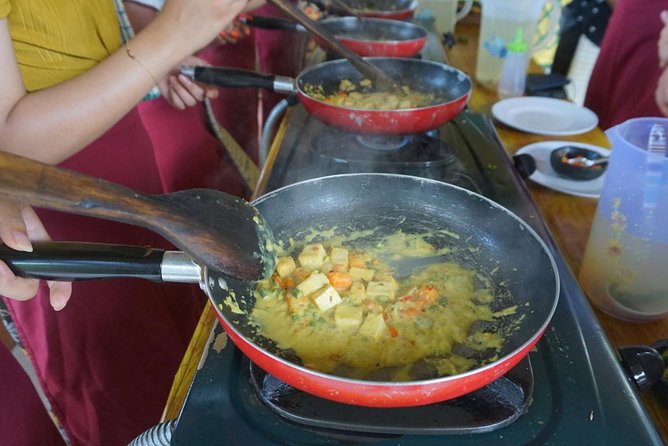
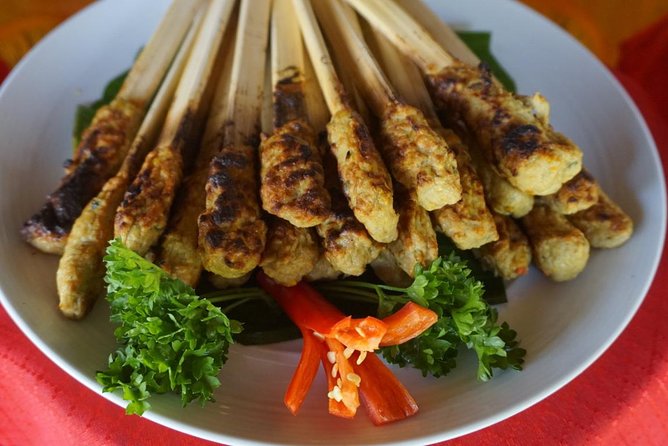
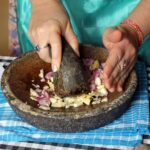
You’ll learn to make multiple delicious menu items using authentic Balinese recipes and ingredients. Then you’ll have lunch included at the cooking class—so you don’t leave with only photos. You eat what you made, which is often the fastest way to judge whether a recipe actually works.
What to expect in the class itself isn’t described step-by-step, but you can still plan for the flow:
- You’ll likely get guidance on ingredient prep and key flavor components.
- You’ll cook, share a station with your group, and get corrections when needed.
- You’ll end with a meal that includes the dishes you prepared.
Possible drawback: cooking classes can be hands-on and warm, so wear clothes you can get a little messy in. Also, if you have serious dietary restrictions, the tour details don’t list customization options. It’s worth checking in advance so you don’t end up with a dish you can’t eat.
Sacred Monkey Forest Sanctuary: what you’ll actually notice
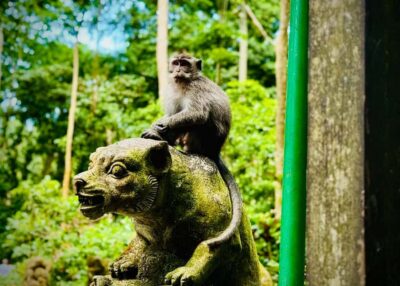
After cooking, your driver takes you to Sacred Monkey Forest Sanctuary around 1:00 pm. You’ll see hundreds of playful monkeys in a calm, lush forest, with Balinese long-tail macaques being the main monkey in the area. The forest also includes about 115 species of trees, and the tour notes that some trees are sacred or tied to Balinese rituals and materials.
That forest detail matters because it helps you see the place as more than a monkey attraction. You’re walking through a cultural landscape, where trees aren’t just scenery—they’re part of beliefs and practices.
Timing note: you finish visiting the Monkey Forest at 2:00 pm, so the window is long enough to look around, but not so long that you’re stuck in the hottest stretch without a break. Still, expect you’ll want water and steady footwear. You’ll be walking, and you’ll be watching monkeys.
Also, this is a place where monkeys can act like monkeys—quick, curious, and bold. Keep your bag secure and avoid sudden grabby behavior. You’re there to observe, not to negotiate with wildlife.
The spa reset at 2 hours: massage and scrub, not just a lounge
Once you wrap up the Monkey Forest, you head to the spa and enjoy a 2-hour treatment. The treatment is clearly defined:
- 1 hour body massage
- 1 hour body scrub
This is a nice payoff for the day. Cooking means you’ve been standing, moving, and likely sweating a bit in the process. Monkey Forest adds walking and sun exposure. The spa is the segment that turns the day from active to recover.
One key detail: the therapists use products made from blended natural ingredients and selected natural oils, herbs, and spices. That suggests the spa focuses on comfort and scent, not just basic services. It also helps the whole day feel cohesive—Balinese cooking, Balinese nature, then Balinese body care.
Bring your calm expectations. You’re not going to do anything strenuous right after, and you won’t want to. This is the time to let your body unclench.
Price and value: what $135 gets you in real terms
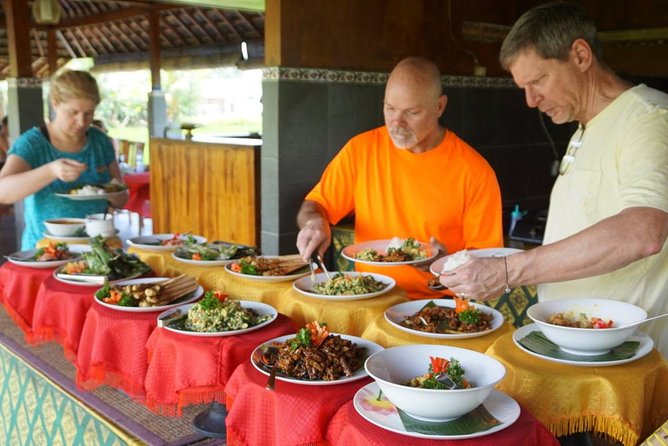
At $135 per person, you’re paying for a full package rather than separate tickets. Here’s what’s included:
- Cooking class guide
- Lunch at the cooking class
- 2-hour spa treatment
- Private driver
- Hotel pickup and drop-off
- Transport by private vehicle
- Bottled water
- Tour escort
Why that matters: Bali transport can eat time and energy if you have to coordinate yourself across multiple stops. Here, your logistics are handled. That makes the day feel easier, especially if you want to maximize sightseeing without doing constant planning.
Also, the price includes the big “emotional” parts of the day: the cooking class (learning and eating), the Monkey Forest (unique and fun), and the spa (recovery). If you booked those separately, you’d likely spend similar money once you add transport and a structured schedule. The value comes from the way the day is bundled.
If you’re traveling solo, the tour has a minimum of 2 people per booking, so you’d need to pair up with others or check if the operator can accommodate single travelers through the group. If you’re two people, the math often feels more reasonable because you’re splitting the structure of a private transport plan.
Group size, privacy, and timing: what to expect day-of
You’ll have a maximum of 15 travelers on the tour. That size is important. It’s big enough for a lively class, but small enough that your guide can still help without losing you in the shuffle.
Here’s the key nuance:
- Cooking class is not private (so you’ll share the class setting)
- Tour and spa are private
That usually means you might still be in a shared cooking space, but your overall day plan and your spa experience are protected from the chaos of mixing with strangers the whole time.
Timing wise, the day is paced in a way that keeps the “busy” blocks from overlapping too much. Market and rice learning happen in the morning. Cooking and lunch fill the middle. Monkey Forest takes you into the early afternoon. Spa closes the loop.
A small practical note: you’re on the move from 7:00 am onward, with no mention of extra breaks besides the spa. If you’re the kind of person who likes long bathroom stops or slow café time, you’ll need to work with the schedule.
Who should book this Ubud day?
This tour fits best if you:
- Love food enough to want hands-on instruction, not just a meal
- Want a cultural thread from market to farming to cooking
- Enjoy nature and wildlife, but also like learning what you’re seeing
- Really value recovery time after a busy day, since the spa is built in
It may be less ideal if you’re looking for a shorter outing. Ten hours is a commitment. It’s also not the best choice if you need strict dietary customization (the details don’t mention it).
Should you book Balinese cooking + Monkey Forest + spa?
If you want one Ubud day that feels like it belongs together—food first, nature second, and a body reset at the end—this is a strong pick. The biggest reason is the structure: you learn ingredients at the market, rice farming adds context, you cook and eat your creations at lunch, and then the spa helps you finish without feeling wrecked.
Book it if your ideal day includes hands-on cooking, a real 2-hour massage and scrub, and an organized schedule with a driver who actually runs on time. Based on the details you have here, you’re not buying random stops—you’re buying a full sequence.
FAQ
How long is the experience?
It runs about 10 hours (approx.).
What time does pickup start?
Your private driver picks you up at 7:00 am from your hotel.
What happens in the morning?
You meet your guide and visit a local or traditional market around 8:30 am, then meet farmers to learn how rice is grown.
What is included in the lunch?
Lunch is included at the cooking class.
Is the cooking class private?
No. The cooking class is not private, but the tour and spa services are private.
What is included in the spa treatment?
The spa includes a 2-hour treatment: 1 hour body massage and 1 hour body scrub.
How long do you spend at Monkey Forest?
You visit Sacred Monkey Forest Sanctuary and finish around 2:00 pm, after arriving at about 1:00 pm.
How many people can be in the group?
The maximum is 15 travelers.
What is the minimum number of people required?
The booking requires a minimum of 2 people.
Is free cancellation available?
Yes. You can cancel up to 24 hours in advance for a full refund.
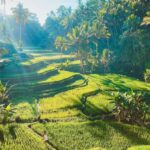
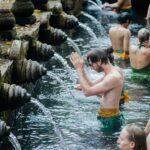
Spa Afternoons in Ubud
Cook Balinese in Ubud
Into the Monkey Forest

Just added around Ubud
- Ubud: White Water Rafting with visit Ubud Monkey Forest
★ 5.0 · 3 reviews - Private Guided Bali Car Charter
★ 5.0 · 3 reviews - East Bali and Lempuyang Temple Tour
★ 5.0 · 3 reviews - Bali Downhill Cycling and White Water Rafting
★ 5.0 · 3 reviews - Cave Tubing Adventure in Ubud
★ 5.0 · 3 reviews
Monkey Forest Tours, compared.
 ★ 5.0Monkey Forest, Jungle Swing, Rice Terrace, and Water TempleFrom $317,160 reviews
 ★ 5.0Full-Day Rice Terrace, Monkey Forest & WaterfallFrom $232,634 reviews
 ★ 4.9Hands-On Silver Jewelry Making Near Ubud’s Monkey ForestFrom $281,789 reviews
 ★ 4.7Monkey Forest, Ceking Rice Terraces and More– Full DayFrom $37917 reviews
 ★ 4.8Sacred Monkey Forest Sanctuary Ticket and Guided TourFrom $16675 reviews
 ★ 5.0Ubud Tour with Monkey Forest Waterfalls Temples and MoreFrom $30495 reviews
 ★ 4.8Monkey Forest Sanctuary & Jungle Swing TourFrom $16360 reviews
 ★ 5.0Gorilla Cave ATV Bali Ubud, Monkey Forest, Temple, and LunchFrom $75295 reviews