
Reviewed · COOKING CLASSES
The Authentic Balinese Cooking Experience
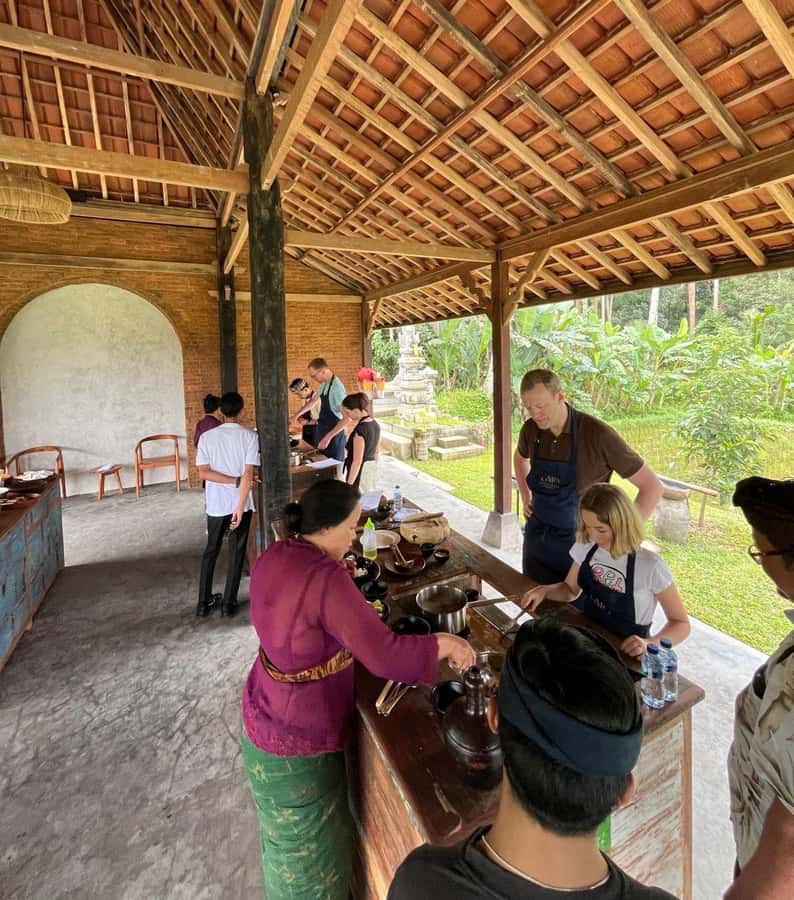
Cooking in Bali comes with a view.
I love how this Balinese cooking experience in Ubud turns food into a real cultural thread: you visit a traditional Balinese house, walk a farm to learn local plants and fruit, then cook with an instructor and eat what you make at the rice fields. There’s also that classic young coconut welcome drink that makes the whole thing feel like it starts on the right foot.
I especially like the traditional house visit (with cultural customs and how the compound is laid out) and the hands-on ingredient time at the farm, including fruit tasting/harvesting before you start cooking. One possible drawback: you’ll be in a small group of up to 8, and each cooking station is shared between two people, so you won’t get total one-on-one attention the whole time.
In This Review
- Key highlights you’ll feel right away
- A 4-hour Balinese cooking class that starts with culture
- Pickup from Ubud, and why the ride is part of the deal
- The traditional Balinese house stop: customs and compound layout
- Farm tour and fruit harvesting: meet the ingredients before the spice work
- Young coconut welcome: a small moment that sets the tone
- Cooking stations, spices, and the balance you’re actually learning
- With a shared station, you’ll need a quick teamwork mindset
- What you’ll cook: 5 mains plus 1 dessert
- Walking through daily life on the way to the kitchen
- Eating your own meal with rice-field views
- Price and value: what $33 buys you in Ubud
- Who this suits best (and who might want to plan around it)
- Practical tips so you enjoy every minute
- Should you book the Authentic Balinese Cooking Experience?
- FAQ
- How long does the Balinese cooking class last?
- Is pickup and drop-off included?
- What languages does the instructor speak?
- How many people are in the group?
- What happens before cooking?
- What food do you prepare during the class?
- Is there a welcome drink?
- What drinks and water are included with the meal?
- What should I bring?
- Is it wheelchair accessible?
Key highlights you’ll feel right away
- Traditional Balinese house stop for customs and how the home compound works
- Farm tour plus local plant learning before you touch the spices
- Harvesting and tasting local fruit so ingredients make sense before cooking
- Young coconut welcome drink and included mineral water
- Small group max 8 with stations shared between two people
- Cook 5 main dishes and 1 dessert, then eat your own meal
Other Ubud tours and experiences to line up next
- Ubud Cooking Class Bali with Balinese Chef★ 5.0 · 1,609 reviews
- Ubud: Cooking Class with Transfers and Optional Market Visit★ 4.9 · 824 reviews
- PRIVATE Authentic Balinese Cooking Class in Ubud at Putu’s Home★ 5.0 · 644 reviews
- Balinese Ubud cooking school (9 Dish Cooking and Market Tour)★ 5.0 · 540 reviews
A 4-hour Balinese cooking class that starts with culture
This is the kind of Bali experience that doesn’t treat cooking as just a demo. Food is the main event, yes, but the timing matters. You don’t rush straight into a kitchen and call it authentic. You start by learning the setting—how people live, what they grow, and what flavors show up again and again in Balinese dishes.
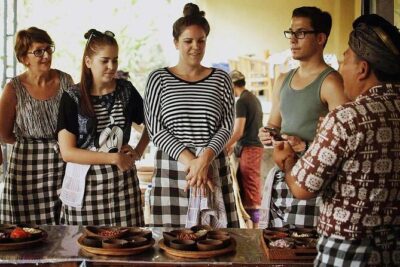
The vibe is practical, not performative. You’ll chop, grind, and simmer with a Balinese instructor (English and Indonesian are available), and you’ll get feedback as you go. The hands-on approach is what makes the cooking stick. After a couple of hours, you’re not just eating Balinese food—you can recognize how the balance is built.
Pickup from Ubud, and why the ride is part of the deal
This experience includes hotel pickup and drop-off in the Ubud area, which is a real value-add. In Bali, the roads can be… creative. Having pickup means you show up ready to learn instead of spending your energy on transport logistics.
One review mentioned a beautiful drive that takes you out toward the rice paddies. That’s more than scenery. It’s your first reminder that Balinese cooking is tied to what’s grown nearby and what’s available daily. By the time you reach the first stops, you’ll already be in the right mindset: you’re heading into real everyday life, not just a studio-style class.
The traditional Balinese house stop: customs and compound layout
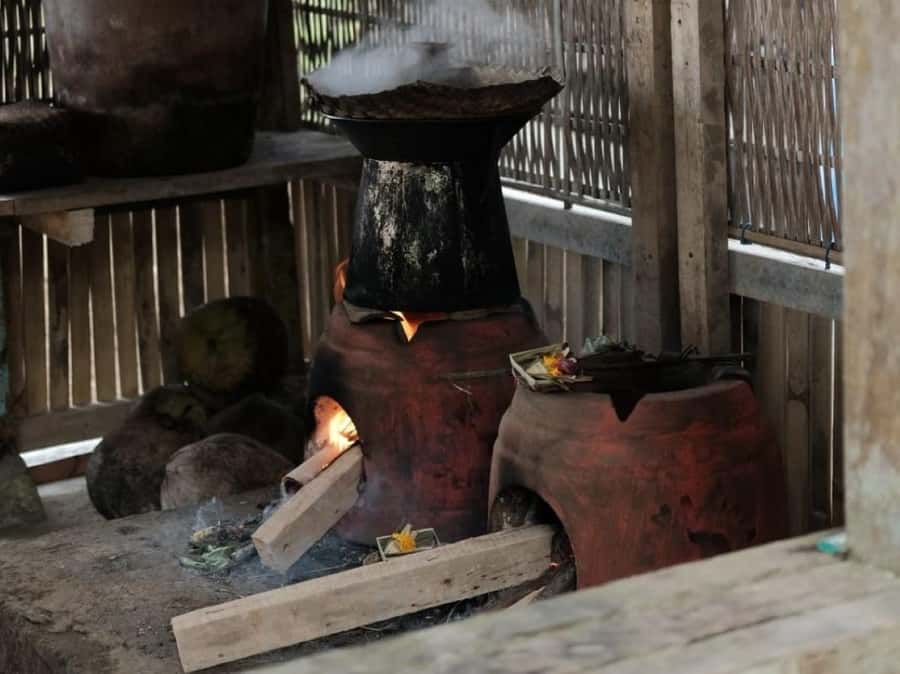
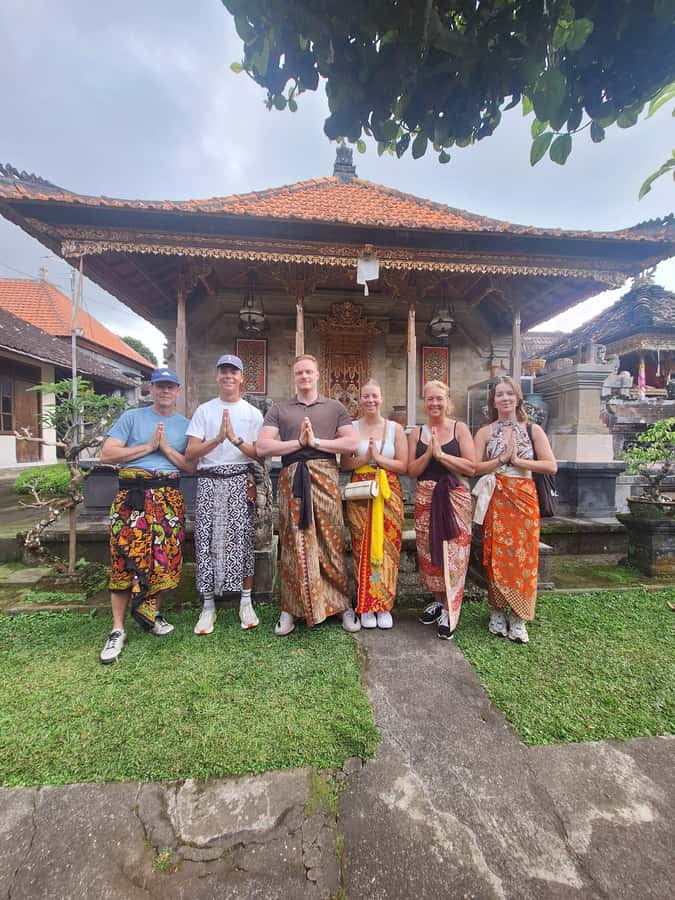
Before cooking, you’ll tour a traditional Balinese house. This matters because Balinese cuisine isn’t only about flavor. It’s also about how life and routine are organized—where food fits into daily rhythm, family worship, and the household layout.
You’ll learn local cultural customs and get an explanation of the house layout. In one account, the visitor highlighted time spent at the family temples inside the compound. That’s an important detail: you’re not only seeing architecture. You’re seeing how a Balinese home connects with spiritual practice.
What to watch for during this stop:
- How the compound is organized—so the “why” behind the space starts to click
- How ceremonies and family life shape daily habits, including meal timing
- How the hosts explain their customs, not just facts someone reads from a card
This is also where your questions will land best. If you’ve got any curiosity about daily routines, offering practices, or household culture, this is usually the moment to ask.






Farm tour and fruit harvesting: meet the ingredients before the spice work
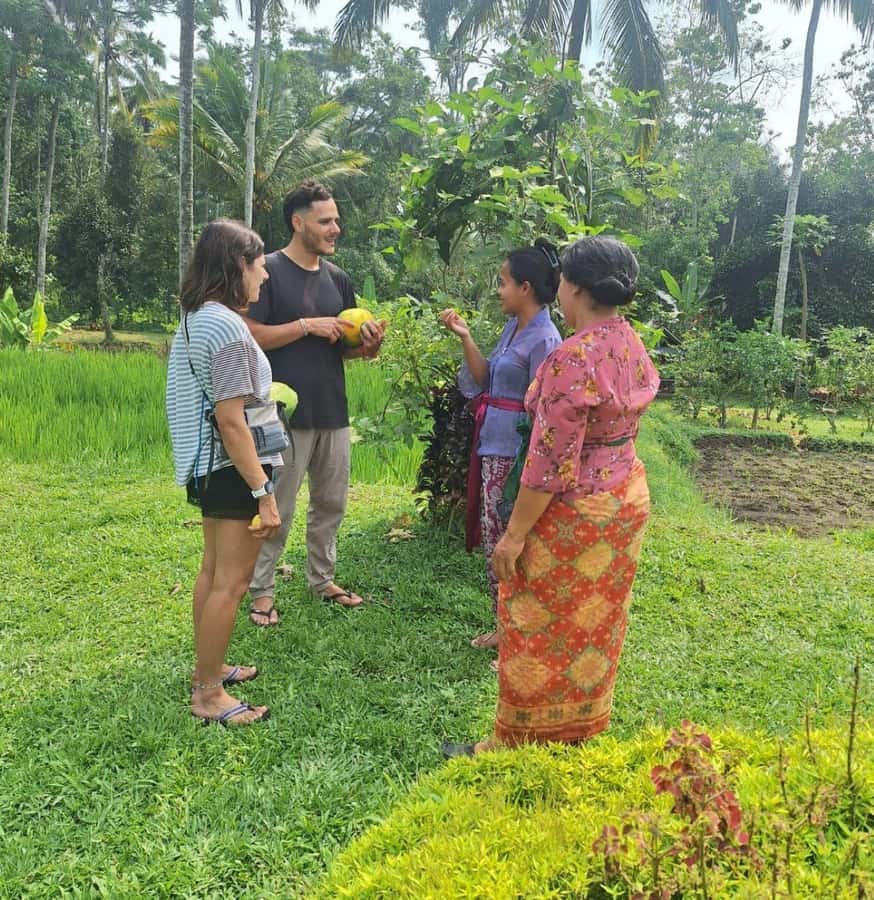
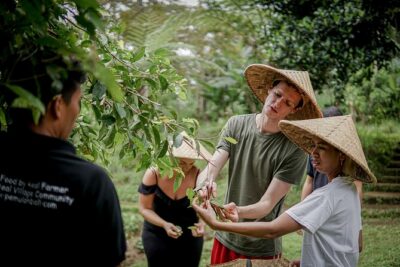
Next comes the farm area, where you’ll learn about local plants and you’ll taste local fruit. There’s a big difference between hearing “use local ingredients” and actually meeting them first.
One of the nicest aspects here is that you stop at a farm and spend time on plants before cooking. You can then connect flavors to sources. Later, when you’re grinding something fragrant or building a paste, it feels less like following steps and more like using ingredients you recognize.
You’ll also do fruit harvesting (and there’s fruit tasting too). Even if you don’t become a Balinese fruit expert in four hours, you’ll leave with a stronger sense of what counts as “daily” for people nearby—what they pick, what they eat, and how food moves from garden to plate.
Practical tip: bring a camera, as the tour suggests. The farm walk and the rice-field setting give you more photo moments than a typical cooking class.
Young coconut welcome: a small moment that sets the tone
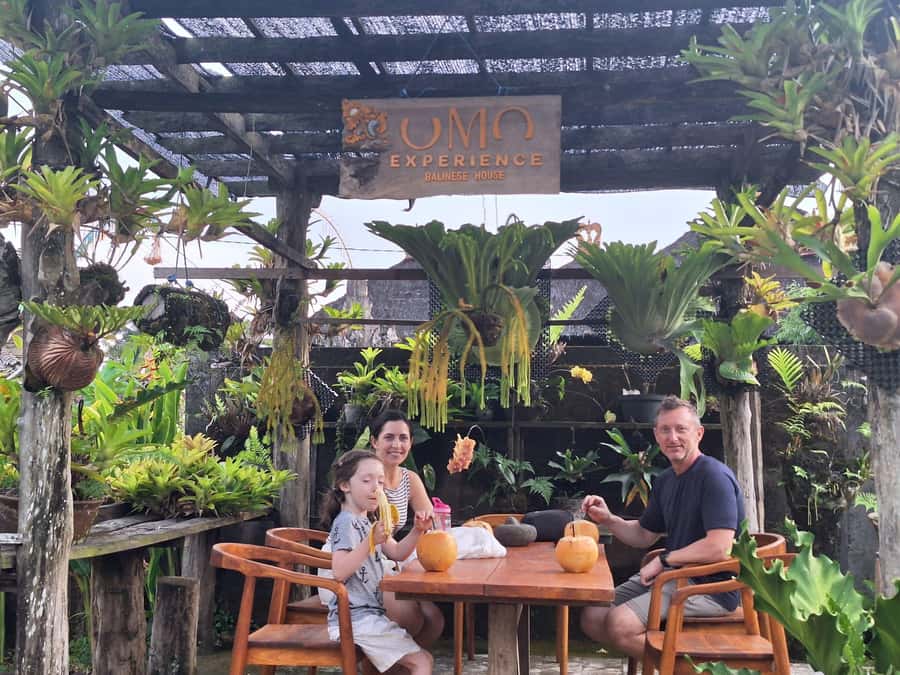
Before you cook, you’ll get a welcome drink of young coconut. It’s included, and it’s not just a free drink. It’s a pace-setter.
When you’re about to start chopping and grinding, a cold, simple refresh helps you settle in. Plus, it’s a very Bali thing—everyday, not fancy. That “normal life” feeling continues through the rest of the experience, especially when you walk past local daily activities on the way to the cooking place.
Cooking stations, spices, and the balance you’re actually learning
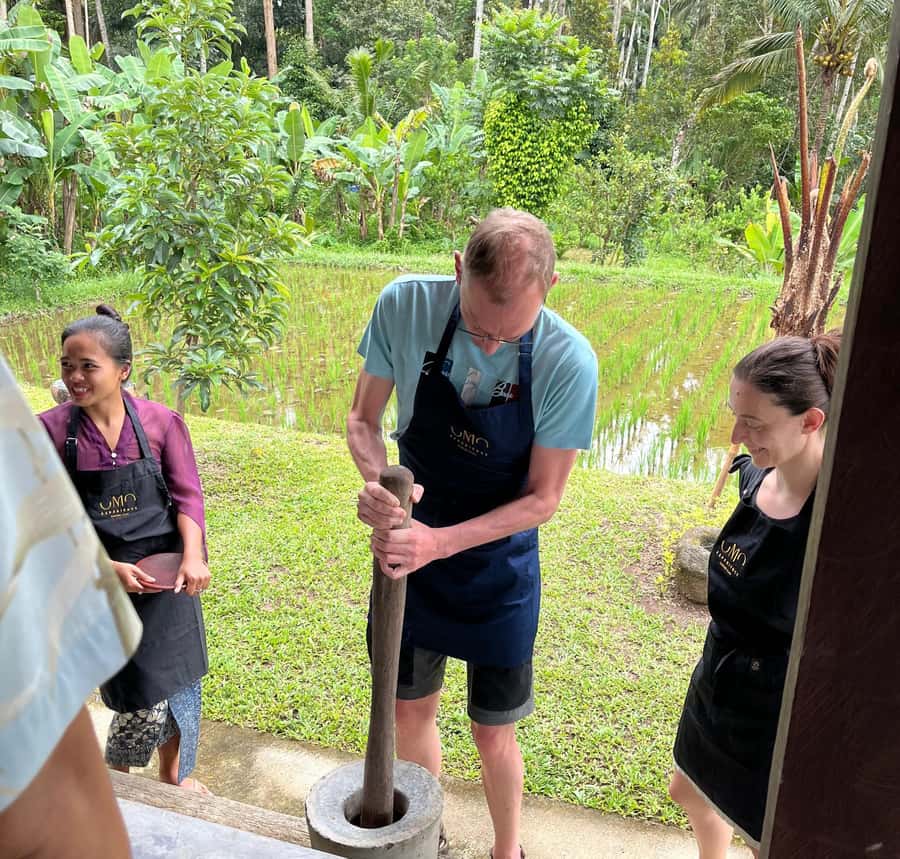
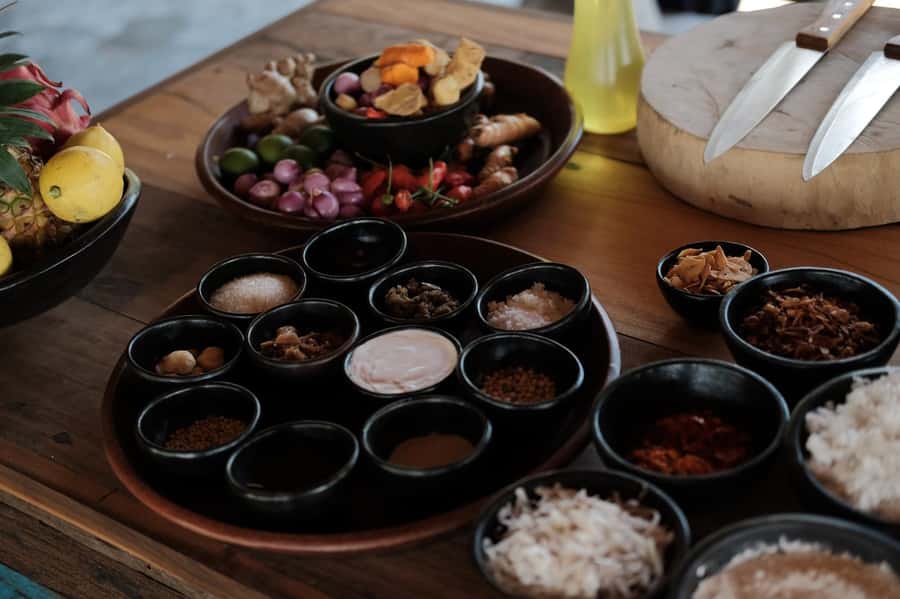
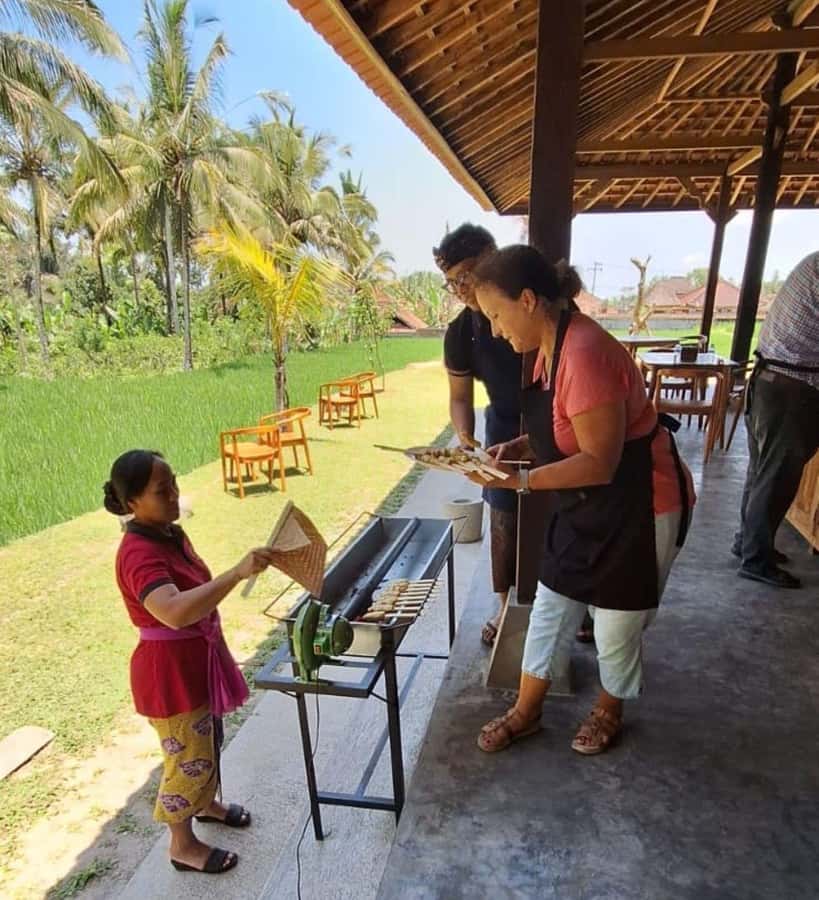
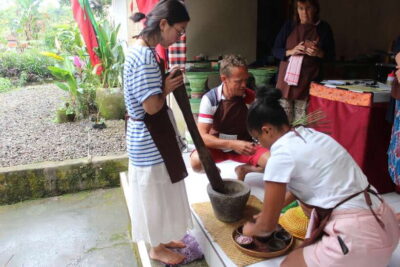
Once you reach the cooking place (near the rice fields), your class shifts into true hands-on mode. You’ll be guided step-by-step by your instructor, and you’ll learn the significance of each ingredient and how Balinese flavors are balanced.
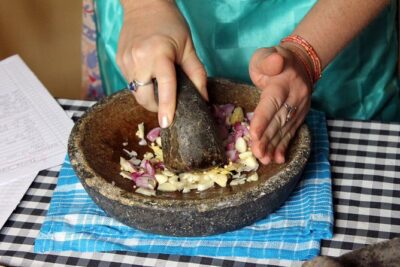
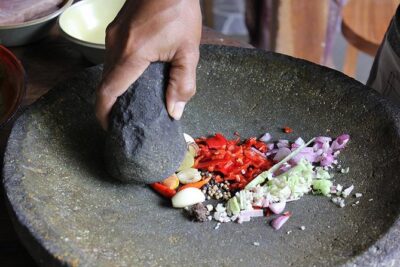
In Balinese cooking, the magic often comes from the combination of aromatics and how they’re processed. The experience is built around that physical process—chopping, grinding, and simmering—so you learn how paste textures and heat affect the final dish.
With a shared station, you’ll need a quick teamwork mindset
One note that matters for your experience: each cooking station is shared between two people. That can be totally smooth, but you’ll get more out of it if you’re ready to cooperate.
Here’s the sweet spot:
- Take turns on the hands-on tasks without watching everything like it’s a cooking show
- Ask quick questions when the instructor checks your paste, not only when you’re done
- Agree on who’s plating or tasting first so you don’t miss parts of the lesson
If you go with a friend or partner who’s comfortable working side-by-side, this setup can feel fun instead of limiting.
What you’ll cook: 5 mains plus 1 dessert
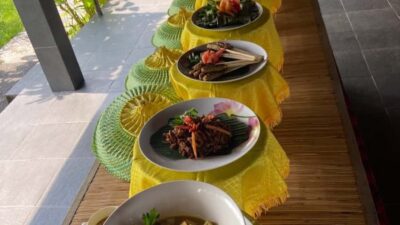
The class includes a menu that ends with five main dishes and one dessert. That’s a great structure for a short, 4-hour format. You get breadth, not just one dish and a sad side.
And you won’t just assemble pre-made food. You cook according to your taste, and you serve according to your creation. That means your plate reflects your own choices within the class framework.
Walking through daily life on the way to the kitchen
Between the house tour and the cooking spot, you’ll walk through the area where you can see local people activities. This is the “in-between” part that can easily be skipped in other experiences, but here it’s built in.
I like this because it reminds you that this cooking class isn’t floating in a tourist bubble. People are living nearby. You see that in small moments: what’s happening around paths, how daily life continues while you’re learning.
Eating your own meal with rice-field views
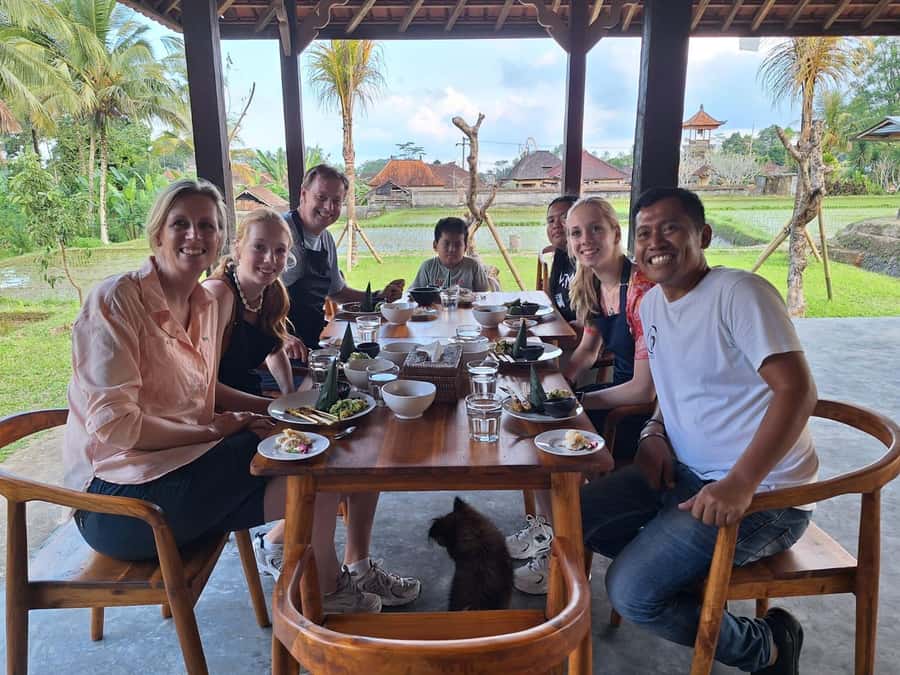
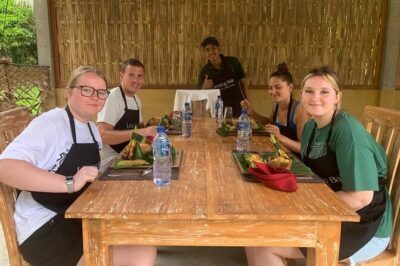
About two hours in, you’ll eat the lunch or dinner you prepared. The best part is that your meal happens while you can enjoy the scenery of the rice fields, and in the afternoon, there’s even mention of a beautiful sunset.
This is where the cooking lesson becomes satisfying. If you’ve ever taken a class, eaten quickly, and then realized you forgot everything, this doesn’t do that. You’re eating right away, with context still fresh in your head.
Also, you get meals included—so you’re not paying extra at the end for a separate restaurant tab. You’re directly getting value from the time you spent cooking.
One review described the experience as taking the visitor into the host’s home and even toward family temples. You can feel that same “home” energy again at the meal. It’s not just your food; it’s their world of daily hospitality.
Price and value: what $33 buys you in Ubud
At $33 per person for a 4-hour class, you’re paying for several things at once:
- pickup and drop-off in the Ubud area
- a traditional Balinese house visit
- a farm tour with plant learning and fruit harvesting/tasting
- a young coconut welcome drink and mineral water
- equipment, plus a recipe book
- the food you cook (five mains plus dessert)
When you break it down, this is strong value for Bali. A cooking class alone would often cost similarly, but what makes this one feel like better-than-average worth is the extra cultural stops and the ingredients-focused farm time.
If you’re looking for the most affordable option in Ubud, you might find cheaper. But if you care about learning something real—plus eating what you make—this price looks fair.
Who this suits best (and who might want to plan around it)
This experience is a great fit if you:
- want a short activity that feels genuinely cultural
- enjoy cooking and want to learn Balinese spice balance through hands-on steps
- like meals with a story, not just a tasty result
- prefer small groups (max 8)
It may be less ideal if you:
- need a wheelchair-accessible activity (it’s not suitable for wheelchair users)
- want maximum one-on-one time at the stove (stations are shared between two people)
- hate walking parts of an outdoor route (the farm and rice-field walk are part of the experience)
If you’re the type who likes structure—clear steps, a set menu, then a shared meal—this class format should feel comfortable.
Practical tips so you enjoy every minute
Here are a few things that will make your day smoother, based on what’s included and how the experience works.
- Bring a camera. The house stop, farm area, and rice-field meal moments give you plenty of shots.
- Wear comfortable clothes you don’t mind getting a little dusty. You’ll be moving between stops.
- Expect a collaborative kitchen time. The shared station setup means you’ll do better if you’re quick to coordinate.
- Plan for a real meal. This is not a snack class; you cook and eat your own food.
Also, if you don’t drink soft drinks or beer, you’re fine. Soft drinks and beer are available for purchase, but you’re already covered with the included young coconut and mineral water.
Should you book the Authentic Balinese Cooking Experience?
I’d book it if you want a Balinese cooking class that connects the dots. The best version of this experience is for people who enjoy learning by doing—especially when the learning starts with a traditional house tour and continues with farm ingredients.
Skip it if you only want a quick cooking show, or if you require wheelchair accessibility, or if you’re very sensitive about shared space at the cooking station.
If you can do only one cooking activity in Bali that aims for real context (culture + ingredients + meal), this is the kind of option that tends to leave people feeling like they understood more than just recipes.
FAQ
How long does the Balinese cooking class last?
The experience lasts about 4 hours.
Is pickup and drop-off included?
Yes. Pickup and drop-off are included for hotels in the Ubud area.
What languages does the instructor speak?
The instructor speaks English and Indonesian.
How many people are in the group?
It’s a small group with a maximum of 8 participants.
What happens before cooking?
You’ll visit a traditional Balinese house and then go on a farm tour. You’ll also harvest/taste local fruit before you start cooking.
What food do you prepare during the class?
The class includes five main dishes and one dessert.
Is there a welcome drink?
Yes. You’ll have a welcome drink of young coconut.
What drinks and water are included with the meal?
Mineral water is included. Soft drinks and beer are available for purchase.
What should I bring?
The information provided recommends bringing a camera.
Is it wheelchair accessible?
No. It’s not suitable for wheelchair users.
More Cooking Classes in Ubud

More Ubud Tours We Rate





Just added around Ubud
- Ubud: White Water Rafting with visit Ubud Monkey Forest
★ 5.0 · 3 reviews - Private Guided Bali Car Charter
★ 5.0 · 3 reviews - East Bali and Lempuyang Temple Tour
★ 5.0 · 3 reviews - Bali Downhill Cycling and White Water Rafting
★ 5.0 · 3 reviews - Cave Tubing Adventure in Ubud
★ 5.0 · 3 reviews
Cooking Classes, compared.
 ★ 5.0Ubud Cooking Class Bali with Balinese ChefFrom $351,609 reviews
 ★ 4.9Cooking Class with Transfers and Optional Market VisitFrom $21824 reviews
 ★ 5.0PRIVATE Authentic Balinese Cooking Class in Ubud at Putu’s HomeFrom $75644 reviews
 ★ 5.0Balinese Ubud cooking school (9 Dish Cooking and Market Tour)From $58540 reviews
 ★ 4.8Balinese Cooking Class and Market TourFrom $23531 reviews
 ★ 5.0Balinese Farm Cooking Class by Pemulan BaliFrom $39410 reviews
 ★ 5.0Balinese Authentic Cooking Class in UbudFrom $39239 reviews
 ★ 5.0PRIVATE Balinese Cooking Class in Ubud with Dewa with TransfersFrom $69213 reviews
Browse the lists this tour appears in