
Reviewed · BALINESE COOKING CLASSES
Authentic Balinese Cooking Class with Ubud Tour – All Inclusive
Ubud tastes like a lesson. This all-inclusive day mixes a traditional market stop with a countryside farm-to-cook experience, then caps it with Ubud Sacred Monkey Forest and the famous Tegenungan waterfall. I also like the hands-on cooking approach, especially learning the Lesung technique (that mortar-and-pestle spice pounding) instead of just watching a demo.
The one thing to think about is the pacing: it’s an 8-hour plan with several outdoor breaks, plus the provider notes it depends on good weather. If you’re heat-sensitive or expect a slow afternoon, you’ll want to plan your energy.
In This Review
- Key Highlights You’ll Notice on This Day
- Why This Ubud Cooking Day Works for First-Time Bali Trips
- Hotel Pickup, Mobile Ticket, and How the Day Flows
- Traditional Market Tour: Buying Spices Like a Local
- Balinese House Visit: Culture, Layout, and Daily Life
- Farm Harvest and Cooking Class with Lesung Techniques
- What the cooking portion feels like
- Lunch, Coffee, and Traditional Sweets You’ll Appreciate
- Ubud Sacred Monkey Forest: Temples, Gray Macaques, and Real Energy
- Tegenungan Waterfall: A Famous View with a Manageable Stop
- Value Check: Is $59 Good for an All-Inclusive Ubud Day?
- What to Bring (So the Day Feels Easy)
- Should You Book This Ubud Cooking Class?
- FAQ
- How long is the Ubud cooking experience?
- What does the tour include?
- Do they pick you up from hotels outside Ubud?
- Is vegetarian or vegan food available?
- What is not included?
- Where does the cooking class take place?
- Do you visit Monkey Forest and a waterfall?
- Is the market tour part of the same day?
- What happens if the weather is bad?
- What is the cancellation policy?
Key Highlights You’ll Notice on This Day
- Traditional market tour (morning-only) to shop for spices the way locals do
- Balinese house visit for real context on daily life and how homes are set up
- Farm harvest so you cook with ingredients you help pick
- Lesung mortar-and-pestle technique for authentic spice prep
- Ubud Sacred Monkey Forest with gray macaques in a Hindu temple setting
- Tegenungan waterfall for big views in a single day
The full-day loop that ties the big Ubud sights together.
- Best of Ubud Full-Day Tour with Jungle Swing★ 5.0 · 8,571 reviews
- Best of Ubud 1-Day Private Tour★ 5.0 · 4,451 reviews
- Best of Ubud Attractions: Private All-Inclusive Tour★ 5.0 · 1,150 reviews
- Private Day Tour: The Highlight of Ubud★ 5.0 · 1,136 reviews
Why This Ubud Cooking Day Works for First-Time Bali Trips
If it’s your first time in Bali, you’ll usually bounce between temples, beaches, and quick food stops. This day is designed to connect the dots. You get culture, ingredients, cooking technique, and then two of the top Ubud-area highlights in one smooth circuit.
I like that it’s not only cooking. The market run, local house visit, and farm tour help you understand what you’re tasting and why the flavors work. And because the group is capped at 15 travelers, the day doesn’t feel like you’re disappearing into a crowd.
Hotel Pickup, Mobile Ticket, and How the Day Flows
You’ll get pickup and drop-off from many common areas around Bali, including Ubud, Kuta, Seminyak, Sanur, Nusa Dua, Jimbaran, Canggu, and Legian. That matters because it turns a “maybe I’ll figure it out” day into a planned route with less stress.
The overall duration is about 8 hours. Expect a full day rhythm: morning market and house visit, then the cooking/farm segment, and finally Monkey Forest and Tegenungan waterfall before returning to your hotel by car. You’ll also use a mobile ticket, which keeps things simple on the day.
Practical note: the itinerary is heavily outdoor after the farm segment, so bring a light layer for comfort, and plan to hydrate.
Traditional Market Tour: Buying Spices Like a Local
The day starts with a traditional market tour (morning class only). This is the part that turns cooking from entertainment into understanding. You go looking for the spice ingredients that will shape your menu, not just random souvenirs.
A key detail: you’ll buy spices with guidance, so you learn what to look for and how local vendors think about fresh ingredients. Even if you’re not planning to cook at home, you’ll leave with a clearer sense of how Balinese cooking builds flavor.
What I like most here is the timing. Doing the market early means you’re still in “ingredient mode” when you reach the farm and kitchen, so the day feels connected.
Market basket to banana-leaf plate. More Ubud cook-alongs.
Balinese House Visit: Culture, Layout, and Daily Life
After the market, you’ll visit a local house to learn more about Balinese culture and lifestyle. You’ll also see how the place is arranged—something that’s hard to understand from photos alone.
This stop is valuable because it gives you context for the cooking day. Balinese food isn’t only about taste; it’s part of everyday routines, local belief systems, and the way communities live. The house visit helps you read what you’re seeing later in temple areas too, especially when you reach Monkey Forest.
If you’re the type who likes small, real-life details—how people live, not only what they believe—this part is one of the best uses of time.
Farm Harvest and Cooking Class with Lesung Techniques
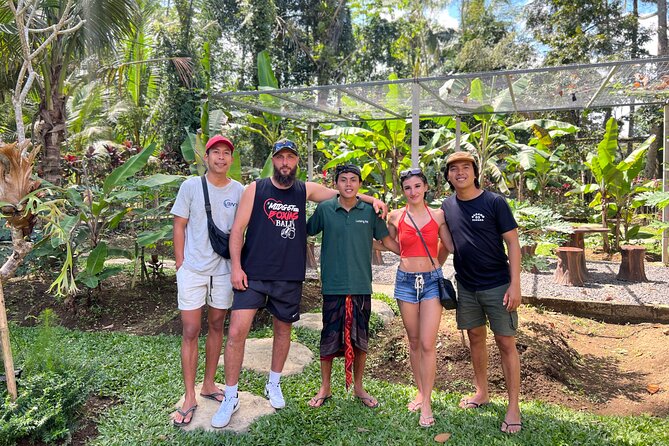
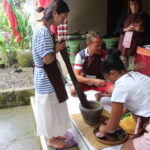
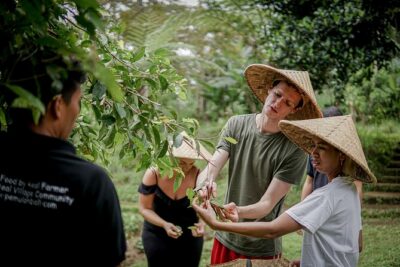
Next comes the farm, where the cooking class starts in a countryside setting on the west side of Ubud. You’ll explore the farm, then harvest the spices you’ll use in your meal. That hands-on ingredient step is one of the strongest reasons this tour feels authentic.
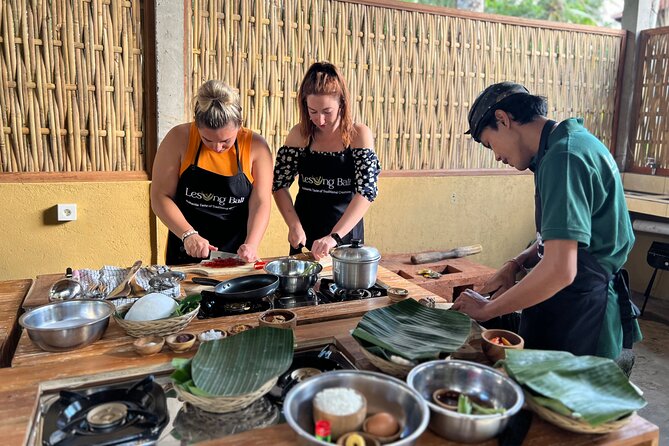
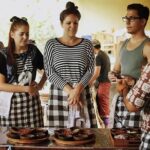
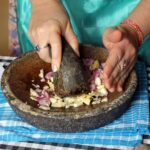
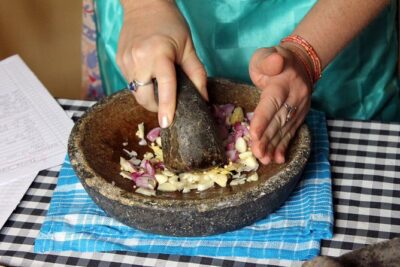
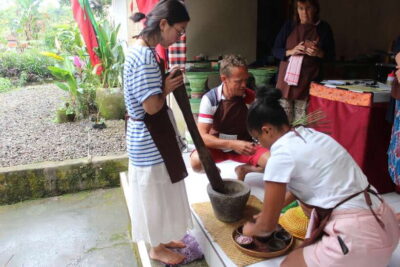
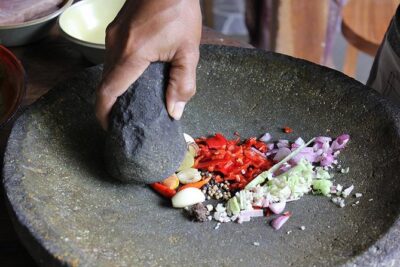
Once you’ve decided on your menu, your Balinese chef guides you through the cooking process with fresh ingredients. This isn’t a rushed “chop and go” workshop. You learn real techniques used in Balinese cooking, including chopping and pounding spices using Lesung (a mortar and pestle). It’s the kind of method that changes the texture of spices, and that texture is a big part of the flavor story.
One more smart touch: you can choose a menu option that fits your preferences. The class offers vegetarian and vegan options as well as a regular menu, and you can choose during the class.
What the cooking portion feels like
You’ll start with the spice prep and ingredient breakdown. Then the chef explains the cooking steps, including what ingredients you’ll use and what additional components go with your chosen menu. From the reviews, the meal prep is generally fun and well paced, which is what you want when you’re doing hands-on cooking for a full day.
Lunch, Coffee, and Traditional Sweets You’ll Appreciate
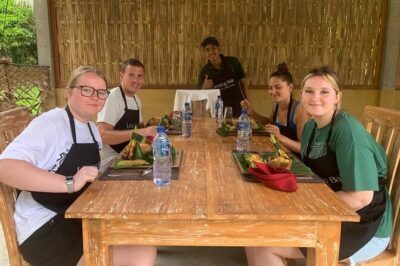
Lunch is included, and you’ll also get coffee and/or tea. This matters because cooking classes can sometimes end with you leaving hungry or thirsty. Here, you get fuel built into the experience.
Also, one review highlights Balinese coffee and traditional sweets as part of the day, which fits the “experience the culture” theme beyond just the cooking. It’s the kind of small detail that makes the afternoon feel intentional rather than transactional.
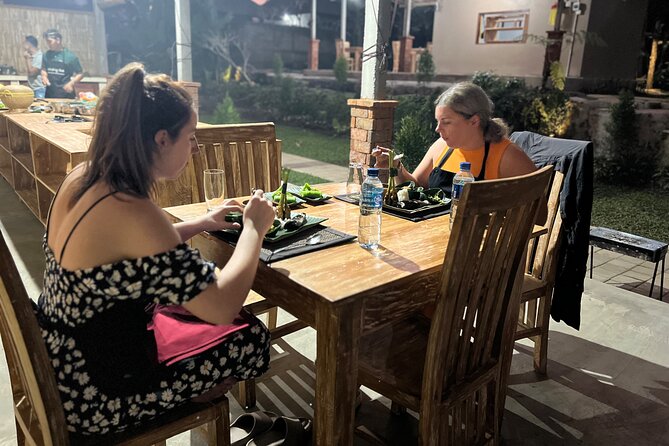
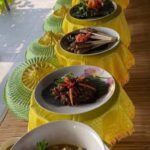
Your final result is what you cooked. You’ll eat what you prepared, so you can actually taste the impact of those techniques—especially the spice pounding step.
Ubud Sacred Monkey Forest: Temples, Gray Macaques, and Real Energy
After the cooking and lunch, you’ll head to Ubud Sacred Monkey Forest, where gray macaques roam around Hindu temple areas. This is one of those places that feels alive fast. There are temples, pathways, and lots of movement overhead and at eye level.
Because the monkeys are active, it helps to keep your expectations practical. Treat this like a respectful nature-and-temple visit, not a petting zoo. Keep an eye on your belongings and stay aware where the macaques are clustering.
The good part: the setting is visually rewarding, and the temple atmosphere gives the stop more meaning than a generic wildlife encounter. It’s also a nice break from the kitchen rhythm before you move on to the waterfall.
Tegenungan Waterfall: A Famous View with a Manageable Stop
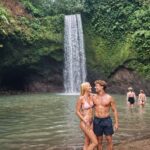
Your final major sight is Tegenungan waterfall, described as one of the most popular waterfalls in Bali that’s not too far from the capital. In this kind of full-day itinerary, that’s a helpful detail: you get a big scenery payoff without needing a long, travel-heavy detour.
This stop is also your “nature reset.” After cooking and temples, it’s a chance to slow down for photos and to simply enjoy the drop and surrounding views.
The only consideration is the typical one for waterfalls: you’ll want decent footwear and to be ready for mist or slick spots near the water. If it’s been a warm day, also plan for sun and hydration.
Value Check: Is $59 Good for an All-Inclusive Ubud Day?
At $59 per person, this tour sits in an accessible range for what you get. You’re paying for a full package: pickup and drop-off (from several areas), an air-conditioned vehicle, lunch, coffee and/or tea, bottled water, cooking utensils and an apron, entrance fees, and the guided market/house/farm experience.
You’re also getting a structured “learn and do” format. Many cooking classes only teach technique and then you snack. Here, you harvest spices on a farm and practice prep with a Lesung. That’s the difference between a one-hour activity and a full cultural food day.
A plus for value: the tour is small, with a maximum of 15 travelers, which usually means more attention and a smoother schedule. And there are group discounts, though the exact details aren’t listed—still, the model is designed to reward shared bookings.
One more practical value point: the provider mentions this activity is on average booked 72 days in advance. That’s a hint it’s popular, so if your dates are firm, it’s smart to reserve sooner rather than later.
What to Bring (So the Day Feels Easy)
You don’t need to overpack, but a few items can make a big difference on a day that includes cooking plus outdoor sightseeing.
Bring:
- Comfortable closed-toe shoes for the farm paths and the waterfall area
- Sun protection (hat, sunscreen) since you’ll be outside
- A light rain layer, especially because the experience requires good weather
- Refillable water if you like extra hydration beyond bottled water
Also, consider your comfort level with active wildlife at Monkey Forest. If you’re traveling with a camera, hold it securely and keep it away from any monkey curiosity.
Should You Book This Ubud Cooking Class?
I’d book it if you want a Bali day that’s more than a cooking show. This works best when you like practical learning: shopping for spices, seeing a farm harvest, and cooking with technique you can actually replicate later.
It’s also a good fit if you’re a first-time Bali visitor who wants a connected storyline: market to house to farm to food to temple forest to waterfall. The stops are diverse, but they don’t feel random because the day keeps circling back to ingredients and culture.
Don’t book it if you want a slow, low-activity afternoon or if you know you struggle with long outdoor time in heat. And keep in mind the tour depends on good weather, so be ready for the possibility of rescheduling if conditions are poor.
If that sounds like your style, this is the kind of all-inclusive day that gives you both a meal and a clearer picture of how Bali puts flavors together.
FAQ
How long is the Ubud cooking experience?
It runs for about 8 hours.
What does the tour include?
Pickup and drop-off (Ubud and several nearby areas), coffee and/or tea, lunch, air-conditioned vehicle, cooking utensils, an apron, bottled water, and entrance fees.
Do they pick you up from hotels outside Ubud?
Yes. Pickup is offered from Ubud and areas like Kuta, Seminyak, Sanur, Nusa Dua, Jimbaran, Canggu, and Legian.
Is vegetarian or vegan food available?
Yes. You can choose vegetarian and vegan menu options during the class, as well as a regular menu.
What is not included?
Alcoholic beverages are not included.
Where does the cooking class take place?
The cooking class is at a location in the west side of Ubud, described as a countryside area surrounded by green space.
Do you visit Monkey Forest and a waterfall?
Yes. You’ll visit Ubud Sacred Monkey Forest and end with Tegenungan waterfall.
Is the market tour part of the same day?
Yes, but it’s listed as a morning class only portion of the experience.
What happens if the weather is bad?
The experience requires good weather. If it’s canceled due to poor weather, you’ll be offered a different date or a full refund.
What is the cancellation policy?
You can cancel for a full refund up to 24 hours before the experience’s start time. If you cancel less than 24 hours before, the payment isn’t refunded.
More Ubud Tours We Rate


Cook Balinese in Ubud
The Best of Ubud in a Day
Just added around Ubud
- Ubud: White Water Rafting with visit Ubud Monkey Forest
★ 5.0 · 3 reviews - Private Guided Bali Car Charter
★ 5.0 · 3 reviews - East Bali and Lempuyang Temple Tour
★ 5.0 · 3 reviews - Bali Downhill Cycling and White Water Rafting
★ 5.0 · 3 reviews - Cave Tubing Adventure in Ubud
★ 5.0 · 3 reviews
Balinese Cooking Classes, compared.
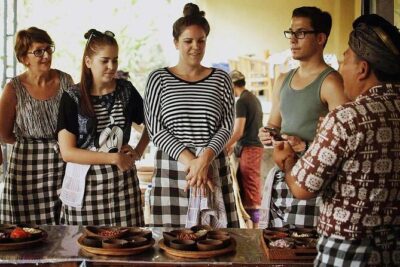 ★ 5.0Ubud Cooking Class Bali with Balinese ChefFrom $351,609 reviews
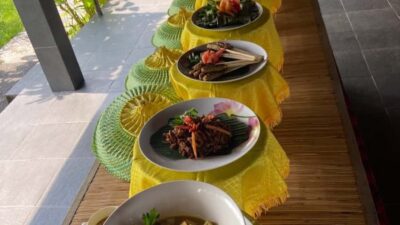 ★ 4.9Cooking Class with Transfers and Optional Market VisitFrom $21824 reviews
 ★ 5.0PRIVATE Authentic Balinese Cooking Class in Ubud at Putu’s HomeFrom $75644 reviews
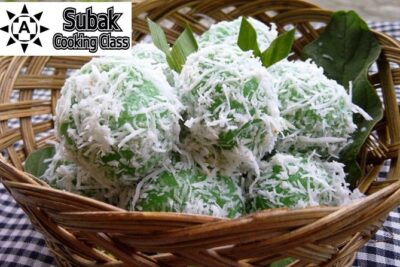 ★ 5.0Balinese Ubud cooking school (9 Dish Cooking and Market Tour)From $58540 reviews
 ★ 4.8Balinese Cooking Class and Market TourFrom $23531 reviews
 ★ 5.0Balinese Farm Cooking Class by Pemulan BaliFrom $39410 reviews
 ★ 5.0Balinese Authentic Cooking Class in UbudFrom $39239 reviews
 ★ 5.0PRIVATE Balinese Cooking Class in Ubud with Dewa with TransfersFrom $69213 reviews
Browse the lists this tour appears in