
Reviewed · UBUD TEMPLE TOURS
Skip the Line Tirta Empul Temple Entrance Ticket All Inclusive
Water blessings at Tirta Empul cut through the noise.
This all-inclusive package is built for a smooth visit, with skip-the-line entry, an English-speaking escort, and round-trip private transfers from your Ubud address. You’re not just buying a ticket. You’re buying less stress and more meaning at one of Bali’s most famous water temples.
I love the ritual guidance. The ceremony setup, the meaning of the holy springs, and the practical “what to do next” parts are handled for you by the guide. I also like the private pickup from your hotel/villa/lobby, because you’re not negotiating rides while you’re trying to keep the day calm.
One consideration: the ride time can run longer than the advertised 1 to 3 hours. And the skip-the-line part may feel less dramatic depending on crowd timing, since some days don’t have an obvious line in the first place.
In This Review
- Key things to know before you go
- Tirta Empul’s water rite: why people remember it
- What’s included in the all-inclusive ticket (and what that means for you)
- Ubud pickup and private transport: fewer headaches, better timing
- Inside Tirta Empul: your ceremony flow from gate to holy springs
- Timing reality check: the 1–3 hour estimate can be optimistic
- Skip-the-line: why it’s helpful even when there’s no big line
- The guide matters more than you think (names worth noting)
- Photo help and feeling at ease during a sacred ritual
- Shop pressure near the exit: a small thing, but plan for it
- Weather and rescheduling: the day is tied to conditions
- Price and value: does $29.54 feel fair?
- Who should book this tour?
- Should you book? My decision checklist
- FAQ
- What does the Tirta Empul ticket include?
- Is pickup and drop-off included from Ubud?
- How big is the group?
- Do you get a guide, and is the guide in English?
- Is skip-the-line entry really guaranteed?
- Is Wi-Fi included?
- Are women on period allowed to visit?
- What is the cancellation policy?
Key things to know before you go
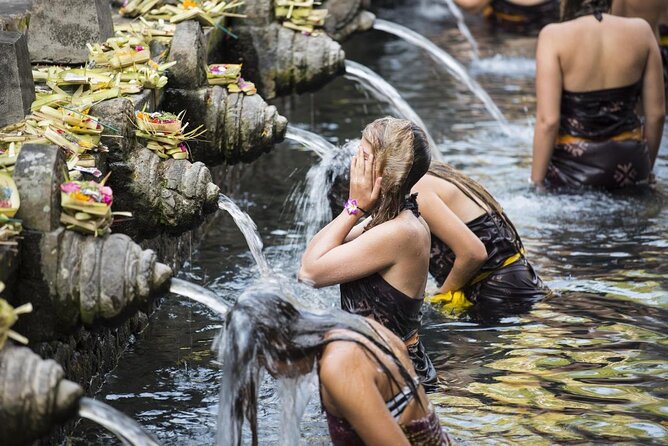
- Skip-the-line entry + guided ceremony: You get help navigating the holy springs and the blessing ritual.
- Sarong and sash loan: You’re not scrambling for temple-appropriate clothing last minute.
- Private transfers from Ubud: Door-to-door pickup and drop-off reduces hassle.
- Small group size (max 14): More personal guidance than a huge bus day.
- Women on period cannot enter: This is a firm temple rule you must plan around.
- Wi-Fi details vary: The operator says temple common areas have Wi-Fi, but onboard Wi-Fi can be inconsistent.
Holy springs and purification pools worth the early start.
- Ubud: Monkey Forest, Jungle Swing, Rice Terrace, and Water Temple★ 5.0 · 7,160 reviews
- Ubud: Waterfalls, Water Temple & Rice Terraces Private Tour★ 5.0 · 5,484 reviews
- Full-Day Tour to Water Temples and UNESCO Rice Terraces in Bali★ 5.0 · 2,539 reviews
- East Bali Tour: Gate of Heaven, Water Palace, Sleeping Gajah★ 5.0 · 1,726 reviews
Tirta Empul’s water rite: why people remember it
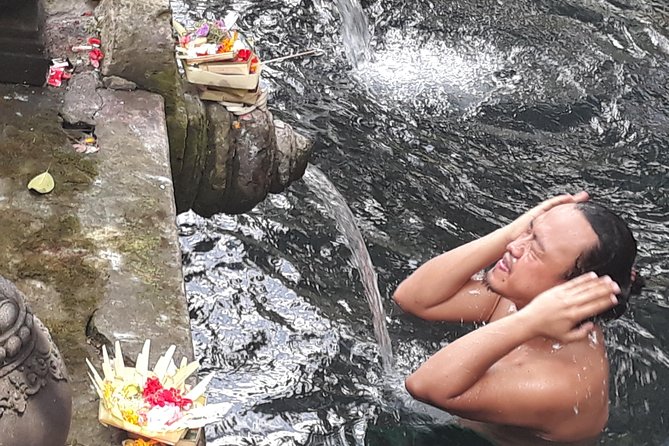
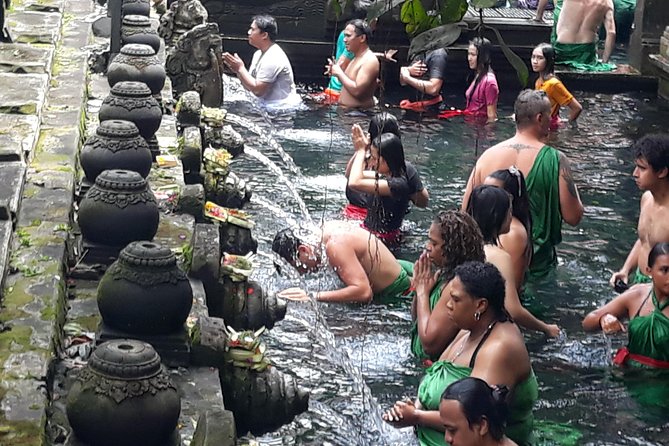
Tirta Empul is one of those places where Bali religion isn’t stuck behind a fence. It’s right there in the water—people gather, offer prayers, and move through the springs as part of their faith. The emotion comes from being surrounded by the same ritual rhythm, day after day, year after year.
What makes this tour especially good for first-timers is that you’re not left to guess. A professional English-speaking guide helps you understand what you’re seeing and what you’re meant to do. That matters because the ceremony has its own order, and it can feel chaotic if you arrive with zero context.
This is also a “slow down” experience in a way that surprises people. You’re not there for big views or shopping stops. You’re there to participate respectfully—through your actions, your offering, and your timing at each spring.
What’s included in the all-inclusive ticket (and what that means for you)
This package is designed to cover the essentials so you can focus on the ritual rather than the logistics. Admission is included, and your entrance is set up so you avoid the typical entry hassle.
Here’s what you should count on:
- Temple entrance ticket included
- Escort by an English-speaking guide during your time at Tirta Empul
- Blessing ritual support on request, including help at the holy water
- Balinese sarong and sash loan
- Hindu offerings included
- Bottled water
- Mobile ticket
- Private round-trip transfers from your Ubud address
- Onboard Wi-Fi listed, but Wi-Fi may be more reliable in temple common areas
That last point is worth a quick reality check. The information says onboard Wi-Fi, but the operator response indicates there isn’t Wi-Fi in the car, while Wi-Fi in the temple common area is available. If Wi-Fi matters for you, treat the vehicle Wi-Fi as a bonus, not a guarantee.
Also note: the guide escort is not just “stand there and point.” People in the same day’s experience have repeatedly highlighted that guides explain the meaning of different springs and help you flow through the ceremony without standing around.
Ubud pickup and private transport: fewer headaches, better timing
One of the smartest parts of this tour is the private nature of it. Pickup is offered from your hotel/villa/lobby area, so you don’t have to coordinate meeting points or hunt down a driver with strangers.
You’ll also travel in a small group setting—up to 14 travelers. That’s big enough to keep the tour running smoothly, but small enough that your guide can actually manage the flow of people once you’re at the temple.
I like private transport for a practical reason: Tirta Empul is popular, and being late (or arriving right when you’re tired) makes the ritual feel harder. When your pickup is direct from Ubud, you can choose to leave with a calmer mindset. And if you can, going earlier helps with crowd pressure, which many visitors specifically appreciate.
More stone shrines and clifftop pura across Ubud.
Inside Tirta Empul: your ceremony flow from gate to holy springs
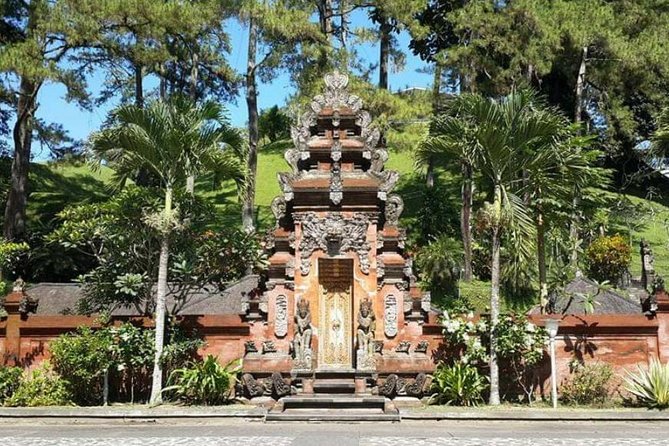
At Tirta Empul, the ceremony isn’t one single moment. It’s a sequence, and the route matters.
You’ll move through the temple complex starting from the first gate, then onward toward the middle side and main temple (described as utama mandala). Your guide helps you understand what you’re looking at and where your path fits into the bigger ritual space.
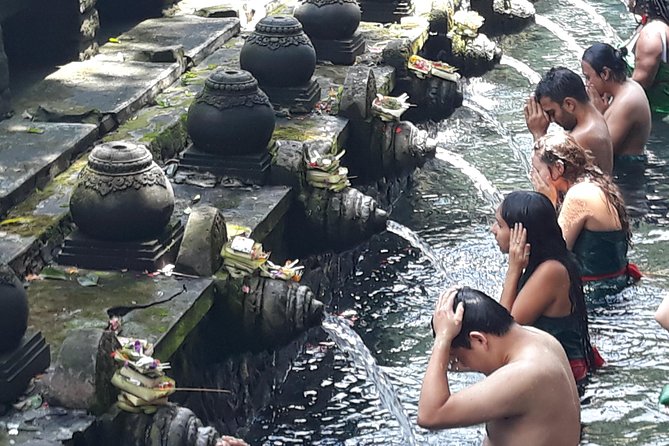
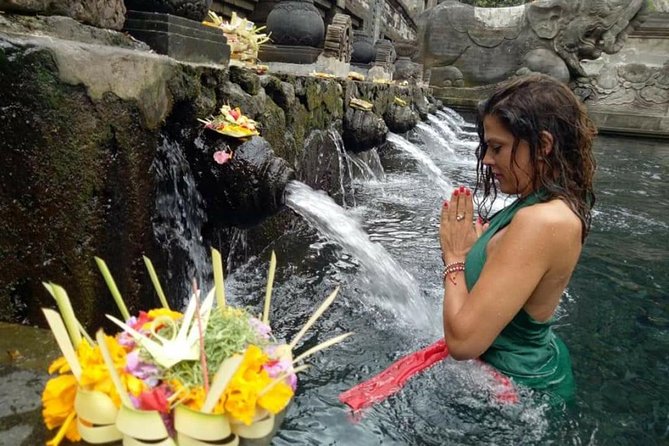
Then the focus shifts to the holy water blessing portion. You’ll be escorted for the blessing ritual, with sarong and offerings provided. This is where the guide’s role becomes most valuable. The springs can look similar at first glance, but the ceremony involves intention and order. A guide helps you avoid the awkward guesswork of wondering what to do next, where to stand, and when to move.
One important temple rule: women on period are not allowed to visit Tirta Empul. If that applies to you, plan a different activity for that day. Don’t gamble on it—this is stated directly as part of the tour conditions.
Timing reality check: the 1–3 hour estimate can be optimistic
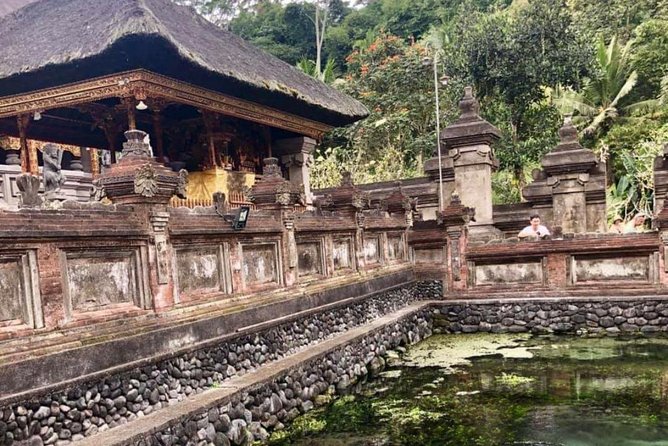
The tour duration is listed as about 1 to 3 hours. In reality, door-to-door time depends heavily on traffic, pickup location, and the pace of your visit.
Some travelers have found the ride time can stretch, and the time inside the temple can take longer than expected if you want to understand what’s going on rather than rush the ceremony. The biggest takeaway: treat the listed duration as a rough range, not a strict promise.
My practical advice: if you’re trying to catch a restaurant reservation, a show, or a later tour, add cushion. The ceremony experience is the point of the day. If you rush it, you’ll miss what makes it powerful.
Skip-the-line: why it’s helpful even when there’s no big line
Let’s talk about the skip-the-line part. At certain times, you might not see a long obvious queue. But even then, having your entry handled can reduce friction.
What matters isn’t just the physical line. It’s also where you enter, how fast you can get oriented, and how quickly you can begin your guided flow. Visitors consistently value that guidance because it reduces delays once you reach the temple grounds.
So if you’re the type who hates waiting around, this matters. Even on quieter days, the structure of a guided arrival can help you get into the correct rhythm sooner.
The guide matters more than you think (names worth noting)
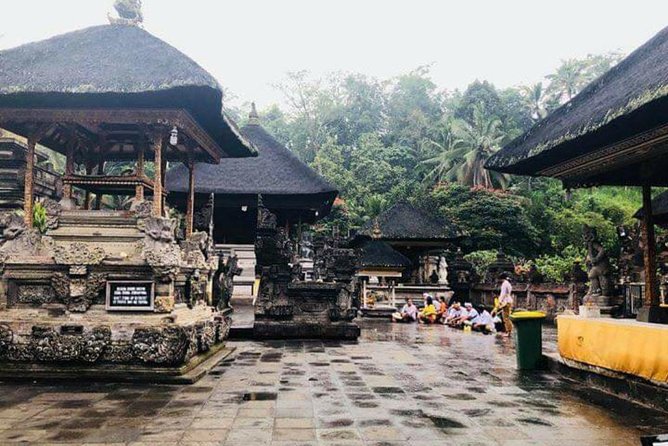
This tour is only as good as the human who guides you through it, and the reviews give a pretty clear pattern: when the guide explains the meaning behind the springs and helps with ceremony navigation, people feel calmer and more connected.
Several guide names come up again and again:
- Wayan is praised for friendliness and clear explanations, plus lots of helpful guidance through the process.
- Moyo stands out for being informative and making people feel cared for during the ceremony.
- Made is mentioned for preparing visitors for the offering and handling questions kindly, while also taking beautiful photos.
- Putu is noted for helping people understand the traditions and making the experience relaxed rather than rushed.
- Gusde / Gusti appear as guide names that helped with ceremony nuances and direction.
- Katut, Sudi, Nyoman, and Kadek Nanda are also mentioned for being strong in English and guiding people through with patience.
Even if you don’t get one of those exact names, the lesson is consistent: the best experience is when your guide helps you do two things well—understand what you’re seeing and handle the practical parts smoothly.
Photo help and feeling at ease during a sacred ritual
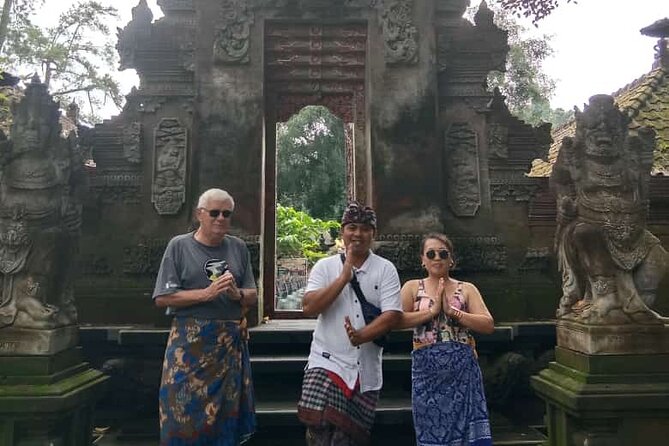
Tirta Empul is sacred, so keep your behavior respectful and your attention focused. But that doesn’t mean you can’t capture the moment.
Many visitors highlight that guides take plenty of photos on their phones and help with picture timing while still keeping you inside the ceremony flow. That’s not just about photos. It’s about not constantly worrying where everyone else is standing and whether you’re in the right spot.
If you’re traveling with family or you want your partner to get good photos without interrupting your ritual focus, this kind of guide support is a real convenience.
Shop pressure near the exit: a small thing, but plan for it
One practical caveat: there are shops (including souvenir and silver outlets) along the exit way. This is common around popular temples, and it can create a “stop, look, negotiate” pressure if you’re not expecting it.
The operator’s guidance in response to a review suggests ignoring shop attendants if you’re not interested. So if you don’t want that extra friction, decide in advance: either browse briefly or keep walking. Your guide can help you stay focused on the actual ritual rather than being pulled into sales mode.
Weather and rescheduling: the day is tied to conditions
The experience is described as requiring good weather. If conditions are poor, you’ll be offered a different date or a full refund.
That doesn’t mean you should obsess over forecasts. It does mean you should keep your schedule flexible if possible. If Tirta Empul is a top priority, it’s smart to book with enough room around it to adjust.
Price and value: does $29.54 feel fair?
At $29.54 per person, this package is positioned as budget-friendly for what it includes. The value isn’t in fancy extras. The value is in removing friction.
For your money, you’re getting:
- Temple admission
- Guide support during the key ritual time
- Sarong and sash loan
- Offerings
- Private round-trip transfers from Ubud
- Bottled water
- A mobile ticket setup
If you had to piece that together yourself—driver + entrance + figuring out ceremony basics + borrowing the right cloth—your day could become more complicated, more time-consuming, and sometimes not cheaper.
That said, it’s not for everyone. If you’re confident going alone, don’t care about understanding the meaning of springs, and you’re fine with sorting transport yourself, you might find a cheaper ticket option. But if you want a calmer day with clear ceremony help, this price starts looking like a decent deal.
Who should book this tour?
This tour fits best if you:
- want a first-time-friendly way to experience Tirta Empul with guidance
- prefer private pickup and drop-off over public transport juggling
- care about understanding what you’re doing during the holy water blessing
- appreciate a guide who can help with ceremony flow and practical questions
It might not be the best fit if you:
- need strict time control (because door-to-door timing can run longer than the estimate)
- are hoping for a totally solo experience with no guiding assistance
- can’t participate due to the women-on-period temple rule
Should you book? My decision checklist
Book it if your top goal is: walk in, follow the rite properly, and leave feeling like you understood something real. The combination of private transport, sarong/offerings, and English-speaking escort is exactly what makes this kind of temple visit easier and more meaningful.
Skip it (or consider another option) if timing is extremely tight or if you prefer full self-guided travel with no structured guidance.
One last tip: if possible, schedule early and wear comfortable clothes under your sarong loan. Then bring a calm attitude. Tirta Empul is at its best when you let the ritual set your pace.
FAQ
What does the Tirta Empul ticket include?
The package includes Tirta Empul temple admission, a guided blessing experience at the holy water on request, Hindu offerings, and the loan of a Balinese sarong and sash. It also includes bottled water and private round-trip transfers from your Ubud address.
Is pickup and drop-off included from Ubud?
Yes. Complimentary pickup and drop-off are offered from your hotel or villa lobby area in Ubud. You need to inform the provider of your accommodation location before the tour starts.
How big is the group?
The tour has a maximum of 14 travelers.
Do you get a guide, and is the guide in English?
Yes. The experience includes an escort by a professional guide who provides English-speaking assistance.
Is skip-the-line entry really guaranteed?
The ticket is described as skip-the-line. Since crowd levels can vary, your experience may feel more or less dramatic depending on how busy the entry area is that day, but your entry is set up to reduce typical hassle.
Is Wi-Fi included?
Wi-Fi is listed as part of the experience, but the operator response indicates Wi-Fi in the car was not included, while Wi-Fi is available in the temple common area. Treat vehicle Wi-Fi as uncertain and temple common area Wi-Fi as the safer expectation.
Are women on period allowed to visit?
No. Women on period are not allowed to visit the temple.
What is the cancellation policy?
Free cancellation is allowed up to 24 hours before the experience start time for a full refund. If you cancel less than 24 hours before, the amount paid is not refunded. The experience can also be canceled due to poor weather, with a different date offered or a full refund.
More Ubud Tours We Rate





Temples & Shrines Around Ubud



Holy Springs & Water Temples

Just added around Ubud
- Ubud: White Water Rafting with visit Ubud Monkey Forest
★ 5.0 · 3 reviews - Private Guided Bali Car Charter
★ 5.0 · 3 reviews - East Bali and Lempuyang Temple Tour
★ 5.0 · 3 reviews - Bali Downhill Cycling and White Water Rafting
★ 5.0 · 3 reviews - Cave Tubing Adventure in Ubud
★ 5.0 · 3 reviews
Ubud Temple Tours, compared.
 ★ 5.0Monkey Forest, Jungle Swing, Rice Terrace, and Water TempleFrom $317,160 reviews
 ★ 5.0Waterfalls, Water Temple & Rice Terraces Private TourFrom $295,484 reviews
 ★ 5.0Uluwatu Sunset, Kecak Dance, and Dinner Jimbaran BeachFrom $353,681 reviews
 ★ 5.0Tanah Lot and North Bali Tour: Scenic JourneyFrom $1003,620 reviews
 ★ 5.0Full-Day Tour to Water Temples and UNESCO Rice Terraces in BaliFrom $392,539 reviews
 ★ 5.0East Bali Tour: Gate of Heaven, Water Palace, Sleeping GajahFrom $1001,726 reviews
 ★ 4.9Tirta Empul: Temple Tour with Optional Spiritual CleansingFrom $241,257 reviews
 ★ 5.0Bali Instagram: Gate of Heaven Temple TourFrom $85737 reviews
Browse the lists this tour appears in