
Pray, rinse, and reset in sacred spring water. A Balinese Melukat water purification ceremony at Tirta Empul Temple in Tampaksiring lets you take part instead of just watching. You’ll follow a guide through offerings and prayers, then bathe in the temple’s holy spring water, a ritual Balinese Hindus have practiced for centuries as a cleansing of body, mind, and soul.
My favorite part is the step-by-step instruction. You’re not left guessing what to do or when to do it. Second, I love how the experience doesn’t end at the spring—your guide also explains what you’re seeing, including the temple’s connection to Indra and why this place matters in Balinese spirituality.
One consideration: at $29 per person, this is a guided ritual, not a self-guided stop. If you think you can easily figure it out on your own, you may feel the cost for a private guide is steep—and you should also know it’s not available for travelers undergoing menstruation.
In This Review
- Key Highlights (Worth Knowing)
- What Makes Melukat at Tirta Empul a Different Kind of Bali Visit
- The Ceremony Flow: Offerings, Prayers, and Sacred Spring Water
- Tirta Empul Temple Tour: Myths, Origins, and the Indra Connection
- The Real Value: Having a Local Guide Lead You Correctly
- Time, Pacing, and What the 2-Hour Format Actually Feels Like
- Price and Value: Is $29 Worth It for a Guided Ritual?
- Practical Etiquette Tips for a More Respectful Melukat
- Who This Experience Fits Best (and Who Might Want Something Else)
- Should You Book This Melukat Ceremony at Tirta Empul?
- FAQ
- Where does the Balinese water purification ceremony take place?
- How long is the experience?
- What does the ticket include?
- Is this a private tour?
- Is the Melukat ceremony always available?
- How does cancellation work?
- When does the activity end?
Key Highlights (Worth Knowing)
- Real participation, not spectator mode: You’ll prepare offerings, recite prayers, and enter the bathing area as part of the rite.
- A guide who makes it make sense: The process includes explanations so you understand the meaning behind each step.
- Tirta Empul after the ceremony: You’ll tour the complex and learn its myths and spiritual importance.
- Indra connection: The temple’s ties to Indra give the whole visit extra context.
- Private group experience: It’s only you and your group, so the guide can pace the ritual for your comfort.
Melukat water blessings and healer visits around Ubud.
- Tirta Empul: Temple Tour with Optional Spiritual Cleansing★ 4.9 · 1,257 reviews
- Ubud: Sacred Monkey Forest Sanctuary Ticket and Guided Tour★ 4.8 · 675 reviews
- Taman Beji Griya Waterfall: Holy Bathing/Soul Retreat Ritual★ 4.8 · 634 reviews
- Ubud Tour – Balinese Healing By Shaman And Self Purification★ 5.0 · 236 reviews
What Makes Melukat at Tirta Empul a Different Kind of Bali Visit
Balinese temples can be gorgeous and photogenic, sure. But Melukat at Tirta Empul is something else. This is not about ticking off a viewpoint or checking out architecture from the edge of a courtyard. The point is purification—spiritual, mental, and physical—and the structure of the ceremony is built around you doing the steps correctly, guided by a local expert.
At Tirta Empul, the setting matters. The temple is known for its spring water, and that water is treated as sacred. In a Melukat ceremony, the spring is more than a place to stand. It’s part of the religious logic: you come with intentions, you follow the prayers, and then you participate in the bathing itself as cleansing.
And yes, you can feel the emotional difference right away. You’ll likely move more slowly than you would on a normal temple tour. People aren’t rushing. There’s a rhythm to the rite—reciting prayers, preparing offerings, and stepping into the bathing area when it’s time. If you like experiences where you’re guided into cultural practice (not just shown cultural practice), this one fits well.
The Ceremony Flow: Offerings, Prayers, and Sacred Spring Water
The Melukat ceremony is described as cleansing your body, mind, and soul from negative energies. That sounds big, and it is. But the ritual is handled in concrete steps, and that’s where a good guide changes everything.
Here’s what you can expect as the ceremony unfolds:
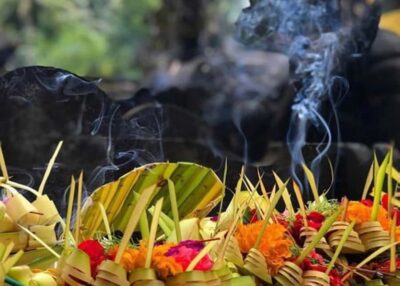
- You prepare offerings as part of the ritual. Your guide helps you with what to do and how to present it.
- You recite prayers with instruction on timing and meaning. Even if you don’t know the language, you can still follow the flow because you’ll be guided step by step.
- You bathe in the temple’s holy spring water. The water is described as crystal-clear, and it’s used intentionally during the purification.
What I like about this kind of structure is that it gives you something to focus on. Instead of asking yourself What is the proper etiquette here? you can listen and follow the guide. In the end, you’re less of an observer and more of a participant, even if you’re still a visitor.
One more thing: the guide isn’t just translating words. They help you understand why the offerings and prayers exist in the first place. That added meaning tends to make the bathing portion feel less like a stunt and more like a ritual you can actually respect.
Tirta Empul Temple Tour: Myths, Origins, and the Indra Connection
After the purification, the experience shifts from ritual participation to temple understanding. You’ll explore the temple complex with your guide, and you should expect explanations of its background and symbolism.
This is the part that makes the entire day feel coherent. The spring water rite has a spiritual goal, but you also need context to understand what you’re stepping into.
Your guide will share things like:
- The temple’s legendary origins
- Its connection to the god Indra
- How it fits into Balinese spirituality
That Indra link is especially helpful. Without it, a temple tour can feel like admiring details you don’t fully interpret. With it, you start seeing the site as part of a living belief system, not just a beautiful location.
Also, you’re guided through the complex after you’ve already participated in the ceremony. That timing matters. Once you’ve gone through the cleansing, the explanations tend to land better. It’s easier to connect the story to what you experienced than if you just showed up for sightseeing.






The Real Value: Having a Local Guide Lead You Correctly
The difference between a decent visit and a great one is often the guide. For this experience, the guide is central, because you’re not only touring—you’re actively participating.
In particular, I saw strong feedback tied to guides who were friendly, easy to follow, and generous with explanations. One named example is Kadek, who was highlighted for excellent guidance and for sharing knowledge in a way that made the visit feel special. There was also mention of the guide preparing a prayer offering, which tells you they’re not treating participation as a DIY task.
That kind of support matters for practical reasons:
- You avoid awkward guesswork about when to move and what to do.
- You learn the significance behind actions, which helps you stay respectful.
- You get an experience that feels personal, not like a rushed group handoff.
If you’re someone who usually skips guided tours, this is still worth considering—because Melukat depends on correct participation. A guide doesn’t just add information; they help you get the experience right.
Time, Pacing, and What the 2-Hour Format Actually Feels Like
The total duration is about 2 hours. That’s an ideal length for balancing meaning with energy. You won’t be stuck there all day with your feet tired and your brain ready for a break.
In a short format, what’s important is pacing. The ceremony has multiple parts—offerings, prayers, bathing—then the temple tour follows. Your guide will help you keep things in order so you’re not spending extra time figuring out what comes next.
Also, because it’s private, your group can set the tempo within reason. In a group setting, people sometimes rush or lag. With only your group participating, it should feel more controlled and less chaotic.
Price and Value: Is $29 Worth It for a Guided Ritual?
At $29 per person, this is positioned as a budget-friendly experience for Bali, but it still includes real guidance during a religious ritual.
Here’s how I think about the value:
- You’re paying for more than entry. This isn’t a museum-style ticket. It includes step-by-step participation in a ceremony.
- You’re paying for accuracy and context. Guides help you understand the prayers and offerings, plus they handle the flow of the ritual.
- You’re paying for time efficiency. Two hours is short, and you still get purification plus a temple tour afterward.
That said, one caution makes sense: if you’re hoping to treat it as a simple stop with minimal guidance, you may feel the price is high relative to what you personally need. The experience is guide-led, and the guide’s role is the product.
So ask yourself this: Do you want someone to walk you through the spiritual mechanics, or would you rather wander and figure things out yourself? If you want the guided version, $29 can be a fair deal. If you want a DIY experience, that price may feel like paying for something you don’t use.
Practical Etiquette Tips for a More Respectful Melukat
The ceremony is spiritual, and that means the tone matters. Even without having all the ritual language, you can still behave in a way that signals respect.
A few practical pointers you can follow:
- Go with a calm mindset. This is not a party. It’s a cleansing ritual.
- Follow the guide’s cues. The process depends on timing and order.
- Be mindful with your body in sacred space. Move carefully, keep your attention on what’s happening, and avoid turning it into a performance.
One more practical note: participation is not available for travelers undergoing menstruation. If that applies to you, this is simply not an option during that time.
If you’re visiting for the first time and worried you might feel awkward, that’s normal. A step-by-step guide usually helps you settle into the flow quickly, and it also reduces the chance you accidentally do something out of order.
Who This Experience Fits Best (and Who Might Want Something Else)
This is a strong match if you:
- Want a genuine cultural and spiritual experience in Bali, not just sightseeing
- Prefer guided instruction you can follow step by step
- Like the idea of doing something hands-on with a local guide
- Appreciate learning the meaning behind religious sites, including myths tied to Indra
It might not fit as well if you:
- Dislike spiritual rituals or feel uncomfortable participating in religious actions
- Plan to go mostly on your own and don’t want to pay for guidance
- Need an option during menstruation
If you’re solo, it can still work well because the tour is private and the guide can explain what you’re doing. If you’re with friends, you can share the experience and still receive personal guidance.
Should You Book This Melukat Ceremony at Tirta Empul?
If you want more than a temple photo stop, I’d book this. The reason is simple: Melukat is designed around participation, and participation needs guidance. You’ll go to Tirta Empul, take part in cleansing with holy spring water, then get a guided tour that gives you context for the site’s spiritual meaning and Indra connection.
I’d skip it only if you know you don’t want religious rituals or if the $29 per person feels too close to your comfort zone for a guided experience. In that case, you could still visit Tirta Empul on your own—but you’d be giving up the step-by-step part that makes this special.
For most people who come to Bali wanting a real cultural moment with clear structure, this is a strong choice.
FAQ
Where does the Balinese water purification ceremony take place?
The ceremony starts at Pura Tirta Empul in Tampaksiring, Gianyar Regency, Bali 80552, Indonesia.
How long is the experience?
The duration is about 2 hours (approx.).
What does the ticket include?
The ticket is described as a mobile ticket, and the experience includes the Melukat water purification ceremony followed by a temple tour at Tirta Empul.
Is this a private tour?
Yes. Only your group participates.
Is the Melukat ceremony always available?
No. It is not available for travelers undergoing menstruation.
How does cancellation work?
Free cancellation is offered. You can cancel up to 24 hours in advance for a full refund.
When does the activity end?
The activity ends back at the meeting point.
More Ubud Tours We Rate





Cleansing & Healing Rituals

Just added around Ubud
- Ubud: White Water Rafting with visit Ubud Monkey Forest
★ 5.0 · 3 reviews - Private Guided Bali Car Charter
★ 5.0 · 3 reviews - East Bali and Lempuyang Temple Tour
★ 5.0 · 3 reviews - Bali Downhill Cycling and White Water Rafting
★ 5.0 · 3 reviews - Cave Tubing Adventure in Ubud
★ 5.0 · 3 reviews
Spiritual Cleansing Rituals, compared.
 ★ 4.9Tirta Empul: Temple Tour with Optional Spiritual CleansingFrom $241,257 reviews
 ★ 4.8Sacred Monkey Forest Sanctuary Ticket and Guided TourFrom $16675 reviews
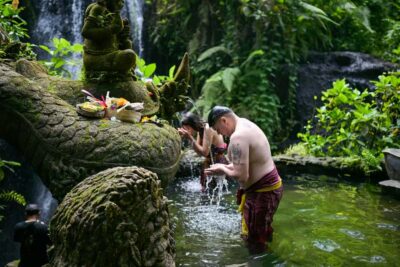 ★ 4.8Taman Beji Griya Waterfall: Holy Bathing/Soul Retreat RitualFrom $29634 reviews
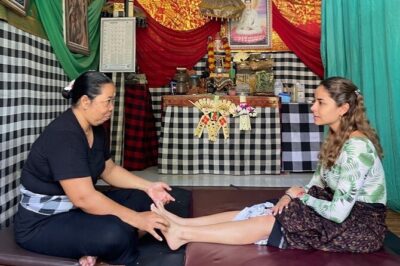 ★ 5.0Ubud Tour – Balinese Healing By Shaman And Self PurificationFrom $74236 reviews
Melukat Ceremony and Temple Tour at Tirta Empul TempleFrom $29218 reviews
★ 5.0Ubud Tour – Balinese Healing By Shaman And Self PurificationFrom $74236 reviews
Melukat Ceremony and Temple Tour at Tirta Empul TempleFrom $29218 reviews
 ★ 4.5Spiritual Cleansing, Palm Reading, & Trauma HealingFrom $27217 reviews
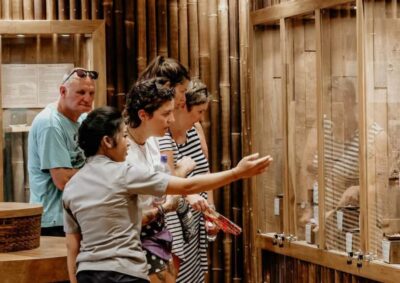 ★ 4.8Soul Retreat & Holistic Mantra Healing ExperiencesFrom $48144 reviews
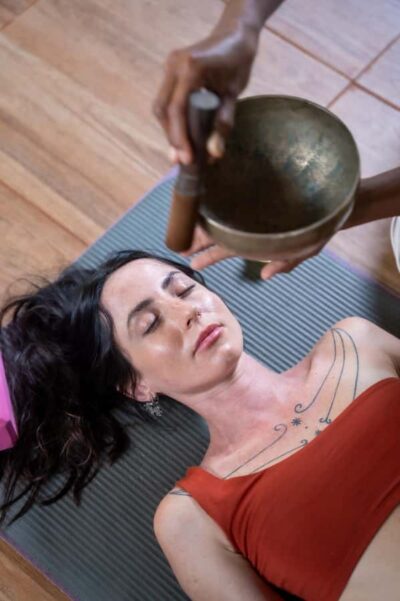 ★ 4.8Ubud Sound Yoga & Energy Healing ExperienceFrom $29112 reviews
Browse the lists this tour appears in