
Reviewed · EVENING EXPERIENCES
VIllage Firefly Night Tour – Ubud Bali
Fireflies in Bali are real, not staged. This Ubud Pemulan Bali Village Experience strings together an organic farm plant walk and a Balinese cooking session with local hands before ending in the rice fields after dark. I also like that it keeps the group small, with a max of 10 travelers, so you’re not just herded along.
One thing to keep in mind: the fireflies are wild and depend on conditions. One past participant found the firefly part underwhelming, and the operator notes that firefly habitat is shrinking due to development and environmental change, so expect variation rather than a guaranteed glowing show.
In This Review
- Key highlights worth knowing
- Why This Ubud Firefly Tour Feels Like Real Rural Bali
- From Pura Dalem Puri Peliatan to the Organic Farm Walk
- Balinese Cooking Class You Can Actually Use Later
- The Traditional House Visit: Learning the Meaning Behind the Buildings
- Rice Fields at Night: Wild Fireflies and Expectation Setting
- Price and Value in Ubud: What $45 Gets You
- Group Size, Pickup, and Timing: How Logistics Shape Your Experience
- Who This Tour Suits Best (and Who Might Want to Skip)
- Should You Book the Pemulan Bali Village Firefly Night Tour?
- FAQ
- Where does the Village Firefly Night Tour start?
- How long is the tour?
- How much does the tour cost?
- Is pickup offered?
- What’s the group size?
- Is a mobile ticket used?
- What does the tour include besides fireflies?
- When is the tour available?
- Do I get confirmation after I book?
- Can I cancel for free?
Key highlights worth knowing

- Organic farm garden walk focused on plants used in Balinese cooking and daily life
- Hands-on cooking with locals plus a traditional meal you helped prepare
- Balinese home visit to understand how the house system works and what each building means
- Small group experience capped at 10 people, with pickup offered
- Rice-field fireflies at night for a truly outdoor, natural moment (not a spectacle on demand)
Other Ubud tours and experiences to line up next
- Uluwatu Sunset, Kecak Dance, and Dinner Jimbaran Beach★ 5.0 · 3,681 reviews
- Mount Batur Sunset Trekking★ 5.0 · 353 reviews
- Half-day tour : Tanah Lot Sunset Tour★ 5.0 · 231 reviews
- Half-day Tour: Fantastic Uluwatu Sunset Tour★ 5.0 · 196 reviews
Why This Ubud Firefly Tour Feels Like Real Rural Bali
If your Bali plan is mostly temples and crowds, this gives you a different angle. Ubud can be a bit “look, see, post.” This tour is more “learn, work, sit, watch.” You spend the afternoon doing rural things in a way that feels connected to how people actually live around Ubud.
Two parts are especially strong. First, the organic farm walk is practical: you’re shown plants used in Balinese cooking and day-to-day life, not just pointed at like souvenirs. Second, the cooking portion is interactive, with you teaming up with locals to prepare a traditional dinner. It’s the kind of activity where you leave knowing what ingredients are for, not just what dishes end up on the table.
The third highlight is the night finale. You head to the rice fields for wild fireflies. It can be magical when conditions are right, but it’s not something you should treat like a theater performance. Think nature, not lights-and-music.
From Pura Dalem Puri Peliatan to the Organic Farm Walk
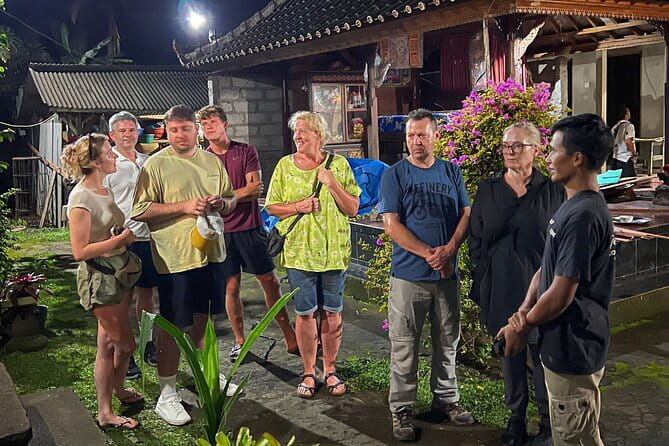
Most tours in Bali start fast. This one starts with a clear meeting point: Pura Dalem Puri Peliatan in the Tebesaya/Petulu area of Ubud (the address is listed at the meeting location). The activity ends back at the meeting point, so you’re not guessing where to regroup after dark.
Pickup is offered, which matters in Ubud. Traffic can be unpredictable, and night driving adds stress. If pickup is available for your time slot, it’s a big quality-of-life upgrade.
Once you’re with the group, you transition into the farm portion. This part is built around an organic farm experience and a guided walk around the plants. You’ll learn what gets used in Balinese cooking and why those plants matter to the community. Even if you’re not the sort of person who nerds out about ingredients, this works because the focus is everyday use: what’s grown, what’s gathered, and how plants connect to meals.
What to watch for here: farm walks can mean uneven ground and outdoor heat during the day. Wear shoes you can trust on paths. You’ll thank yourself later when you shift from farm terrain to the kitchen setup.
Balinese Cooking Class You Can Actually Use Later
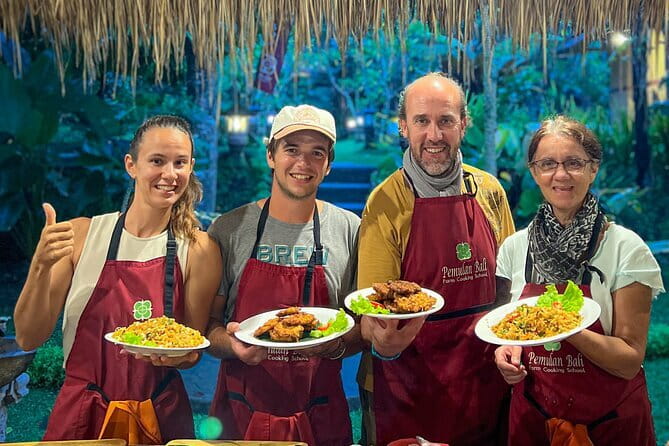
After the farm, the tour moves into the part most people remember: cooking. You team up with locals to prepare a traditional Balinese dinner. The key word in how this tour is structured is hands-on. It’s not only watching someone cook while you take notes. You’re doing the work.
The cooking class is also tied to what you saw earlier. You’re already familiar with some of the plants used in Balinese cooking, so the kitchen time makes sense. That connection is where the value lives. You’re not learning a random recipe; you’re learning how rural ingredients become dinner.
One review praised how smoothly the cooking went, which usually means the hosts know how to pace a group and keep everyone involved. That matters with small tours: a group of 10 can still feel chaotic if the teaching style is off. Here, the flow seems designed to keep you cooking instead of waiting.
Practical tip for the cooking portion: expect you might get kitchen splashes or handle fresh ingredients. Bring a shirt you don’t mind getting a little farm-life on it. If you’re sensitive about smells, pack a small towel or wet wipes so you can reset before heading to the house visit and later the rice fields.






The Traditional House Visit: Learning the Meaning Behind the Buildings
Next comes one of the more thoughtful pieces of the tour. You visit a traditional Balinese home and meet the family. This isn’t framed as a quick photo stop. You observe daily activities up close and learn about the house system, including the functions and structure of each building.
This is important because Balinese houses aren’t just architecture. They’re part of a system that supports living, spirituality, and community life. When a tour explains what each building is used for, it turns a structure you’d otherwise overlook into something you understand.
One potential drawback: home visits can feel intimate. You may be entering someone’s private life space, and the vibe can be quiet and respectful rather than showy. If you prefer big group theatrics, this segment may feel slower. But if you like real human context—how people move through their day—this is where you start connecting the dots between farm work, cooking, and home life.
For this stop, keep your tone gentle. Ask questions if you’re invited to, but don’t rush. You’ll get more out of it if you treat it like learning inside a living community, not consuming a cultural attraction.
Rice Fields at Night: Wild Fireflies and Expectation Setting

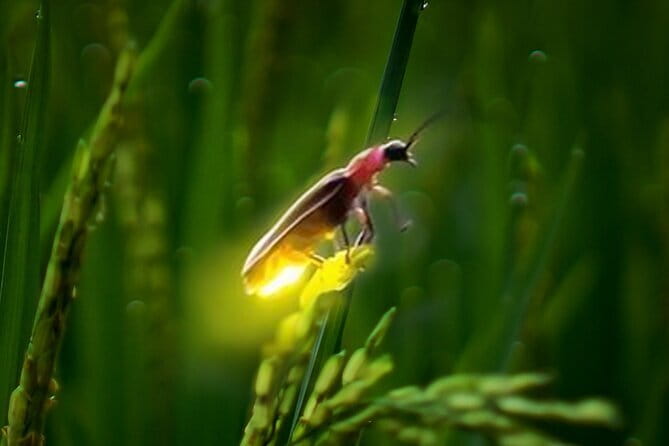
This is the finale: a trip to the rice fields to see wild fireflies. The tour frames it as magical, and when it comes together, it can be exactly that. You’re outside, in the dark, near rice paddies, and you’re waiting for something living to respond to its environment.
Still, you should set expectations carefully. The firefly part is the main selling point, and one participant described disappointment, noting that the firefly experience didn’t match hopes. The operator also explains that firefly habitats in Bali are decreasing due to development and environmental change. That context matters because it suggests sightings can vary.
So what’s a smart way to approach it?
- Go for the experience of being there, not a promised number of lights.
- Give it time. Wild sightings often happen in windows, not on a strict schedule.
- Keep your expectations flexible. If conditions are less favorable, the tour may still feel meaningful because you got there for the nature moment and the walk through the rice fields.
Also consider your comfort. Night in rural areas can mean cooler air and more insects than you’d expect in town. Bring repellent if you normally use it and wear long sleeves if you get bothered. Keep your flashlight use minimal so you don’t disturb the moment.
Price and Value in Ubud: What $45 Gets You
The price is listed at $45 per person for roughly 5 hours. On paper, $45 is normal for a small-group Ubud cultural tour that includes multiple stops. But the real value question is: what do you get beyond transportation?
Here, you’re paying for three things that typically cost extra if purchased separately:
- A guided organic farm walk with a cooking-ingredient focus
- A cooking class and a meal you help prepare
- A traditional home visit where you learn about house structure and meaning
- Plus the evening rice-field time for fireflies
And because the group size caps at 10 and pickup is offered, the tour avoids that common Ubud problem of feeling like you’re moving through stations with strangers. Small groups cost more to run, but they tend to give you more attention and a better flow.
Timing also affects value. The tour is available across the day range listed as 12:00 AM to 11:30 PM, and the meeting point is stable. If you’re planning your schedule tightly, you’ll likely find a slot that fits.
One more note on demand: the tour is often booked about 41 days in advance on average. That’s not a guarantee of full bookings, but it’s a sign this is a popular format—especially for people who want something more local than temple-only days.
Group Size, Pickup, and Timing: How Logistics Shape Your Experience
This tour runs about 5 hours. That’s long enough to feel like a full evening plan, but short enough that you’re not losing your entire day.
The maximum of 10 travelers is one of the biggest “hidden” benefits. Smaller groups usually mean:
- easier questions during the house and cooking parts
- less waiting
- a calmer pace for night viewing in the rice fields
Pickup offered also changes how you experience Ubud at night. Driving yourself can mean extra stress and parking hassles. When pickup is available, you can focus on what you’re doing instead of juggling transport.
Bring a light layer for after sunset. Even in warm places, evenings can feel cooler outside, and rice-field areas often have a different air feel than town streets.
Also, keep your phone charged. If you’ll want photos, low light can be tricky, but having a working battery matters.
Who This Tour Suits Best (and Who Might Want to Skip)
This is a great fit if you want a Bali day that connects food, home life, and night nature. I’d point you here if you like practical learning—like understanding what plants do in cooking—and if you enjoy quiet cultural moments more than high-energy attractions.
You’ll probably enjoy it even more if you’re:
- traveling with curiosity about everyday life
- happy to be outdoors for part of the day
- interested in traditional food without needing fancy restaurant plating
If you’re the kind of person who only cares about guaranteed fireflies, you might feel let down. Since the fireflies are wild and habitat conditions can shift, you’re buying an outdoor experience that depends on nature.
Should You Book the Pemulan Bali Village Firefly Night Tour?
Here’s my straight take: book it if you want a meaningful rural Ubud evening that teaches you real connections—farm plants to cooking, cooking to home life, and then home life to the nighttime rice-field moment.
Choose something else only if you’re treating fireflies as a must-have spectacle and you’d be frustrated by variability. The tour can be magical, but it’s not engineered like a show.
If you do book, go in with the mindset of calm attention. Wear good shoes. Bring a layer for night. And remember: the most memorable part might not be a single flash of light—it’s the way the whole day makes sense as one picture of rural life.
FAQ
Where does the Village Firefly Night Tour start?
It starts at Pura Dalem Puri Peliatan in the Ubud area (Tebesaya/Petulu, Gianyar Regency). The activity ends back at the same meeting point.
How long is the tour?
The duration is listed as about 5 hours.
How much does the tour cost?
The price is listed as $45.00 per person.
Is pickup offered?
Yes, pickup is offered.
What’s the group size?
The tour has a maximum of 10 travelers.
Is a mobile ticket used?
Yes, the tour uses a mobile ticket.
What does the tour include besides fireflies?
You visit an organic farm and learn about plants used in Balinese cooking and daily life, prepare a traditional Balinese dinner with locals, and visit a traditional Balinese home to learn about the house system.
When is the tour available?
The listed opening hours are Monday through Sunday, from 12:00 AM to 11:30 PM.
Do I get confirmation after I book?
Confirmation is received at the time of booking.
Can I cancel for free?
Free cancellation is available up to 24 hours in advance for a full refund.
Evenings Out in Ubud



More to See and Do in Ubud





More Ubud Tours We Rate

Just added around Ubud
- Ubud: White Water Rafting with visit Ubud Monkey Forest
★ 5.0 · 3 reviews - Private Guided Bali Car Charter
★ 5.0 · 3 reviews - East Bali and Lempuyang Temple Tour
★ 5.0 · 3 reviews - Bali Downhill Cycling and White Water Rafting
★ 5.0 · 3 reviews - Cave Tubing Adventure in Ubud
★ 5.0 · 3 reviews
Evening Experiences, compared.
 ★ 5.0Uluwatu Sunset, Kecak Dance, and Dinner Jimbaran BeachFrom $353,681 reviews
 ★ 5.0Mount Batur Sunset TrekkingFrom $45353 reviews
Half-day tour : Tanah Lot Sunset TourFrom $19231 reviews
Half-day Tour: Fantastic Uluwatu Sunset TourFrom $17196 reviews
★ 5.0Mount Batur Sunset TrekkingFrom $45353 reviews
Half-day tour : Tanah Lot Sunset TourFrom $19231 reviews
Half-day Tour: Fantastic Uluwatu Sunset TourFrom $17196 reviews
 ★ 5.0Mount Batur Sunset Jeep Guided Tour (Private Tour)From $27152 reviews
 ★ 5.0Mount Batur Camping Tour with Sunset and Sunrise ExperienceFrom $103143 reviews
 ★ 4.4Ubud Traditional Night Market Food Tour-All InclusiveFrom $4395 reviews
 ★ 5.0Mount Batur Sunset Trekking From UbudFrom $2583 reviews
Browse the lists this tour appears in