
Reviewed · UBUD
Ubud’s Journey from Past to Present
Ubud feels different after this walk. This 3-hour Ubud Story Walks route connects Bali’s older spiritual world with the newer downtown vibe, one step at a time. You’ll visit sites like Pura Gunung Lebah (Campuhan Temple), Campuhan Bridge, Museum Puri Lukisan, and the Ubud Royal Palace area.
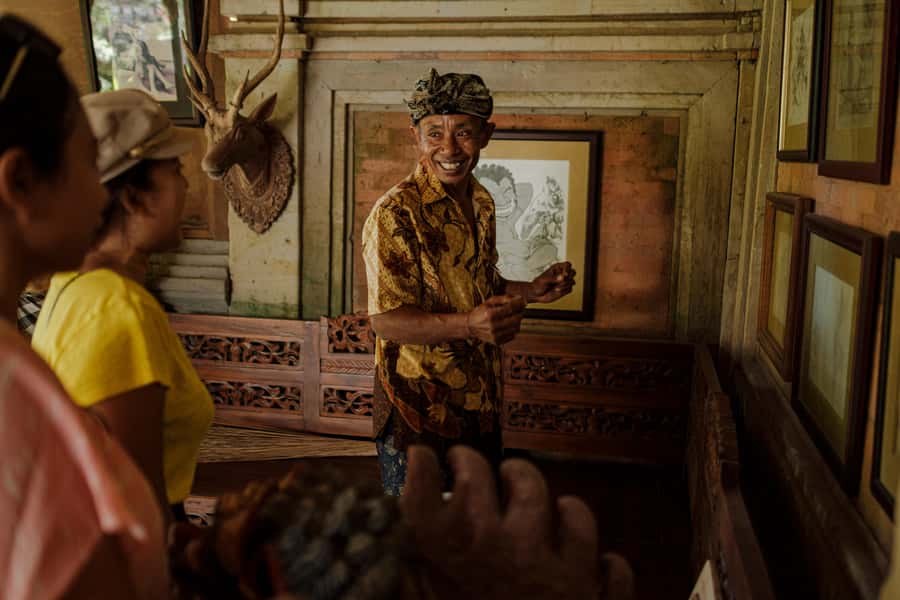
I like two things a lot: the storytelling from guides such as Jo and Win, and the way the tour includes real access, not just sightseeing. You get Museum Puri Lukisan entrance, plus special access to a Balinese compound, so the history feels tangible instead of just pointed-at.
One thing to consider: it’s a walking tour around historic landmarks, so expect uneven temple stairs, steep gradients, and patchy sidewalks. You should be comfortable walking in an urban area for up to 3 hours.
In This Review
- Key Points at a Glance
- Why Ubud’s Past-to-Present Story Walk Feels Worth Your Morning
- Pura Gunung Lebah (Campuhan Temple): A Spiritual Start in a Real Neighborhood
- Campuhan Bridge: Where Views Make Sense After You Hear the Story
- Museum Puri Lukisan: Art History with Real Local Ownership
- Puri Agung Ubud (Ubud Royal Palace): Multi-Tiered Shrines and the Meaning Behind the Layout
- Puri Kantor and the Balinese Compound Access: The Old Among the New
- The Walking Value: $27 for 3 Hours, Real Tickets, and the Right Stops
- Meeting Point, Timing, and What to Bring So You Enjoy It More
- Who Should Book This Tour, and Who Might Skip It
- Should You Book Ubud’s Past-to-Present Story Walk?
- FAQ
- How long is the Past to Present walking tour?
- What is the price per person?
- How big is the group?
- What places do you visit during the walk?
- Is the Museum Puri Lukisan ticket included?
- Where is the meeting point?
- Do they pick you up from your hotel?
- Is the tour held in bad weather?
- Is the tour physically demanding?
- Should I bring anything for the tour?
Key Points at a Glance
- A compact 3-hour loop linking temples, bridge views, a museum, and palace grounds
- Small group size (max 8) for questions without feeling rushed
- Museum Puri Lukisan entry included (Rp 95,000)
- Special access to a Balinese compound beyond the usual walk-by experience
- Practical, human touches like umbrellas and mosquito spray showing up in some groups
- Bring a reusable bottle to help reduce plastic in Bali’s rivers
Not quite the one? These Ubud tours book out fastest.
- All-Inclusive Ubud Private Tour★ 5.0 · 14,344 reviews
- Best of Ubud Full-Day Tour with Jungle Swing★ 5.0 · 8,571 reviews
- Ubud: Monkey Forest, Jungle Swing, Rice Terrace, and Water Temple★ 5.0 · 7,160 reviews
- Ubud: Waterfalls, Water Temple & Rice Terraces Private Tour★ 5.0 · 5,484 reviews
Why Ubud’s Past-to-Present Story Walk Feels Worth Your Morning

Ubud can look like an art town at first glance. This tour helps you understand why that’s true, but also where the roots come from. The best part is the pacing: you walk through areas that feel modern, then you stop at key places that explain how older traditions shaped what grew around them.
I also like how the tour frames Ubud as a changing place, not a frozen postcard. You’ll hear how this area developed from suburb-like spaces into the downtown hub people move through today. That storyline makes each stop click: temple, bridge, museum, palace grounds, and shrine spaces stop being isolated sights.
Finally, the guide experience matters here. In past groups, names like Jo, Joe, Win, and Bagus came up again and again, with guides described as thoughtful, fun, and tuned in to keeping everyone included. A good guide turns a route into a conversation.
Pura Gunung Lebah (Campuhan Temple): A Spiritual Start in a Real Neighborhood
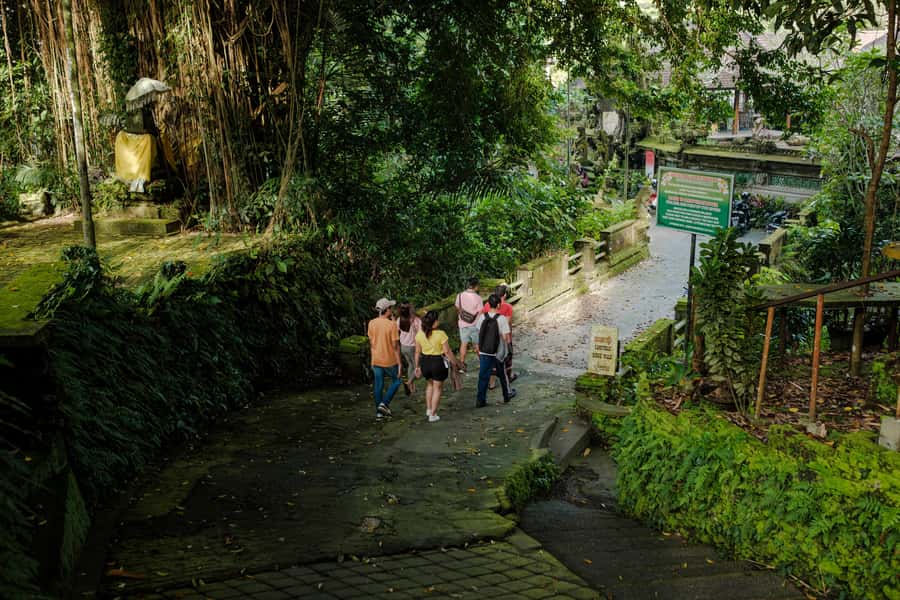
Your walk begins at Pura Gunung Lebah, commonly called Campuhan Temple. It’s a strong opening because it sets the spiritual tone before you head into the more tourist-friendly streets of Ubud. Even if you’re not a ritual watcher, you’ll get context for what the place represents and why people still visit.
The tour story here focuses on Bali’s older identity, and specifically on the idea of a magical meeting between two rivers. That kind of detail matters. It tells you that places here aren’t just scenic points; they’re part of how people make sense of nature, water, and place.
Practical note: temple access means steps. This is where your comfortable shoes really earn their keep. If you’re carrying heavy bags or wearing sandals without grip, swap them before you start.
Campuhan Bridge: Where Views Make Sense After You Hear the Story
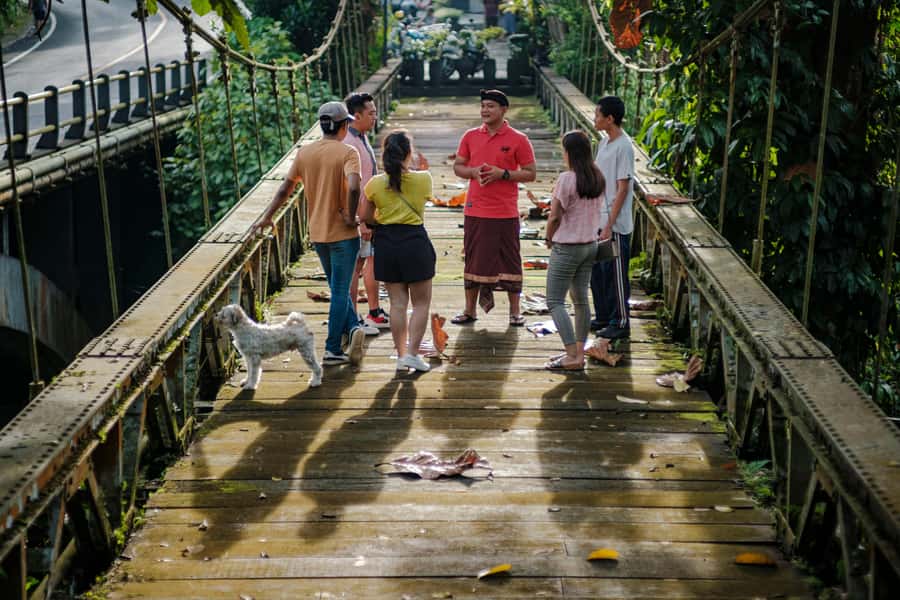
From Campuhan Temple, you move toward Campuhan Bridge. This is one of those Ubud areas where it’s easy to just look. The tour nudges you past that. You’ll connect the bridge to the wider narrative of the region’s geography and the way older spiritual spaces sit alongside evolving daily life.
The bridge stop also gives you a breather. It’s a spot to pause, take photos, and reset your pace before you head into the museum and palace-related sites. If you’ve been in Bali only for beaches and motorbikes so far, this part helps you slow down and see Ubud like a pedestrian town.
Also, because the tour is rain or shine, plan for real weather conditions. If the day is damp, the ground around bridge paths can feel slick—so grip matters.






Museum Puri Lukisan: Art History with Real Local Ownership

Next comes Museum Puri Lukisan, or the Palace of Paintings. I like this stop because it explains why Ubud became known for art without making it sound like a random trend. The tour highlights the early alliance between Balinese and Western artists—so you understand that Ubud’s artistic identity isn’t just something that happened here by accident.
This museum inclusion is a genuine value add. You don’t just get the exterior experience; you get the Museum Puri Lukisan entrance ticket included (Rp 95,000). That matters if you’re trying to keep your day organized and predictable.
What you’ll get out of it: a clearer sense of how art and culture traveled back and forth. The tour also frames Ubud as old among the new, which helps when you see galleries and studios later. You’ll likely notice how the modern art scene sits beside long-standing belief systems and community traditions.
In groups, guides sometimes bring printed photos to support their storytelling. That helps a lot when you want to connect what you’re seeing to what came before.
Puri Agung Ubud (Ubud Royal Palace): Multi-Tiered Shrines and the Meaning Behind the Layout
Puri Agung Ubud is where the walk turns deeper. This isn’t about a single statue or one pretty courtyard. The tour focuses on a multi-tiered shrine to the gods, and it uses that to explain the structure and purpose behind royal and spiritual spaces.
Here’s why I think this stop works for most people: you leave with a mental map. Once you understand how the space is organized and what the layered design represents, you’ll start noticing patterns at other temples later on. It makes your next day in Bali easier, not harder.
There’s also an intangible payoff. Watching a shrine space and knowing what the tiers mean changes your attention. You stop treating it as decoration and start treating it as a living system.
Again, expect stairs and uneven edges. The tour can’t flatten historic grounds, so only book if your legs and feet are up for it.
Puri Kantor and the Balinese Compound Access: The Old Among the New

One of the best parts of this tour is the special access to a Balinese compound. That’s not the same as walking past a gate and hoping you’ll see something. Here, you get permission-based entry that helps you understand everyday life and tradition from inside the cultural boundaries.
The tour also visits Puri Kantor, which adds another layer to the palace-area story. Even if you’re not an architecture nerd, the narrative gives you a way to read the space: what’s official, what’s spiritual, what’s public-facing, and what stays more private.
I like that this part of the route reinforces the tour theme. The walk is designed to show Ubud’s development from suburbs toward a downtown hub. You’re seeing the contrast in real time: older compounds, newer streets, and how people live with both.
In some groups, guides have also shown up with helpful extras like umbrellas and mosquito spray. One guide even carried a first aid kit after spotting a need during a tour. That’s not listed as a standard item, but it does reflect the practical care guides bring to a walking schedule.
The Walking Value: $27 for 3 Hours, Real Tickets, and the Right Stops
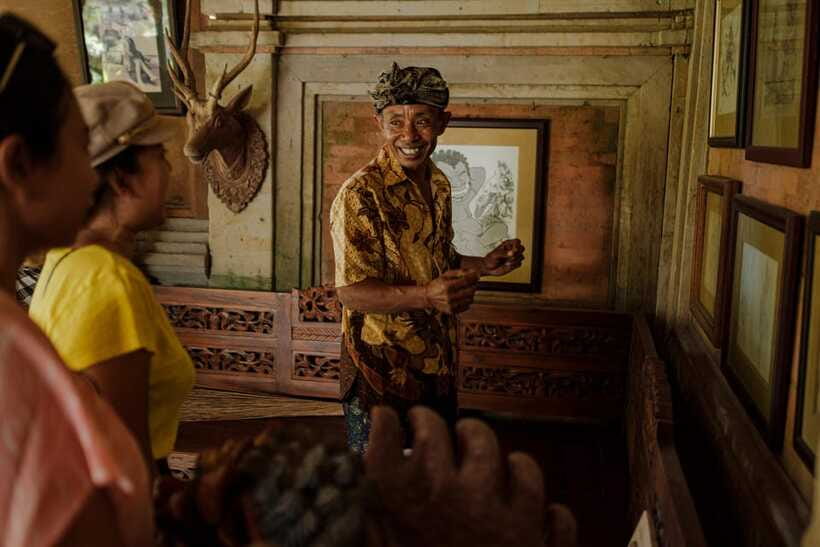
At $27 per person for a 3-hour walking tour, this is priced like a budget-friendly morning plan. But what makes it worth your time isn’t only the cost. It’s what’s included.
You get:
- A local English-speaking guide
- The guided walk itself
- Museum Puri Lukisan entrance (Rp 95,000)
- Special access to a Balinese compound
- Local discounts
That ticket inclusion alone can change how you plan your day. Instead of paying for museum entry on the spot and hoping the time works, it’s built into the flow.
You also get a small group, limited to 8 participants. For me, that’s key. If you’re going to sit through explanations at temples and inside compound areas, you want a guide who can actually answer questions without rushing the slowest walkers.
If you hold a KTP or KITAS, there’s also a discount option. Contact [email protected] to ask for the special offer.
Meeting Point, Timing, and What to Bring So You Enjoy It More
You meet near Antonio Blanco Museum, in the Murni’s Warung area. The exact spot is emailed after booking, so don’t count on a single street corner—watch for that message.
Timing is set for a morning start in many cases. The listed start time is 8:30am for private tours, and other times are available if you contact them. With a 3-hour duration, you’ll finish while the day still feels manageable, which is ideal in Ubud.
What to bring:
- Comfortable shoes with good grip
- A reusable bottle for water refills (their environmental push is to cut plastic in Bali’s rivers)
They operate rain or shine. If weather turns severe, they call you before the start time. For planning, I’d treat this as a real walking schedule, not a soft suggestion.
Who Should Book This Tour, and Who Might Skip It
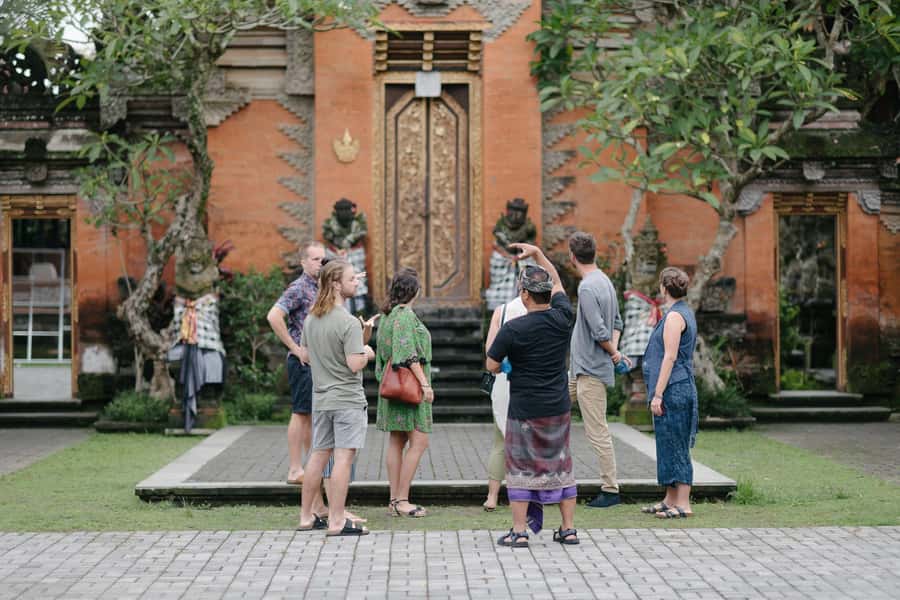
This walk is a great fit if you want Ubud with context. If you like learning why places look the way they do—temple layout, palace-area meaning, how art culture formed—you’ll enjoy the pacing.
It’s also ideal if you want a city walk that doesn’t feel random. The route is built around one theme: Ubud’s journey from past to present. That makes the stops feel connected, not like five separate tickets.
You should be cautious if:
- Your mobility is limited with stairs or uneven surfaces
- You’re not comfortable walking up to 3 hours in an urban environment
- You’re expecting a fully level, stroller-friendly route (the tour can’t alter historic terrain)
Should You Book Ubud’s Past-to-Present Story Walk?
Yes, if you want an on-foot Ubud experience that teaches you how the past shaped what you see today. For $27, the value stacks quickly: museum entry is included, special compound access is included, and the small group format makes the guide’s storytelling matter.
I’d book it especially if you’re the type who likes asking questions while you walk—because that’s when this tour turns from sightseeing into understanding. And if you bring comfortable shoes and a reusable bottle, you’ll be ready for the practical parts too.
If you’re only here for a quick look and you don’t want to do any steps, you might choose a lighter option. But if you’re up for 3 hours of guided walking around real landmarks, this is one of the most sensible ways to get Ubud’s story without wasting time guessing.
FAQ
How long is the Past to Present walking tour?
The tour lasts 3 hours.
What is the price per person?
The price is $27 per person.
How big is the group?
The tour is limited to a small group of up to 8 participants.
What places do you visit during the walk?
The route includes Pura Gunung Lebah (Campuhan Temple), Campuhan Bridge, Museum Puri Lukisan (The Palace of Paintings), Puri Agung Ubud (Ubud Royal Palace), and Puri Kantor.
Is the Museum Puri Lukisan ticket included?
Yes. Museum Puri Lukisan entrance is included, listed as Rp 95,000.
Where is the meeting point?
You meet near Antonio Blanco Museum (also described as near Murni’s Warung). The exact meeting point is emailed after booking.
Do they pick you up from your hotel?
No. The tour does not provide pickup or drop-offs from your accommodation.
Is the tour held in bad weather?
It runs rain or shine. If conditions are severe, they will call you before the start time.
Is the tour physically demanding?
There are uneven temple stairs, steep gradients, and patchy sidewalks. You should be physically capable of climbing steps and ready to walk around an urban environment for up to 3 hours.
Should I bring anything for the tour?
Bring comfortable shoes. They also ask you to bring a reusable bottle for water refills to help reduce plastic in Bali’s rivers.
More Ubud Tours We Rate





Just added around Ubud
- Ubud: White Water Rafting with visit Ubud Monkey Forest
★ 5.0 · 3 reviews - Private Guided Bali Car Charter
★ 5.0 · 3 reviews - East Bali and Lempuyang Temple Tour
★ 5.0 · 3 reviews - Bali Downhill Cycling and White Water Rafting
★ 5.0 · 3 reviews - Cave Tubing Adventure in Ubud
★ 5.0 · 3 reviews