
Reviewed · UBUD
Transforming Plastic Waste A Hands On Recycling Experience
Plastic waste gets a second life.
In Ubud, you can step into r•Plastic’s working studio and watch how discarded plastic turns into useful materials. I love the hands-on sorting and making part, and I especially like the machine demos, including a CNC cutting show where plastic becomes products like surfboard racks and furniture. The main drawback: there’s no lunch, and the experience needs good weather.
This one runs about 1 hour 30 minutes, with a small max group size of 20, so it doesn’t feel like a lecture tour. Martijn Huizing and the team focus on practical lessons about Bali’s plastic problem and how decentralized recycling can actually work, even at small scale.
In This Review
- Key Highlights to Know Before You Go
- Entering a Working Recycling Studio in Kemenuh (Ubud Area)
- The 1.5-Hour Flow: What You’ll Do From Welcome to Keychain
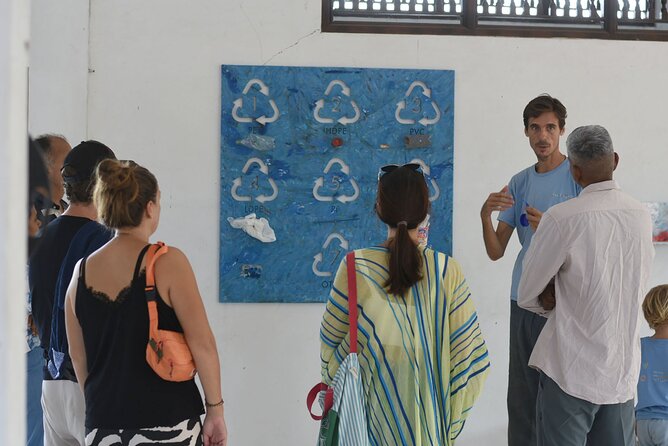
- Sorting Bottle Caps and Learning Plastic Types That Actually Matter
- Machine Demos: Self-Built Tech and the CNC Transformation Moment
- Your Take-Home Keychain: A Small Souvenir With Real Purpose
- Value, Timing, and Group Size: Why This Price Feels Fair
- What’s Included (and What’s Not): Plan Like a Local
- Who Should Book This Bali Recycling Workshop?
- Before You Go: Small Tips That Make a Big Difference
- Should You Book r•Plastic in Bali?
- FAQ
- How long is the Transforming Plastic Waste hands-on recycling experience?
- Where do I meet for the experience in Bali?
- What activities are included during the workshop?
- Is food or lunch included?
- Do I get to keep something at the end?
- How much does the tour cost?
- How big is the group?
- Is bottled water included?
- What if the weather is bad?
- What is the cancellation policy?
Key Highlights to Know Before You Go
- Working recycling studio, not a staged set or passive slideshow
- Sort bottle caps by color and type as a first real step in recycling
- Create your own artwork from recycled plastic materials
- CNC machine demo that turns plastic into finished-looking items
- Take-home handmade keychain made from Bali’s recycled plastic
- Small group feel with up to 20 people and time for Q&A
Not quite the one? These Ubud tours book out fastest.
- All-Inclusive Ubud Private Tour★ 5.0 · 14,344 reviews
- Best of Ubud Full-Day Tour with Jungle Swing★ 5.0 · 8,571 reviews
- Ubud: Monkey Forest, Jungle Swing, Rice Terrace, and Water Temple★ 5.0 · 7,160 reviews
- Ubud: Waterfalls, Water Temple & Rice Terraces Private Tour★ 5.0 · 5,484 reviews
Entering a Working Recycling Studio in Kemenuh (Ubud Area)
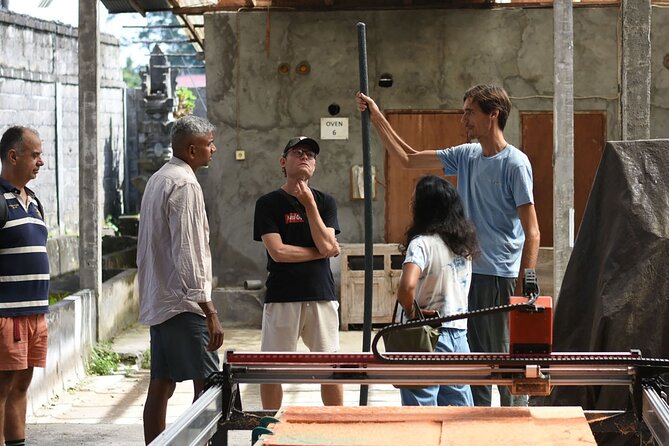
This isn’t the kind of Bali activity where you mostly stand around and take photos. You’re heading to a working space where plastic waste is handled seriously enough that machines are cutting and shaping it. That matters, because you get to see what recycling looks like when it’s actually happening, not just when someone explains it after the fact.
The setting is in Kemenuh, near Sukawati, in the Gianyar area—your start point is at F73J+CFR, Jl. Ir. Sutami, Kemenuh. The experience ends back at the same meeting point, which makes planning simple if you’re staying around Ubud.
The tone here is also practical. Martijn Huizing and the team explain how different plastic types behave differently, and why sorting is the make-or-break step. This is the “why” behind recycling, told in a way that’s easy to follow—even if you’ve never thought about plastic categories before.
The 1.5-Hour Flow: What You’ll Do From Welcome to Keychain
The workshop moves fast, but it’s not rushed. It’s built around short sections that alternate between learning, watching, and doing. Expect a complete loop: intro, studio tour, machine demos, then hands-on making, then Q&A and your souvenir.
Here’s the rhythm you can plan around:
1) Welcome and intro
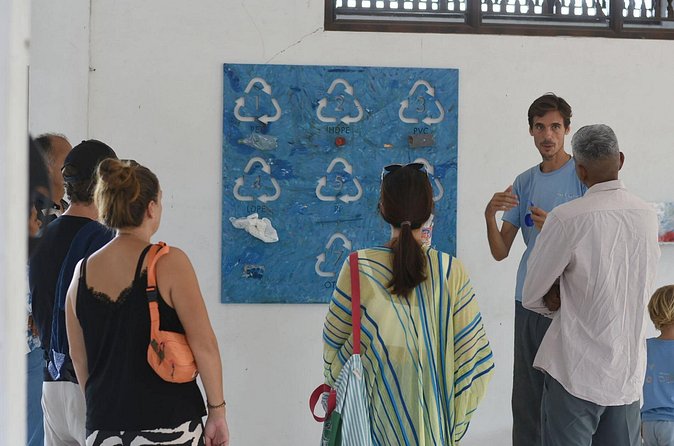
You start with a walkthrough of Martijn’s journey and Bali’s plastic challenge, focusing on why recycling matters and what steps are required to turn waste into something valuable.
2) Plastics and recycling basics
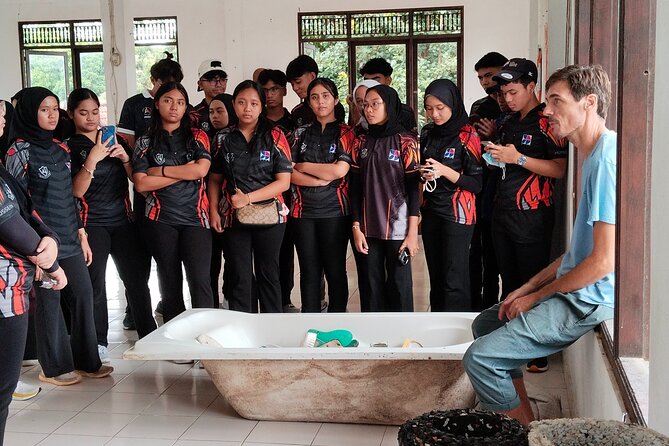
You’ll learn about plastic types and the waste challenges around Bali. It’s not just theory; the point is to help you understand why sorting counts. In school-style versions of the workshop, kids learn to separate plastics by type, which gives you a sense that the method is structured and repeatable.
3) Studio tour and machine demos
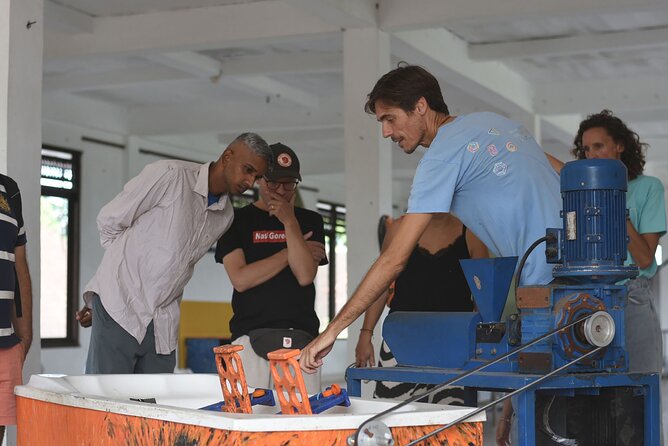
You’ll see how plastic is processed with self-built machines. This part is where the tour feels different from typical attractions: you’re watching equipment in action and learning what each stage is for.
4) Hands-on activities
This is the part you’ll remember:
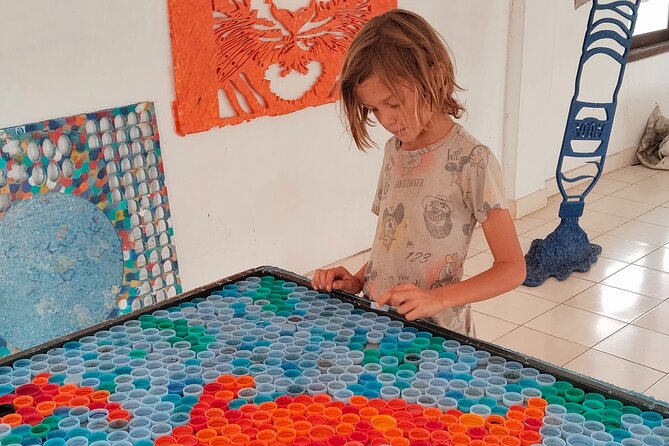
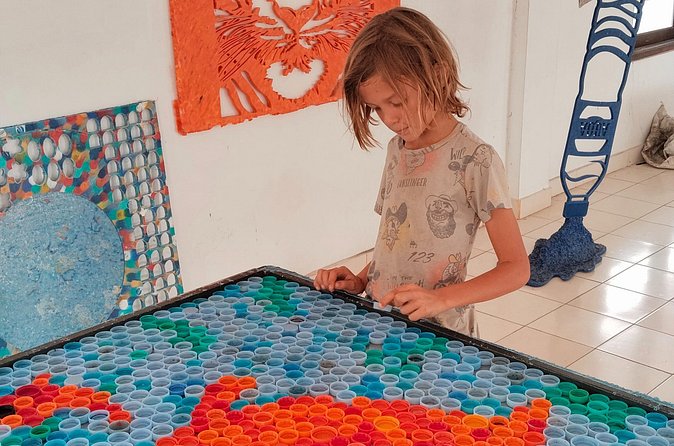
- You sort bottle caps by color and type.
- You make recycled-plastic artwork, using materials from the studio’s work process.
5) CNC machine demo
Then comes the showpiece demo where plastic gets cut by CNC into products like surfboard racks and furniture. Even if you don’t fully follow the technical details, you’ll see the transformation from raw waste into designed output.
6) Q&A and take-home keychain
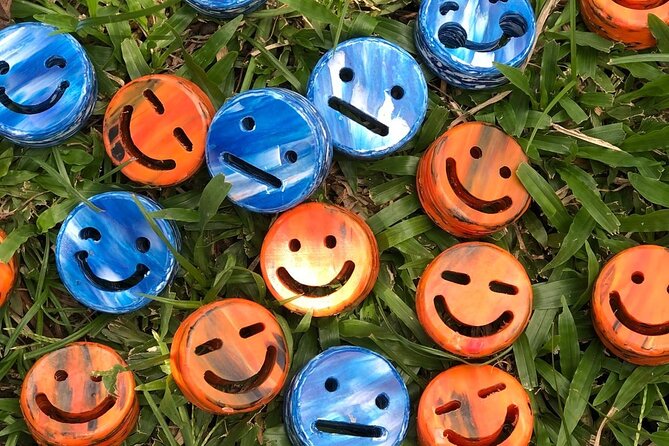
You can ask questions, and you leave with a handmade souvenir: a keychain crafted from Bali’s recycled plastic.
It’s all wrapped into about 1 hour 30 minutes, which is ideal if you want a meaningful activity without eating your whole day.
Sorting Bottle Caps and Learning Plastic Types That Actually Matter
The best part of this workshop is how it trains your brain to see plastic as material, not mess. Sorting bottle caps by color and type sounds simple, but it’s the first real lesson: recycling quality depends on clean categories, not vibes.
You’ll likely pick up practical ideas like:
- some plastics are easier to process than others
- mixing types makes outcomes worse
- small steps in sorting create big differences later in production
One reason I like this approach is that it’s grounded. Many people care about the idea of recycling, but fewer understand the bottleneck: “recyclable” isn’t a magic word. It’s a chain of steps, and sorting is the step you can control.
Martijn Huizing’s teaching style tends to focus on clarity and hands-on learning. If you’re visiting with kids, this is the type of activity where their curiosity stays alive because they’re doing real tasks, not just listening.






Machine Demos: Self-Built Tech and the CNC Transformation Moment
Watching machines in a recycling studio is eye-opening because it makes recycling feel like engineering, not just charity work. You’ll get a studio tour and see self-built machines involved in the process. The workshop doesn’t treat the machinery like a mystery box. Instead, you get context for what each stage is trying to accomplish.
Then you get the CNC machine demo, where plastic is cut into products. The studio uses plastic to create items such as surfboard racks and furniture, which helps you connect the dots between waste and useful design.
A quick reality check: you’re not getting a factory tour with industrial scale, and the workshop isn’t pretending that one studio solves everything. What you’re seeing is how far small-scale, decentralized recycling can go when the system is designed for repeatable output.
That’s why this part feels valuable. It helps you understand what’s possible, and what still needs support.
Your Take-Home Keychain: A Small Souvenir With Real Purpose
Yes, you’ll leave with something you can hold: a handmade keychain made from Bali’s recycled plastic. But the keychain isn’t just a gimmick souvenir.
It’s a tangible link to the process you just watched:
- you learned how plastic is sorted
- you saw how machines convert it
- you helped create artwork from recycled material
- then you get a finished item as proof of the loop
I also like that the souvenir comes from the same materials used in the studio’s work, not from unrelated products slapped with a sustainability label. When the gift matches the mission, it lands better.
Value, Timing, and Group Size: Why This Price Feels Fair
At $15.06 per person, this workshop is priced for people who want an educational experience without blowing their budget. Duration is about 1 hour 30 minutes, which means you’re buying focused time with real activities, not just a long bus ride.
The small cap of 20 travelers max is another value marker. In many tours, group size is how you lose attention. Here, the format suggests you’ll get better interaction because the group stays small enough for Q&A and hands-on involvement.
You’ll also get a mobile ticket, which is handy in Bali where plans can change fast.
One more practical point: you’re paying for access to a working studio and hands-on materials, plus a take-home keychain. That combo is usually what makes experiences like this feel worth it, and this one hits that sweet spot.
What’s Included (and What’s Not): Plan Like a Local
Here’s what you should plan around.
Included:
- Bottled water for topping up your own bottle. The studio avoids single-use plastic, so they don’t provide bottled water for you to take away.
- Parking space available
Not included:
- Lunch and no other food is listed.
This matters because you might be tempted to schedule it right in the middle of your day. If you do, just make sure you eat before you go. Also bring a water bottle you’re fine refilling. You’ll thank yourself later.
The experience also requires good weather, so keep that in mind if you’re traveling during Bali’s more unpredictable periods. If weather turns bad, you’ll be offered a different date or a full refund.
Who Should Book This Bali Recycling Workshop?
I’d point this one toward people who want Bali beyond beaches and temples. It’s a strong fit if you:
- care about sustainability and want to understand the mechanics
- like hands-on activities more than passive sightseeing
- want a family-friendly workshop where kids can actively participate
- enjoy creative making, since you’ll produce your own recycled-plastic artwork
It also works well for anyone who likes small groups and direct explanations from a real practitioner. Martijn Huizing’s role shows up repeatedly in the way the experience is described: he’s teaching, but he’s also running the work.
If you’re the type who wants a view-based tour with scenic stops every 10 minutes, this may feel more workshop-like than sightseeing-like. That’s not a flaw, just a mismatch of expectations.
Before You Go: Small Tips That Make a Big Difference
A few practical things will make your visit smoother:
- Bring a refillable water bottle since bottled water is not handed out for take-away.
- Wear clothes you don’t mind getting a little dusty, especially if you’re doing sorting and making tasks.
- Wear comfortable shoes. You’ll move around the studio space.
- If you’re scheduling a visit, aim for a day where weather is likely to hold.
- If you’re coming with a group, know there’s a maximum of 20, so late planning might limit your options.
Service animals are allowed, and most travelers can participate, so accessibility shouldn’t be the big barrier here. The bigger variable is weather and comfort with hands-on work.
Should You Book r•Plastic in Bali?
Book this if you want a real behind-the-scenes look at plastic recycling in Bali and you enjoy activities where you leave with something you made. The mix of sorting, creative work, and a machine demo (including CNC cutting) makes the time fly in the best way.
Skip it only if you’re mainly shopping for classic sightseeing, or if you can’t handle a workshop where there’s no lunch and good weather is important. Otherwise, this is one of those Bali experiences that gives you more than a photo. It gives you a clearer mental model for how recycling works, and it leaves you holding proof that waste can become a product.
FAQ
How long is the Transforming Plastic Waste hands-on recycling experience?
It lasts about 1 hour 30 minutes.
Where do I meet for the experience in Bali?
The meeting point is listed as F73J+CFR, Jl. Ir. Sutami, Kemenuh, Kec. Sukawati, Kabupaten Gianyar, Bali 80582, Indonesia.
What activities are included during the workshop?
You’ll get a studio intro, learn about plastic types and Bali’s waste challenges, tour the studio and see machine demos, sort bottle caps, create your own recycled-plastic artwork, watch a CNC machine demo, and finish with Q&A and a take-home souvenir.
Is food or lunch included?
No. Lunch is not included, and there are no food or drinks listed beyond water refills.
Do I get to keep something at the end?
Yes. You’ll take home a handmade keychain crafted from Bali’s recycled plastic.
How much does the tour cost?
The price is $15.06 per person.
How big is the group?
The experience has a maximum of 20 travelers.
Is bottled water included?
Bottled water is included in the sense that you can top up your own bottle for free. The studio does not provide water bottles for take-away to avoid single-use plastic.
What if the weather is bad?
The experience requires good weather. If it’s canceled due to poor weather, you’ll be offered a different date or a full refund.
What is the cancellation policy?
You can cancel for free up to 24 hours in advance for a full refund. If you cancel less than 24 hours before the start time, the amount paid is not refunded.
More Ubud Tours We Rate





Just added around Ubud
- Ubud: White Water Rafting with visit Ubud Monkey Forest
★ 5.0 · 3 reviews - Private Guided Bali Car Charter
★ 5.0 · 3 reviews - East Bali and Lempuyang Temple Tour
★ 5.0 · 3 reviews - Bali Downhill Cycling and White Water Rafting
★ 5.0 · 3 reviews - Cave Tubing Adventure in Ubud
★ 5.0 · 3 reviews