
Reviewed · UBUD
The Essence Of Bali
Start with holy water, end with meaning. Bali’s spirituality starts with stories you can actually connect to daily life in Ubud’s north-east, and this private 5-hour experience ties the Pakerisan River Valley UNESCO heritage setting to temples, animist roots, and the Tri Hita Karana idea of balance across nature, people, and spirit.
I especially love the Manukaya stop in the Banjar Penempahan area, where a Balinese family welcome includes a chance to see Lontar script and the Topeng mask tradition up close. It feels personal, not like a quick photo checkpoint.
One thing to consider: Tampaksiring’s sacred-water bathing is part of the program. Sarong and towels are provided, but you should be ready for wet conditions and follow respectful temple rules, so this is better for people who enjoy calm, cultural focus over rapid sightseeing.
In This Review
- Key highlights
- Why the Pakerisan River Valley sets the tone for the whole day
- Manukaya family compound: Lontar and Topeng before the temples
- Ancient ancestral sites and the path to sacred cleansing in Tampaksiring
- The largest Buddhist stupa in Bali: where iconography mixes on purpose
- Lunch with your hosts: the most underrated part of the experience
- Price and logistics: is $98 worth it?
- Who should book this Essence of Bali tour
- Quick tips to get more out of every stop
- Should you book the Essence of Bali tour?
- FAQ
- How long is the Essence of Bali tour in Ubud?
- How much does the tour cost?
- What’s included in the price?
- Do you offer pickup from my hotel?
- What should I know about tickets?
- Is alcohol included?
- Are snacks included?
- What time does the tour start?
- Can I cancel for a full refund?
Key highlights
- UNESCO context for the Pakerisan River Valley and how it shapes belief and community life
- Manukaya family welcome with Lontar script and the Topeng mask tradition
- Ancient temple sites spanning animist roots, Hindu influence, and Buddhist symbolism
- Tampaksiring holy springs bathing with sarong and towels provided
- A large Buddhist stupa with shared Hindu and Buddhist iconography
- Lunch with your hosts plus coffee and/or tea included
Not quite the one? These Ubud tours book out fastest.
- All-Inclusive Ubud Private Tour★ 5.0 · 14,344 reviews
- Best of Ubud Full-Day Tour with Jungle Swing★ 5.0 · 8,571 reviews
- Ubud: Monkey Forest, Jungle Swing, Rice Terrace, and Water Temple★ 5.0 · 7,160 reviews
- Ubud: Waterfalls, Water Temple & Rice Terraces Private Tour★ 5.0 · 5,484 reviews
Why the Pakerisan River Valley sets the tone for the whole day
The magic of this tour is that it doesn’t treat Bali as a list of temples. It frames the day inside the Pakerisan River Valley, a Cultural Heritage Area recognized by UNESCO in 2012. That matters because the river valley context helps you see why sacred sites weren’t built in isolation. In this region, ancient ancestral sites link to living belief systems, and you’ll hear how ideas moved across the sea and then settled into Balinese forms.
You also get the broader religious mix in a way that feels practical. You learn about animist beliefs, plus the influence of Hinduism and Buddhism spreading from India to Bali through Javanese kingdoms. That means you’re not only looking at structures. You’re learning how those beliefs unified, and why the same worldview shows up again and again: in architecture, community routines, and even how people manage water.
The philosophy lesson is a big part of that. Tri Hita Karana is explained as balance among the natural world, the physical world, and the spiritual world. If you’ve felt Bali is both spiritual and intensely organized, this is one reason why. It’s not just “serenity for tourists.” It’s a guiding idea for how people live with land, people, and gods.
Manukaya family compound: Lontar and Topeng before the temples
The day starts with a drive from Ubud-side backroads toward Penempahan village and the Manukaya area. This is a good approach because you don’t begin the tour in traffic or right in the center of Ubud’s tourist core. The pace feels slower from the start, and you get time to shift gears before you’re expected to be respectful at sacred places.
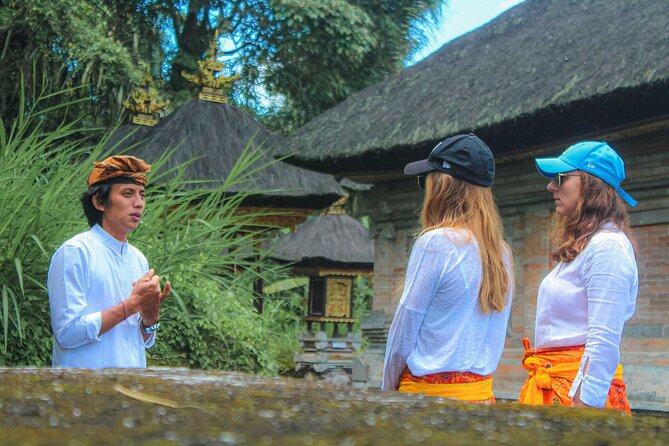
Stop 1 is Manukaya, and the highlight here is the family welcome. You’ll be offered a drink at a Balinese family compound. Then you can see two specific cultural elements up close: Lontar script and the Topeng mask tradition.
Lontar matters because it’s tied to how knowledge is preserved. It’s not just decorative writing; it’s part of how ideas survive and get transmitted through generations. And Topeng is more than a pretty mask. It’s part of the performance and symbolism that shows up in Balinese culture, where characters and roles are visual language.
The practical side: this early stop helps you understand the rest of the tour. When you later visit temples that reflect animist, Hindu, and Buddhist layers, you’ll notice the same themes: meaning carried through objects, writing, craft, and ritual. It’s a “read the culture first” moment.
Ancient ancestral sites and the path to sacred cleansing in Tampaksiring
After the family compound, the program moves into the temple sequence around the area north-east of Ubud. You’ll visit an ancestral temple dating back to the 8th century. That’s an important anchor point, because it gives you a time reference right away. Instead of generic “old temple” sightseeing, you’re walking into a site connected to deep roots.
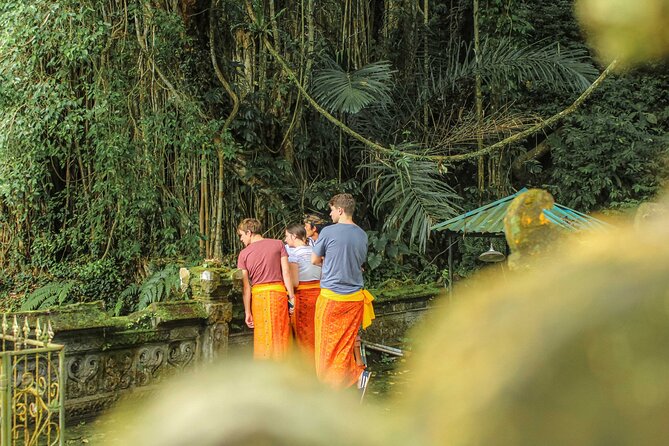
From there, you continue to Tampaksiring, where you’ll go to a sacred water temple dating back to the 11th century. This is where the tour leans fully into Bali’s spiritual practice: devotees come to spiritually cleanse themselves by bathing in the holy springs.
The tour provides sarong and towels, so you don’t have to figure out how to handle the water situation on your own. Still, it’s smart to come prepared to get wet and to treat the site like an active place of worship. Bring a practical mindset, not just a camera mindset. If you’re the type who enjoys watching how rituals work and then asking questions, this is the section that will reward you the most.
What I like about this stop is how it connects religion to community behavior. Sacred water isn’t just a backdrop. It’s a routine with meaning. It helps you understand why Tri Hita Karana isn’t theoretical in this part of Bali. Water, nature, bodies, and spirituality are linked in one practice.
A possible drawback: because the bathing element is central, you may feel less “tour-pace” than you expect. If you prefer temples that you can simply view from dry land, you might want to mentally adjust your expectations before you go in.




The largest Buddhist stupa in Bali: where iconography mixes on purpose
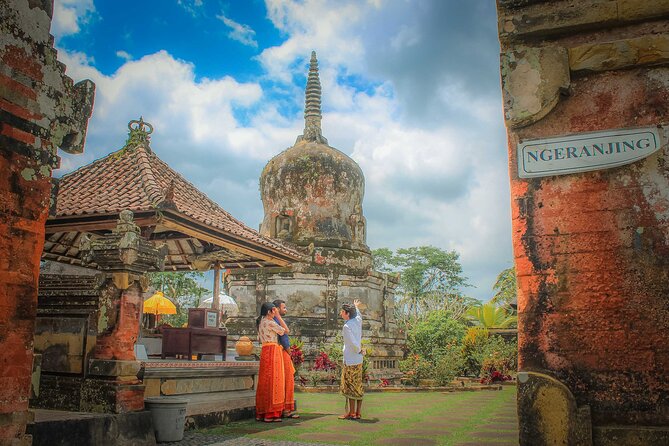
The tour closes its temple sequence at a major site: the largest Buddhist stupa on Bali, where Hindu and Buddhist iconography combine in dedication to Hindu and Buddhist cosmology.
This is a fascinating moment because it explains something many first-time visitors miss. In Bali, the religious landscape isn’t always neatly separated. The symbolism overlap is intentional, and it reflects the long history of belief blending on the island.
So when you’re standing in front of the stupa, don’t just look for differences. Look for how the iconography speaks the same worldview in different languages. That’s what makes this stop more than a “big monument.” It’s a visual summary of the earlier lessons about unity between belief systems, plus the idea of balance that threads through Bali life.
Also, this part of the program helps you tie together what you learned earlier in the family compound and the ancestral and water temples. You’ll see how messages travel—from writing and masks, to ritual bathing, to the combined imagery on religious architecture.
Lunch with your hosts: the most underrated part of the experience
One of the easiest things to underestimate on a cultural tour is the meal. Here, lunch is included, and it comes from hosts—so it’s not just a boxed-up convenience stop.
This is where I think the tour earns its value. You’re already in a mindset of learning about Tri Hita Karana and how people organize daily spiritual life. Sharing a meal with your hosts gives you an informal window into what those beliefs look like when no one is posing for anything. It’s also a natural time to ask practical questions about how things work locally, like how community life and religious life interact.
Because coffee and/or tea is also included, the day feels complete rather than squeezed. You’re not rushing from temple to temple and then hunting for food afterward. It’s a calmer rhythm, which helps the whole experience make more sense.
Price and logistics: is $98 worth it?
At $98 per person for about 5 hours, this tour is priced in the “serious cultural experience” category. The cost can feel like a lot if you compare it to a quick bus-and-temple combo. But the value shows up in what’s included.
You get private transportation, plus coffee/tea and lunch. Admission is included for the stops mentioned as part of the program. And there’s also the practical convenience of pickup offered, with the tour ending back where it started.
The private format is a key part of the value. Only your group participates, which usually means less waiting, fewer interruptions, and more room to ask questions when something grabs your attention—like the Lontar script details or what the holy springs bathing means to devotees.
What’s not included is also useful to know: alcoholic beverages and snacks are available to purchase, not included. If you snack a lot or you plan to drink during the meal, budget a bit extra. If not, you can keep spending under control.
Bottom line: if you want a respectful, meaning-first day around Ubud’s UNESCO-linked heritage area, $98 is fair. If you only want major photo landmarks and you don’t care about the cultural explanation, you’ll likely feel the price more.
Who should book this Essence of Bali tour
This is a great fit if you want to understand Bali beyond the surface and you enjoy religious and cultural context tied to real places. The combination of animist roots, Hinduism, and Buddhism—plus the Tri Hita Karana framing—works especially well for people who like to connect ideas to everyday life.
It’s also a strong option if you’re staying in or around Ubud and you want a calm half-day that still feels full. The start time is 9:00 am, which helps you beat some of the later-day heat and gives you room to finish with lunch without feeling squeezed.
Based on how the experience is described, the guide team is often led by locals such as Gede or Ari, with drivers sometimes noted like Wayan (and other guides including Eka and Nyoman). That local knowledge is the point here: you’re not just seeing temples, you’re getting the cultural logic behind them.
A quick self-check: if your ideal Bali day includes noisy markets, party beaches, and zero explanations, this probably won’t be your match. But if you want temples as living practice—plus cultural details like script and masks—you’ll probably love the way the day links together.
Quick tips to get more out of every stop
A few small choices will make the day smoother.
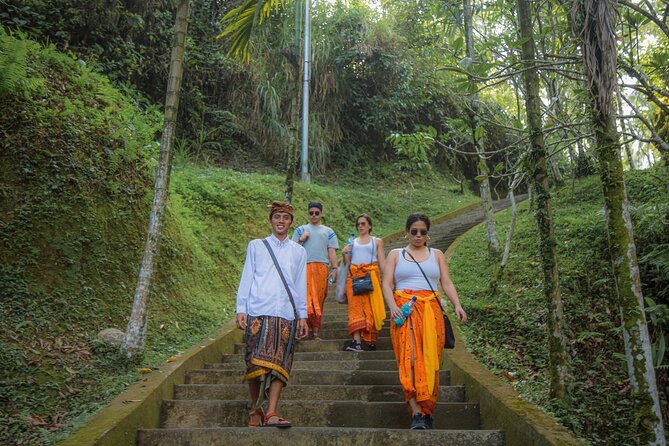
- Wear clothing that makes it easy to participate respectfully at temples and when you’re given a sarong for bathing.
- Expect a slower, more thoughtful pace than a “see everything in one go” tour.
- Bring a mindset of questions. When you learn how belief systems unify, you’ll notice more details as you go.
- If water is part of your comfort zone, plan for that mentally. If it’s not, ask yourself how you want to handle the holy spring bathing element.
Should you book the Essence of Bali tour?
I’d book it if you want a values-based Bali day: UNESCO context, clear explanations about animist, Hindu, and Buddhist layers, and a real taste of community life through a family welcome and included lunch. The $98 price makes more sense when you account for private transport, included meals, and admission.
Skip it if you only want quick temple photos, or if you strongly prefer not to participate in holy-spring bathing. In that case, you might prefer a more viewing-focused temple itinerary.
If you’re excited by the idea of understanding Tri Hita Karana and how water, spirit, and daily life connect, this tour is one of the best ways to get that in a single half-day.
FAQ
How long is the Essence of Bali tour in Ubud?
It runs for about 5 hours.
How much does the tour cost?
The price is $98.00 per person.
What’s included in the price?
Coffee and/or tea, lunch, and private transportation are included. Admission tickets are included for the activities listed.
Do you offer pickup from my hotel?
Pickup is offered.
What should I know about tickets?
You’ll receive a mobile ticket.
Is alcohol included?
No, alcoholic beverages are available to purchase.
Are snacks included?
No, snacks are available to purchase.
What time does the tour start?
The start time is 9:00 am.
Can I cancel for a full refund?
Yes. Free cancellation is available. You must cancel at least 24 hours in advance for a full refund.
More Ubud Tours We Rate




Just added around Ubud
- Ubud: White Water Rafting with visit Ubud Monkey Forest
★ 5.0 · 3 reviews - Private Guided Bali Car Charter
★ 5.0 · 3 reviews - East Bali and Lempuyang Temple Tour
★ 5.0 · 3 reviews - Bali Downhill Cycling and White Water Rafting
★ 5.0 · 3 reviews - Cave Tubing Adventure in Ubud
★ 5.0 · 3 reviews