
Reviewed · UBUD
Day with a Balinese Family in a Village
Rice fields, coconut oil, and family stories right nearby Ubud. This village day swaps temple-only sightseeing for everyday Balinese routines—walking through rice fields, learning coconut oil production, enjoying a homemade meal, and making colorful offerings with your hosts.
I really like the hands-on parts: you don’t just watch coconut oil get made, and you don’t just see offerings—you learn how they’re made and what they mean. I also love the small group size (max 5 people), because it makes questions feel easy and the day stays relaxed instead of rushed.
One thing to consider: this is a 6-hour mix of outdoor walking and home visits, so you’ll want to dress for heat and uneven ground, and be mindful that specific dietary needs aren’t listed.
In This Review
- Key highlights to look for
- A village day that feels like Bali, not a checklist
- 6 hours with a max of 5 people: the pace that matters
- Walking the rice fields: how daily farming becomes a lesson
- Coconut oil production in a family home: more than a demo
- Wood-fire lunch with your hosts: where the flavor story starts
- Offering-making with leaves and plant fibers: the meaning isn’t an afterthought
- Price and value: what you’re really paying for
- Pickup, timing, and what to expect from the route
- Who this fits best (and who might want another option)
- Should you book this Balinese family village day?
- FAQ
- FAQ
- How long is the Day with a Balinese Family in a Village experience?
- Is lunch included?
- Does the tour offer pickup?
- What language is the guide?
- How big is the group?
- Is tipping included in the price?
- Can I cancel if plans change?
Key highlights to look for
- Rice fields walk with real farming methods you can see up close
- Coconut oil making you can understand and talk about afterward
- Wood-fire family lunch plus coffee and/or tea
- Offering-making using leaves and plant fibers, including the meaning behind it
- Very small group (up to 5), so the guide can focus on you
- Free admission for the activity, with lunch included in the price
Not quite the one? These Ubud tours book out fastest.
- All-Inclusive Ubud Private Tour★ 5.0 · 14,344 reviews
- Best of Ubud Full-Day Tour with Jungle Swing★ 5.0 · 8,571 reviews
- Ubud: Monkey Forest, Jungle Swing, Rice Terrace, and Water Temple★ 5.0 · 7,160 reviews
- Ubud: Waterfalls, Water Temple & Rice Terraces Private Tour★ 5.0 · 5,484 reviews
A village day that feels like Bali, not a checklist
Near Ubud, Bali can sometimes feel like a nonstop stream of scooters, shops, and “next stop” tours. This experience slows things down. The backbone of the day is simple: a Balinese family welcomes you into their village life—rice cultivation, home production like coconut oil, and spiritual daily practice through offerings.
What makes it satisfying is the order of events. You start with the land (rice fields and plantations), then move into the work that comes from the land (coconut oil), then to the food and the meaning people attach to everyday rituals (wood-fire lunch and offerings). It’s not just “culture photos.” You leave with things you can explain.
6 hours with a max of 5 people: the pace that matters
This runs about 6 hours, starting at 8:30am and ending back at the meeting point. Pick-up is offered, and the group size is intentionally small—up to 5 people. For me, that’s the difference between feeling like a silent observer and actually being able to ask follow-up questions.
Because the family hosts are doing their normal work, you won’t feel like you’re forcing the schedule into something artificial. You’ll walk between fields and homes at a human pace, and the day stays conversational—especially if your guide is in French or English. Several past groups specifically praised French-speaking guidance, which helps a lot when you want details about belief and meaning, not just general explanations.
A practical note: the tour mentions most people can participate, but it doesn’t spell out a fully flat, wheelchair-friendly route. If you need very even surfaces, ask questions before you go.
Walking the rice fields: how daily farming becomes a lesson
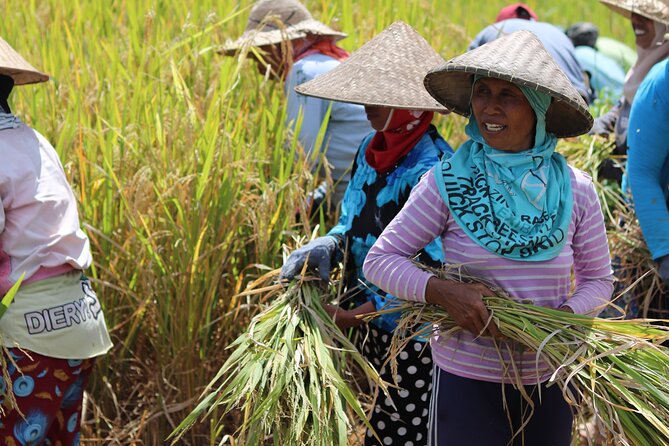
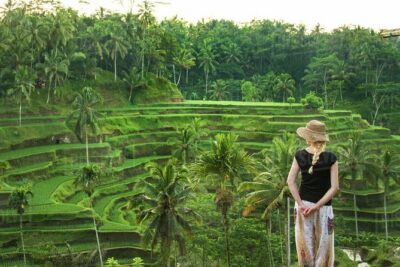
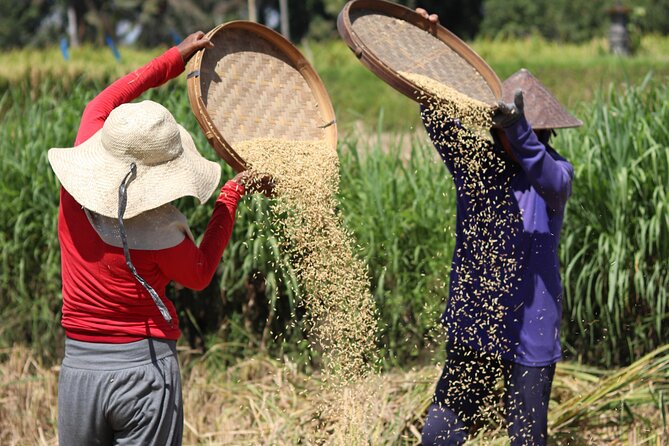
You begin with a walk that focuses on the day-to-day rhythm of village life. The highlight isn’t a “viewpoint.” It’s what you notice while you’re moving: how rice is grown, and how different farming methods show up in the paddies around you.
This part works because you can connect what you learn to what you see. Rice cultivation isn’t just a background theme in Bali—it’s tied to water management, seasons, and village work. When you’re walking the fields, you can spot the practical logic behind what might otherwise feel mysterious from photos.
And since you’re not rushing through it, you get time to ask the real questions: what changes during different stages, how people care for the plants, and what tools or routines show up day after day. A good guide will translate those answers into plain language you can remember later.





Coconut oil production in a family home: more than a demo
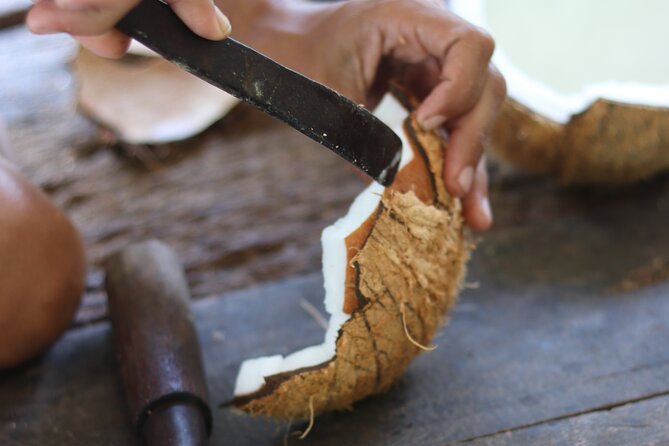
After the field walk, you shift from nature to production. The day includes artisanal coconut oil making, and it’s not just a quick show-and-tell. You learn the process in a relaxed, home-based setting, with time to understand what goes into it and why it matters.
Coconut oil has obvious uses, but the value here is learning the everyday logic:
- it’s used for cooking
- and also for massage
That connection—food plus body care—makes the whole topic feel practical. You stop thinking of coconut oil as a souvenir product and start seeing it as a household staple.
In past experiences, the welcome and instruction came from family members such as Gaia and Ganyar, with a friendly, humorous tone that made questions feel welcome. A driver named Sywa/Syva was also mentioned as punctual and upbeat, which matters because it keeps you from starting the day stressed.
Wood-fire lunch with your hosts: where the flavor story starts
Lunch is included, and it’s served at the inhabitant’s house. The day centers on traditional food prepared over a wood fire, which you can often taste immediately in the aroma and the way the dishes feel less “mass produced.”
This is one of those meals that’s worth showing up for even if you’re not a “food tour” person. Why? Because you’re eating in the same context you learned in. You’ll have already walked the rice fields, and you’ve already seen how coconut oil is produced. That makes lunch feel connected to the land instead of a separate event.
Coffee and/or tea are included too. Take that break to slow down and ask questions that don’t fit in a walk-through—how the family structures their days, what traditions matter most to them, and what they hope visitors understand.
Offering-making with leaves and plant fibers: the meaning isn’t an afterthought
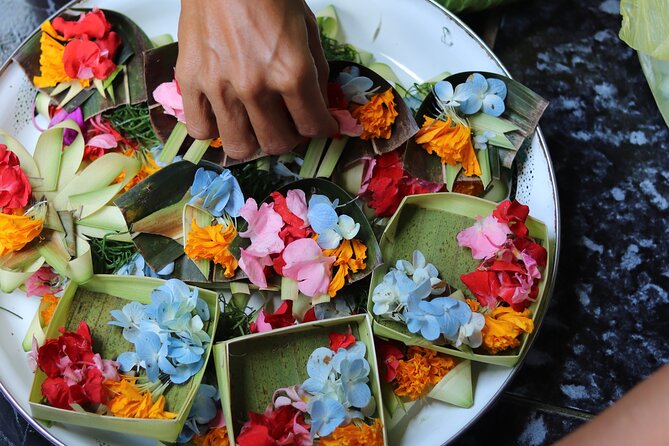
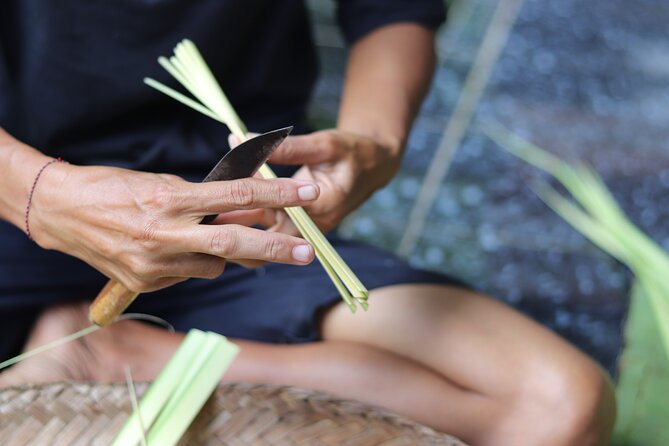
One of the most memorable parts of this day is making offerings. You’re guided through how to intertwine leaves and plant fibers to create different colorful forms, and you also hear about the meanings behind what you’re making.
This matters because offerings can look decorative if you only see the final product. When you learn how they’re constructed, you start understanding the logic: materials are chosen, colors are intentional, and the act itself fits into daily spiritual practice.
In several experiences, families welcomed visitors with warmth and shared beliefs in French, which helped people follow the explanation without feeling lost. Parents also reported their kids (including a 7-year-old and a 12-year-old) enjoyed it—an important clue that this activity isn’t just for adults who already “get” cultural crafts.
Price and value: what you’re really paying for
The price is $72.08 per person for about 6 hours. That sounds straightforward until you look at what’s included:
- lunch
- coffee and/or tea
- an air-conditioned vehicle
- all fees and taxes
- a donation
- a French or English-speaking guide
- pickup offered
- mobile ticket
- admission ticket free
There’s also the small-group element (max 5 people). In Bali, small-group attention can mean the difference between a generic tour and a real conversation.
So the value isn’t just “you get lunch.” It’s that you’re buying time with a family and an explanation-driven experience—rice farming, coconut oil production, wood-fire cooking, and offering-making all in one day.
One cost not included: tip. If the service is good (and with small groups, it usually is), plan to tip.
Also, this type of tour tends to book ahead—on average, people reserve around 36 days in advance. If your dates are fixed, you’ll feel better booking sooner rather than later.
Pickup, timing, and what to expect from the route
You start at Coco Supermarket in Ubud (Jalan Raya Pengosekan), and the experience ends back there. The start time is 8:30am, which is a smart choice in Bali: it gives you cooler morning hours for walking before the heat ramps up.
The route is part village roads, part paths through rural areas. That means your comfort depends on shoes and clothing more than you might expect. Even if the walking isn’t described in detail, rice fields and plantations usually mean uneven ground and occasional mud.
What I recommend you bring:
- comfortable walking shoes (not flip-flops)
- a light layer or scarf (useful for sun and respect)
- water
- a small bag that can handle damp conditions
Who this fits best (and who might want another option)
This is ideal if you want a real village day near Ubud—especially if you like practical skills and everyday culture more than only big monuments.
It tends to suit:
- couples wanting a shared activity with conversation built in
- families with kids who enjoy crafts and hands-on learning
- solo travelers who want a small setting where questions aren’t brushed off
It might be less ideal if:
- you need a fully structured, “every stop is a photo spot” itinerary
- you strongly prefer indoor-only activities
- you’re not comfortable with outdoor walking in warm weather
Should you book this Balinese family village day?
If you want to understand Bali through daily life—rice cultivation, coconut oil, wood-fire food, and offerings—then yes, it’s a good bet. The strongest reasons to book are the small group size, the hands-on learning, and the fact that your time is spent with a real family rather than a scripted demo.
If you’re the type who enjoys asking questions and learning how people live (not just what they believe), you’ll likely have a standout day. Just come prepared for outdoor walking and plan for a calm pace, because this experience is about sharing daily routines, not racing through them.
FAQ
FAQ
How long is the Day with a Balinese Family in a Village experience?
It runs for about 6 hours.
Is lunch included?
Yes. Lunch is included, and coffee and/or tea are included as well.
Does the tour offer pickup?
Pickup is offered, and the activity ends back at the meeting point.
What language is the guide?
The guide speaks French or English, based on the tour.
How big is the group?
This experience has a maximum of 5 travelers.
Is tipping included in the price?
No. Tip is not included.
Can I cancel if plans change?
You can cancel for a full refund up to 24 hours in advance of the experience’s start time.
More Ubud Tours We Rate




Just added around Ubud
- Ubud: White Water Rafting with visit Ubud Monkey Forest
★ 5.0 · 3 reviews - Private Guided Bali Car Charter
★ 5.0 · 3 reviews - East Bali and Lempuyang Temple Tour
★ 5.0 · 3 reviews - Bali Downhill Cycling and White Water Rafting
★ 5.0 · 3 reviews - Cave Tubing Adventure in Ubud
★ 5.0 · 3 reviews