
Bali can feel like a whirlwind of temples and photos. This Bali Iconic Tour turns that into a one-day route with famous stops in a sensible order. I especially like the mix of UNESCO rice terraces and water-temple scenery, so you get more than one type of Bali moment. The day is long, but it’s built around time at each place instead of rushing through everything.
I really like the human touch in this tour. One guide named Ketut was patient with pacing and encouraged us to take our time at each stop, plus he would add a coffee-plantation look if you’re curious. That kind of flexibility makes a big difference when you want photos but also want to slow down.
One thing to consider: this experience depends on good weather. If conditions are poor, it may be rescheduled or refunded, and some outdoor sections (like the waterfall trek) are less comfortable when the skies are wet and unpredictable.
In This Review
- Key things to know before you go
- Getting oriented: what a 9-hour Ubud day actually feels like
- Leke Leke Waterfall: the trek part you should plan for
- Ulun Danu Bratan Temple: the water temple stop with real photo payoff
- Jatiluwih UNESCO rice terraces: where you slow down without falling behind
- Handara Iconic Gate: photos first, but don’t skip the timing
- The traditional coffee plantation stop (and that java luwak option)
- Price and value: what $69 buys you in real terms
- Who this tour suits best (and who should think twice)
- What to bring and how to handle the weather
- Should you book the Bali Iconic Tour?
- FAQ
- What time does the Bali Iconic Tour start?
- How long is the Bali Iconic Tour?
- Is pickup included?
- Is this tour private?
- What stops are included in the itinerary?
- Are admission tickets included?
- What is the cancellation policy?
Key things to know before you go
- A classic Bali circuit in one day: Leke Leke waterfall, Ulun Danu Bratan, Jatiluwih, and Handara Gate.
- Admissions are covered for the main sights: tickets are included at each listed stop.
- UNESCO Jatiluwih is the time anchor: 1.5 hours here gives you room to see the terraces without sprinting.
- Private for your group: you won’t share the day with strangers.
- A real guide can change the vibe: Ketut-style patience and pacing show up in the best experiences.
- Coffee plantation stop is included: you may be able to see a java luwak coffee demonstration if it fits the day.
Not quite the one? These Ubud tours book out fastest.
- All-Inclusive Ubud Private Tour★ 5.0 · 14,344 reviews
- Best of Ubud Full-Day Tour with Jungle Swing★ 5.0 · 8,571 reviews
- Ubud: Monkey Forest, Jungle Swing, Rice Terrace, and Water Temple★ 5.0 · 7,160 reviews
- Ubud: Waterfalls, Water Temple & Rice Terraces Private Tour★ 5.0 · 5,484 reviews
Getting oriented: what a 9-hour Ubud day actually feels like
This tour is built as a full morning-to-afternoon sweep, starting at 8:30 am and running about 9 hours. The meeting point is near public transportation, and pickup is offered, which matters because Bali traffic can turn a short day into a long one fast. If you’re staying around Ubud, this format is a practical way to hit multiple big-name sights without piecing together separate drivers.
Because it’s a private tour (only your group participates), the day feels easier than the typical bus tour. You can ask questions, pause for photos, and generally control your pace. That said, it’s still a busy itinerary. You’re visiting four standout outdoor/landmark stops plus a coffee plantation. Wear shoes you can walk in, and plan to keep your expectations realistic: this is sightseeing with stops, not a slow resort day.
Also note the tour is weather-dependent. The itinerary includes outdoor walking at Leke Leke and lots of open-air viewpoints, so if weather turns messy, your guide may shift how the day flows or prioritize the best available options.
Leke Leke Waterfall: the trek part you should plan for
The day kicks off at Leke Leke Waterfall with about 1 hour 30 minutes for trekking and exploring. This is the start of the “active” portion of the itinerary, so I like treating it as a warm-up: it gets you outside, gets you moving, and sets the tone for the rest of the scenery.
What to expect here is a mix of walking and time spent at the falls. Since the itinerary specifically notes a trek and admission included, you can reasonably expect a guided experience that gets you to the right areas without needing to figure everything out on your own.
The only real drawback? If it’s rainy or very humid, the walk can feel sticky and slippery. Bring shoes with decent grip and consider a light rain layer you can actually move in. You don’t want to spend the next stops worrying about your footing or your camera battery drying out.
Ulun Danu Bratan Temple: the water temple stop with real photo payoff
After the waterfall, you head to Ulun Danu Bratan Temple for around 1 hour, with admission included. This is one of Bali’s most recognizable water-temple scenes, and it earns that reputation for a simple reason: the setting makes the temple look like it belongs to the water, not just beside it.
The time here is short enough that you’ll feel focused, but long enough to do more than one thing. You can look around calmly, get a few angles, and then settle into the stillness for a minute without watching the clock every five minutes.
For practical tips, I’d treat temple visits as a quick reset. Bring something simple for modesty (or plan to follow what staff advise on-site), and keep an eye on the ground—temples mean stone paths and stairs. If you’re also someone who likes to take time for composition, this is a good stop to slow down and let the light change.
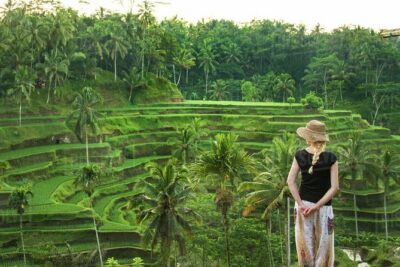

Jatiluwih UNESCO rice terraces: where you slow down without falling behind
Next comes Jatiluwih Green Land, the UNESCO-listed rice terraces stop, with about 1 hour 30 minutes on the ground. I love this part because it’s not just a viewpoint. You get time to walk, look, and understand the scale of the terraces without being rushed.
This is also where the tour becomes more than a checklist. The terraces are spread out, and the human eye needs a little time to appreciate depth and pattern. That’s why 1.5 hours works better than shorter slots. You can find an angle, take a few photos, and then step back to watch how the fields look from slightly different positions.
The only caution is comfort. Even if the terrain isn’t described in detail, rice-terrace areas usually involve uneven paths and lots of walking. Comfortable shoes matter here more than at most other stops. If you’re prone to sore legs, plan for it now, not later.
Handara Iconic Gate: photos first, but don’t skip the timing
Then you reach Handara Iconic Gate, a famous photo stop. You’ll have about 1 hour, and admission is included. This is the part of the day where people often rush, because the structure itself is the attraction and the lines for photos can feel like a mini event.
Here’s how I’d approach it: treat the gate as two moments. First, capture the shot you came for. Second, take a few minutes to step back and check the light and angles around the entry area so you’re not stuck with one flat photo.
The good news is that the time allocation is enough to do this without feeling trapped. The potential downside is crowd pressure if the gate is busy. If that’s a concern for you, it’s smart to be ready to move a little between angles so you don’t wait too long in one spot.
The traditional coffee plantation stop (and that java luwak option)
The itinerary includes a Bali traditional coffee plantation stop to finish the day. What I like about a coffee plantation visit on this kind of tour is that it adds a local, sensory angle after all the outdoor scenery. It’s also a chance to ask questions in a lower-stakes setting.
One review highlights that the guide Ketut took the group to see a coffee plantation for a tasting and a java luwak coffee demonstration when asked. That’s not something I’d assume will happen for every stop automatically, but it’s a strong hint that if you’re curious, your guide may be able to support a tasting-style experience during the plantation visit.
If you enjoy learning how ingredients get from farm to cup, bring a curious mindset rather than expecting a museum. If you’re not into coffee or don’t want demonstrations, you can still use this time as a break before the ride back.
Price and value: what $69 buys you in real terms
At $69 per person for about 9 hours, this tour isn’t trying to be the cheapest way to see Bali. It’s priced like a day where you get transportation, a guide, and admission tickets tied to the main sights.
The value piece is the combination:
- Multiple major stops in one day
- Admission tickets included for the listed sights (waterfall, temple, and UNESCO terraces, plus the Handara gate)
- Pickup offered and a route that’s designed for an all-in-one day plan
- Private setup for your group, which usually makes the experience feel more personal
Is it worth it? If you want one guided day that covers the big names without spending your trip energy coordinating separate tickets and drivers, I think it is. If you prefer very slow travel with lots of independent wandering, you might feel this schedule is busy. But for first-timers in Bali or anyone who wants a highlight reel with guided context, it’s solid value.
Who this tour suits best (and who should think twice)
This tour fits best if you want:
- A structured day with famous Bali highlights
- Easy guided decision-making (you don’t want to plan every entrance and route)
- A private-group pace with time to breathe at key stops
It’s also said to be suitable for most travelers, which I interpret as a general readiness level: there’s walking involved, and you’ll want decent mobility for the waterfall trek and terrace paths.
Think twice if you:
- Hate tight schedules or long ride time between stops
- Want a totally relaxed day with no early start
- Have limited tolerance for weather changes, since the experience depends on good conditions
What to bring and how to handle the weather
Because good weather is required, I’d pack for flexibility. A light rain layer helps, even if the forecast seems fine. For footwear, choose something you can trust on damp or uneven ground.
Bring:
- Comfortable walking shoes
- A small day bag for water and essentials
- A light rain jacket or poncho you can move in
- Sun protection (you’ll be outside for much of the day)
- Cash or cards for any coffee-related extras you might decide to do
A small but important mental tip: treat the day as a series of “short missions.” You arrive, you look, you take photos, you move. That keeps you from feeling stressed when you’re switching environments fast.
Should you book the Bali Iconic Tour?
I’d book this tour if you want an efficient, guided Ubud-area day that hits the most recognizable Bali scenes—water temple, UNESCO terraces, waterfall, and the Handara gate—without turning your vacation into logistics.
I’d skip it or look for an alternative if you want a quiet, slow day or if weather sensitivity is an issue for you. The weather dependency isn’t a small detail here; it affects the outdoor parts.
If you do book, I’d lean into it by doing two things: wear good shoes for the trek, and ask your guide about coffee tasting options if that’s your thing. Based on guide Ketut’s approach in strong reviews, that curiosity can shape the day in a nice way.
FAQ
What time does the Bali Iconic Tour start?
The tour starts at 8:30 am.
How long is the Bali Iconic Tour?
It’s listed as about 9 hours.
Is pickup included?
Pickup is offered.
Is this tour private?
Yes. It’s described as a private tour/activity, so only your group participates.
What stops are included in the itinerary?
You’ll visit Leke Leke Waterfall, Ulun Danu Bratan Temple, Jatiluwih rice terraces, Handara Iconic Gate, and a traditional coffee plantation.
Are admission tickets included?
Admission tickets are included for the listed stops in the itinerary, including Leke Leke Waterfall, Ulun Danu Bratan Temple, Jatiluwih, and Handara Iconic Gate.
What is the cancellation policy?
Free cancellation is available. You can cancel up to 24 hours in advance for a full refund. If it’s within 24 hours, the amount paid is not refunded. The tour also requires good weather, and if canceled due to poor weather you’ll be offered a different date or a full refund.
More to See and Do in Ubud





More Ubud Tours We Rate

Just added around Ubud
- Ubud: White Water Rafting with visit Ubud Monkey Forest
★ 5.0 · 3 reviews - Private Guided Bali Car Charter
★ 5.0 · 3 reviews - East Bali and Lempuyang Temple Tour
★ 5.0 · 3 reviews - Bali Downhill Cycling and White Water Rafting
★ 5.0 · 3 reviews - Cave Tubing Adventure in Ubud
★ 5.0 · 3 reviews
Tours, compared.
 ★ 5.0All-Inclusive Ubud Private TourFrom $10014,344 reviews
 ★ 5.0Best of Ubud Full-Day Tour with Jungle SwingFrom $568,571 reviews
 ★ 5.0Waterfalls, Water Temple & Rice Terraces Private TourFrom $295,484 reviews
 ★ 4.9All-Inclusive Tour with Optional LunchFrom $275,438 reviews
 ★ 5.0Best of Ubud 1-Day Private TourFrom $544,451 reviews
 ★ 5.0Tanah Lot and North Bali Tour: Scenic JourneyFrom $1003,620 reviews
Bali Snorkeling Tour at Blue Lagoon Beach – All-InclusiveFrom $402,928 reviews
★ 5.0Tanah Lot and North Bali Tour: Scenic JourneyFrom $1003,620 reviews
Bali Snorkeling Tour at Blue Lagoon Beach – All-InclusiveFrom $402,928 reviews
 ★ 5.0Full-Day Tour to Water Temples and UNESCO Rice Terraces in BaliFrom $392,539 reviews