
Reviewed · UBUD
ARMA Museum Visit
Art passes fast at ARMA. I love the guaranteed entry that cuts waiting, and I also like the free coffee/tea you get when you redeem your ticket. The possible drawback: it’s self-paced, so if you want a highly structured, narrated tour, you may need to slow down and read more on your own.
This admission setup lets you spend 30 minutes to 2 hours at your pace, without being trapped in a group schedule. ARMA is more than galleries, so even a shorter visit can still feel like you got something real out of it.
In This Review
- Key Highlights You’ll Care About at ARMA in Ubud
- Why the ARMA Museum Ticket Feels Like Good Planning
- What You’ll Do on Site: A Self-Guided Visit with Real Options
- Inside Stop 1: Agung Rai Museum of Art (ARMA) and How to Use Your Time
- The Permanent Collection and Temporary Exhibitions
- Performing Arts and Hands-On Learning
- Bookshop, Library, and Reading Room
- Workshops, Seminars, and Training Programs
- The Art Plus the Food Factor (and Why It Matters)
- Coffee/Tea Included: How to Make That Benefit Count
- Timing in the Real World: 30 Minutes to 2 Hours
- Price and Value: What $9.38 Really Gets You
- Who This ARMA Museum Visit Is Best For
- Tips to Plan Your Day Around ARMA
- Should You Book the ARMA Museum Ticket?
- FAQ
- FAQ
- How long is the ARMA museum visit?
- What does the ticket cost?
- Is a free hot drink included?
- Can I explore at my own pace?
- What’s included in the admission?
- Is lunch included?
- Are alcoholic drinks available?
- What else is offered besides galleries?
- Will I have a guide?
- What if I need to cancel?
Key Highlights You’ll Care About at ARMA in Ubud
- Guaranteed entry means less time hunting tickets and waiting around
- Free coffee/tea is included when you redeem your admission
- Self-paced wandering so you can go where your eyes land
- More than a museum: classes, workshops, and arts events can be part of the experience
- Short visit range (30 min–2 hrs) makes it easy to fit into a day in Ubud
- Max group size 100 helps keep the overall flow from feeling chaotic
Not quite the one? These Ubud tours book out fastest.
- All-Inclusive Ubud Private Tour★ 5.0 · 14,344 reviews
- Best of Ubud Full-Day Tour with Jungle Swing★ 5.0 · 8,571 reviews
- Ubud: Monkey Forest, Jungle Swing, Rice Terrace, and Water Temple★ 5.0 · 7,160 reviews
- Ubud: Waterfalls, Water Temple & Rice Terraces Private Tour★ 5.0 · 5,484 reviews
Why the ARMA Museum Ticket Feels Like Good Planning
ARMA (Agung Rai Museum of Art) is one of those places where planning ahead pays off. You’re not just buying a ticket—you’re buying your way into less waiting and more time with the art. That’s a big deal in Ubud, where you’ll often be bouncing between sites. When entry is handled in advance, your day stays on your feet, not on your phone checking lines.
The value here is also practical. For about $9.38 per person, you’re paying for entry plus a free hot drink (coffee and/or tea). That doesn’t sound earth-shaking until you remember what happens on art days: you walk, you look, you get thirsty, and suddenly you’re paying museum prices for a basic drink. Here, that basic cost is already covered.
I also like that ARMA positions itself as a cultural center, not only a collection behind glass. If you’re the type who gets bored with a quick look-and-go gallery, ARMA’s mix of art formats can keep you interested even if you only have an hour.
What You’ll Do on Site: A Self-Guided Visit with Real Options
Your ticket is for admission to ARMA, and you’re set up to explore at your own pace. That matters because art looking doesn’t follow a clock the way a bus tour does. If you find one painter’s style that grabs you, you can stay. If you’re more interested in contemporary works, you can drift toward those areas. If you want a slow sit-down moment, you can do that too—without waiting for a group to reassemble.
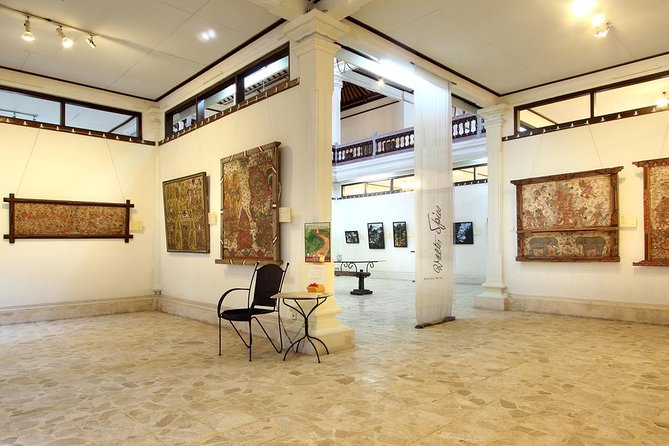
The museum experience is described as more than a single gallery loop. ARMA functions as a center for visual and performing arts. In addition to a permanent collection and special temporary exhibitions, it can involve theatre performances, dance, music, and painting classes. There’s also a bookshop, a library, and a reading room. Cultural workshops, conferences, seminars, and training programs may also be part of what’s happening during your visit.
Here’s the practical meaning for you: you’re not limited to one style of engagement. You can treat it as:
- a quiet art walk,
- a short cultural stop where you catch a class or event if scheduled,
- or a mixed visit where you browse, read, and then slow down with a hot drink.
If your goal is to see as much as possible in one stop, ARMA is set up to support that. If your goal is calm and intentional looking, it also works.
Inside Stop 1: Agung Rai Museum of Art (ARMA) and How to Use Your Time
ARMA is the main event, and it’s where most of your time (up to 2 hours) will go. Think of it as several experiences stitched together:






The Permanent Collection and Temporary Exhibitions
You’ll have access to ARMA’s permanent collection of paintings plus special temporary exhibitions. The collection is described as ranging from traditional Batik paintings to contemporary masterpieces. That range is exactly what makes the ticket worth it for different kinds of art lovers.
Practical tip: if you’re not sure where to start, begin with the traditional end (Batik) and then move forward in time. It helps you see what changes—technique, themes, and how artists adapt their visual language.
Performing Arts and Hands-On Learning
ARMA is also a center for theatre, dance, and music, and it may include painting classes. Even if you don’t plan your day around performance times, this is still part of why the place feels different from a standard museum. You’re likely to see evidence of the museum’s education mission—people learning, programs running, and space reserved for arts practice.
Practical consideration: the exact schedule of performances or classes isn’t spelled out in the information you have here. If catching a specific kind of show matters to you, build in a little flexibility and don’t assume every category will happen during your visit window.
Bookshop, Library, and Reading Room
ARMA includes a bookshop, library, and reading room. This is one of those “small” details that makes a visit feel more complete. You can slow your pace after looking at art and do some contextual reading, which often makes the artworks stick longer in your head.
If you like taking one good souvenir instead of five random ones, the bookshop is the more thoughtful option. It’s also a way to leave with something you can use later—maps of styles, artist names, or themes.
Workshops, Seminars, and Training Programs
The museum also runs workshops, conferences, seminars, and training programs. These aren’t guaranteed to be active every minute, but their presence tells you ARMA is functioning like an active cultural space. For visitors, that tends to mean the museum doesn’t feel like it’s only there to display—it’s there to produce learning and creative output.
The Art Plus the Food Factor (and Why It Matters)
One of the strongest feedback signals in the provided information is that the ARMA experience pairs well with eating on site. The mention of the museum and restaurant being very nice suggests you’re not forced into an immediate food scramble after your gallery time.
What this means for you: you can plan ARMA as a half-day moment. Browse for a while, use the included coffee/tea as your mid-visit reset, then consider an on-site meal so you don’t burn time traveling elsewhere.
Also, keep expectations practical: lunch and other drinks aren’t included in the ticket. Alcohol is available to purchase, but it’s not part of the included offer. So treat the hot drink as your included refresh, and plan on paying separately if you want more.
Coffee/Tea Included: How to Make That Benefit Count
The included coffee and/or tea is a small line item that can turn into real comfort during a walk-heavy museum visit. You’ll get a free hot drink when you redeem your ticket.
To make the most of it:
- Use it around the halfway point of your visit, not at the start.
- If it’s cool or rainy, take advantage right away and warm up before continuing.
- If you’re squeezing ARMA into a busy Ubud day, this included drink can replace an extra stop.
If you’re someone who hates paying for a “basic” beverage at every stop, this detail alone can push ARMA toward strong value.
Timing in the Real World: 30 Minutes to 2 Hours
The visit window listed is 30 minutes to 2 hours. That range is actually useful, because it helps you match your museum ambition to your day.
Here’s how I’d think about it:
- 30–45 minutes works if you’re selective—focus on the main art areas, catch a quick sense of the collection range, and don’t get stuck in endless rooms.
- 60–90 minutes is a sweet spot for most people—enough time to see traditional Batik works, then compare with contemporary pieces, plus take a break in the reading room or bookshop.
- Up to 2 hours is ideal if you want a slower art walk and you’re curious about the museum’s broader arts center side.
A practical drawback to keep in mind: because you can’t control your pace with a group leader, it’s easier to under-plan and accidentally rush. If you’d rather not feel rushed, pick a start time when you’re not fighting another timed reservation.
Price and Value: What $9.38 Really Gets You
At about $9.38 per person, you’re not paying for a guided tour with a detailed narration here. You’re paying for three key things:
- Admission with guaranteed entry
- Reduced waiting vs buying on arrival without a plan
- A free hot drink
That can be great value if you enjoy self-guided museum time. It’s less great value if you’re the kind of visitor who needs a lot of background storytelling to stay engaged.
Also, consider timing. The information provided notes that, on average, bookings are made about 24 days in advance. That doesn’t mean you can’t go sooner, but it’s a clue: ARMA tickets are popular enough that planning ahead helps you keep your schedule clean.
Who This ARMA Museum Visit Is Best For
This ticket is a good fit if you:
- want flexibility and don’t want to wait for a group,
- like art but prefer controlling your own pace,
- appreciate that ARMA is both visual and performing-arts related,
- enjoy adding a bookstore/library moment to your sightseeing,
- want a solid Ubud cultural stop that doesn’t require a full half-day commitment.
It’s also a strong option for couples or solo visitors who want a quieter experience without the pressure of a fixed route.
You might find it less ideal if you:
- need a very structured guided narrative to understand art themes,
- only have 20–30 minutes and want a guaranteed, deeply explained tour experience (because the time window starts at 30 minutes, and the content is broad).
Tips to Plan Your Day Around ARMA
Since this is a self-paced museum admission, the best planning is about protecting your attention span.
- Give yourself at least an hour if you care about more than one style (Batik to contemporary).
- Pair ARMA with other nearby art stops in Ubud rather than far-away attractions, so you’re not spending your energy on travel.
- If you want to catch classes, workshops, or performances, arrive with a little open time instead of squeezing it between tight deadlines.
Also, since the overall group size is capped at 100, don’t expect total solitude. But the design still supports independent wandering, so you’re not locked into a tight herd.
Should You Book the ARMA Museum Ticket?
If you’re deciding whether ARMA is worth your time, I’d book it if your goal is a flexible art visit with practical perks. The combination of guaranteed entry, lower waiting stress, and a free hot drink makes it a straightforward win. And because ARMA is described as more than a standard museum—art plus education and arts programming—you’re not limited to a simple gallery checklist.
I’d skip it or add extra planning if you specifically want a fully guided, heavily narrated experience, because this format is built around exploring on your own.
If you do book, plan to spend long enough to move from traditional Batik works toward contemporary pieces, and give yourself a chance to use the bookshop/library areas. That’s how you turn a ticket into a memory, not just a stop.
FAQ
FAQ
How long is the ARMA museum visit?
It’s typically 30 minutes to 2 hours.
What does the ticket cost?
The price is $9.38 per person.
Is a free hot drink included?
Yes. Coffee and/or tea is included, and you receive it when you redeem your ticket.
Can I explore at my own pace?
Yes. The experience is designed so you can explore independently without waiting for a group.
What’s included in the admission?
You get admission to ARMA, with access to the museum’s permanent collection and any special temporary exhibitions during your visit.
Is lunch included?
No. Lunch and food/drinks are not included.
Are alcoholic drinks available?
Alcoholic drinks are available to purchase, but they are not included.
What else is offered besides galleries?
ARMA is described as a center for visual and performing arts, and may include theatre, dance, music, painting classes, cultural workshops, conferences, seminars, and training programs, along with a bookshop, library, and reading room.
Will I have a guide?
It may be operated by a multi-lingual guide, but the visit itself is still self-paced.
What if I need to cancel?
You can cancel for a full refund up to 24 hours before the experience’s start time.
More Ubud Tours We Rate





Just added around Ubud
- Ubud: White Water Rafting with visit Ubud Monkey Forest
★ 5.0 · 3 reviews - Private Guided Bali Car Charter
★ 5.0 · 3 reviews - East Bali and Lempuyang Temple Tour
★ 5.0 · 3 reviews - Bali Downhill Cycling and White Water Rafting
★ 5.0 · 3 reviews - Cave Tubing Adventure in Ubud
★ 5.0 · 3 reviews